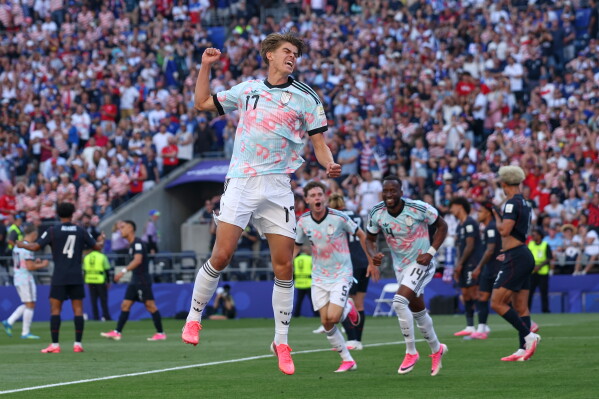
The FIFA World Cup, with its origins tracing back to 1930, remains a stage primarily dominated by Europe and South America. As the current tournament narrows its field, these continents largely dominate the quarterfinals lineup once more.
From the 48 teams that started this World Cup, only eight remain, and a staggering six are from Europe. If Morocco does not create history with a series of unpredictable wins, the tournament’s trophy will likely return to either Europe or South America again. Over nearly a century and 22 tournaments, these two continents have shared all victories, Europe with 12 and South America with 10, leaving none for the rest of the participating continents.
Norwegian player Erling Haaland expressed surprise at the advancement of his national team. Norway reached the quarterfinals for the first time, defeating Brazil with Haaland contributing two crucial goals. ‘I thought it was not possible to do some things,’ Haaland said, reflecting on their achievement.
However, North America saw less success. As hosts, the United States, Mexico, and Canada aimed high in this extensive World Cup. Despite all three teams advancing smoothly through the group stage with a combined 9-2-1 record, they faltered in the round of 16. The U.S. exited after a decisive 4-1 loss to Belgium.
U.S. player Christian Pulisic acknowledged the gap they need to bridge. ‘Trying to compete and beat the world’s best, that’s our next step,’ he stated after their elimination.
In the round of 16, the North American hosts faced significant challenges. Mexico lost to England 3-2, and Canada was outplayed by Morocco, bowing out with a 3-0 defeat. French soccer legend Thierry Henry remarked on the difficulty, noting the novelty of the round of 32 which saw each host advance. However, all three soon exited the competition.
The World Cup is different in the group stage… Unfortunately, one host, two hosts, three hosts, out. That’s exactly what you don’t want at a World Cup. That is annoying for me.
CONCACAF, representing North and Central America along with the Caribbean, has not seen a team reach the World Cup quarterfinals since Costa Rica in 2014. The U.S. last reached that stage back in 2002. Canada has never progressed beyond the round of 16, a milestone Mexico has reached repeatedly without advancing further.
Erik Lira from Mexico summed it up by saying, “Everyone gave everything… But, in the end, it wasn’t enough.” This sentiment echoes across regions that consistently fall short against their European and South American counterparts.
In 2002, five confederations were represented in the quarterfinals. Since then, Europe has claimed 30 of the 48 quarterfinal spots, with South America taking 14, Africa three, and North America just one.
Africa entered the tournament with high hopes, sending ten teams to compete, nine of which made the round of 32. Yet many fell after conceding critical late goals. Cape Verde, for example, was defeated by an own goal against Argentina in extra time.
The defeat was heavily felt by Egypt, who lost to Argentina after leading 2-0 and attributed their exit to controversial officiating decisions.
Once again, Argentina proved its resilience by overcoming a deficit against Egypt. Lionel Messi emphasized the challenges of such comebacks, especially at this level of competition, yet expressed gratitude for advancing once more.
It wasn’t easy to come back from a 2-0 deficit in a World Cup knockout match… But thank God, we did it once again.
 United Russia’s Election Victory and Its Implications
  Canada’s Tariff on Chinese Electric Vehicles: Business Influence and Security Concerns
  Saints’ Tyler Shough Leads Team to Win Amid Controversial Call
  NFL Week 2: Key Insights From Each Game
  Jets Coach’s Clock Management Sparks Debate
  Chicago Bears Struggle After Caleb Williams’ Injury