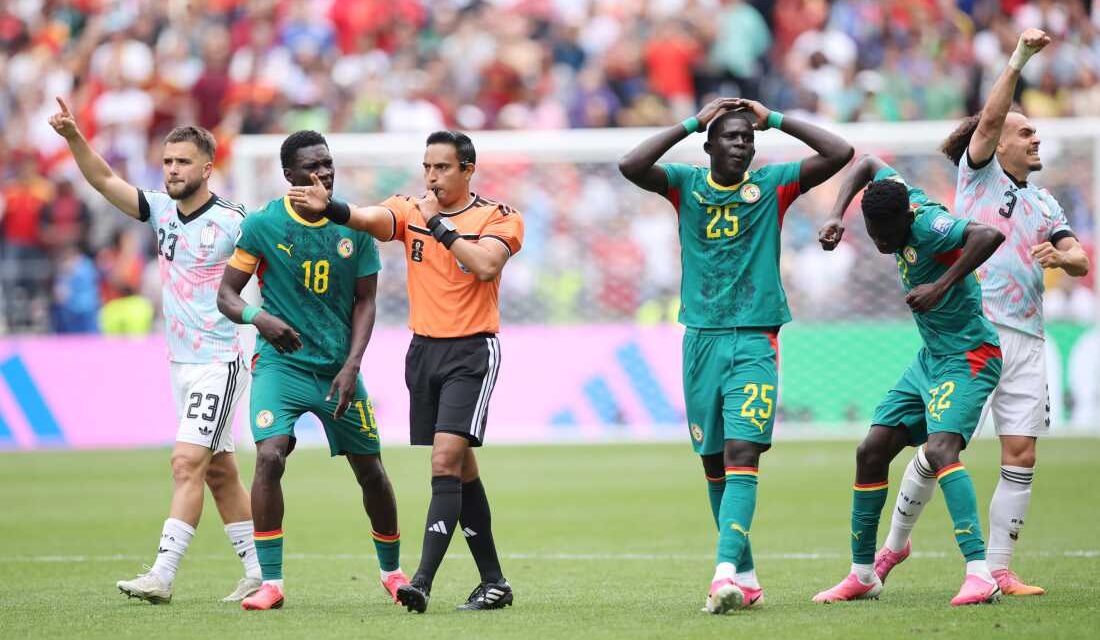
During the 2023 World Cup match between Belgium and Senegal in Seattle, a penalty kick awarded to Belgium after a VAR review stirred emotions. The video assistant referee, known as VAR, has become a centerpiece of World Cup discussions.
The Rise of VAR in Soccer
Initially, VAR was welcomed by many who believed it would enhance the game’s fairness. Its roots can be traced back to the 2009 World Cup qualifiers. In a match between France and Ireland, Thierry Henry’s handball went unnoticed, leaving many viewers frustrated. This incident highlighted the potential of technology in making better referee decisions.
Soccer has historically been slow to adopt changes. For example, substitutions were prohibited until 1970, the same year red and yellow cards were introduced. FIFA’s resistance to change makes its adoption of VAR significant.
Professor Chris Davis from Adelphi University highlights how the U.S. tends to embrace technological innovations in soccer, setting the stage for VAR. It was tested during Major League Soccer games in 2014 and 2015, before being officially introduced in the World Cup in 2018.
VAR’s Impact on Game Integrity
When VAR was introduced, fans generally praised its ability to correct obvious errors, helping protect soccer’s integrity. However, its use was initially limited.
Now, referees frequently check VAR for various plays, including offside calls. The offside rule, a complex law involving player positions relative to the ball and opponents, exemplifies the challenges of implementing technology perfectly. Players, commentators, and fans have criticized VAR’s frequent involvement.
Iran’s match against Belgium saw an Iranian goal disallowed due to a player being fractionally offside, while a Colombian goal was annulled over an attacker’s toe position. These decisions can halt the game’s momentum.
Controversy in Soccer Matches
One controversial game featured Egypt against Argentina. Although Egypt dominated the match, a goal was disqualified after VAR identified a prior foul. Egypt accused the system of injustice, resulting in heated discussions about tech deployment in soccer.
This scenario mirrors broader societal debates about technology’s reach. As Felipe Cardenas from The Athletic notes, the balance between human judgment and technology is delicate. Accepting human error is essential, as integral to the sport’s nature.
Ultimately, VAR’s role in soccer reflects ongoing concerns about technology possibly overstepping or aiding human oversight. The dialogue surrounding its usage continues as teams, fans, and officials evaluate its impact on the beautiful game.
 Chicago Cubs Fall Short Against Cincinnati Reds, Leaving Opportunities Unclaimed
  Teen Pickleball Star Faces a Busy Schedule
  Ovechkin’s Political Controversy Amid Russian Elections
  Arizona Cardinals’ Week 1 Upset and Dan Orlovsky’s Quarterback Debate
  Buffalo Bills Triumph Over Detroit Lions But Face Injury Setback
  Sophie Cunningham Responds to Misinterpretations of Comments on Teammates