
Rising Inflation and Energy Prices
Inflation hit a three-year high this summer due to a war with Iran that increased global energy prices. As energy prices have recently declined, inflation has followed. The extent of this decline remains uncertain.
The Consumer Price Index (CPI) for June, scheduled for release soon, will offer insights. Inflation in June is expected to reduce to 3.8% from May’s 4.2%. Price pressures lessened after a preliminary agreement to end the conflict with Iran. Recent strikes have partially reversed progress, although gasoline prices remain below the peak of $4.56 per gallon recorded in May.
Federal Reserve’s Role and Challenges
The Federal Reserve will meet soon to discuss whether to raise interest rates to control inflation, which has been persistently high. Inflation sources include both the Iran conflict and price gains associated with artificial intelligence advancements. Inflation in the services sector, comprising transportation and personal care, remains significant.
Minutes from the Fed’s June gathering indicate broad support for higher rates if inflation doesn’t slow. However, if inflation retreats, most officials suggest keeping rates steady. The core inflation rate, excluding volatile items, is anticipated to drop slightly to 3.8% year-on-year as prices ticked up by 0.2% in June.
Federal Reserve’s New Leadership
Kevin M. Warsh, the new Fed chair since May, has promised to ensure price stability. He will address the House Financial Services Committee regarding inflation and other economic issues, as well as answer Senate Banking Committee queries.
Boosts in Labor Productivity
Labor productivity has climbed at its fastest pace in over two decades, driven by tight labor markets, digitization, and remote work. While AI contributes to this trend, it is not the central factor yet.
Jerome H. Powell, before his role ended as Fed chair, acknowledged the ongoing productivity surge and anticipated its continuation. Industry changes such as remote work, machine learning, and improved technology have enhanced productivity across various sectors, including health care and retail.
Leaders in finance and tech have been applying A.I. to improve efficiencies, evident in hiring practices and supply chain improvements. For example, Elevation Resources in Texas has optimized drilling operations to increase productivity per rig without additional labor costs.
Impact of Unemployment and Tech
Low unemployment rates since 2021, combined with industry-specific job cuts, have contributed to productivity improvements. While these gains benefit the larger economy, affected workers face challenges as markets adjust.
Questions on Productivity Gains
There is skepticism about the interpretation of recent productivity data, influenced by inflation spikes due to tariffs and conflicts. Uncertainties in data make it difficult to assess true productivity impacts.
Real compensation for labor has not kept pace with productivity growth. This trend has led to concerns about how corporate efficiency gains are distributed among workers and households. Economists note that reported productivity gains may not immediately reflect underlying improvements.
Grocery Prices and Consumer Behavior
Amidst high food prices, grocery stores like Walmart are lowering prices on select items to attract budget-conscious consumers. Despite these efforts, overall grocery bills may continue to rise, as expected food price increases are forecasted for later years.
Grocers are using promotional strategies and increasing less expensive store brand offerings to compete with discount chains like Aldi.
Gasoline Pricing Dynamics
As oil prices decline post-conflict, retailers are slower to reduce gas prices, drawing political attention. This trend is influenced by increased margins and retailer strategies to maintain profitability.
Technological advancements in pricing strategies have allowed retailers to adjust prices opportunistically. Algorithms have played a role in price-setting, leading to discussions over fair pricing practices in competitive markets.
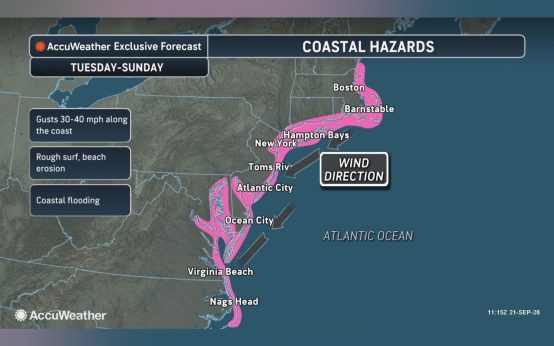 Nor’easter Threatens East Coast with Heavy Rain and Winds
  California’s Growing EV Adoption: Challenges and Benefits
  Data Centers in Virginia face Growing Opposition
  Texas Leads Air Taxi Innovation with Project Nexus
  Influencer Brothers Logan and Jake Paul Visit the Pentagon
  Florida Reports First Dengue Fever Death as Outbreak Expands