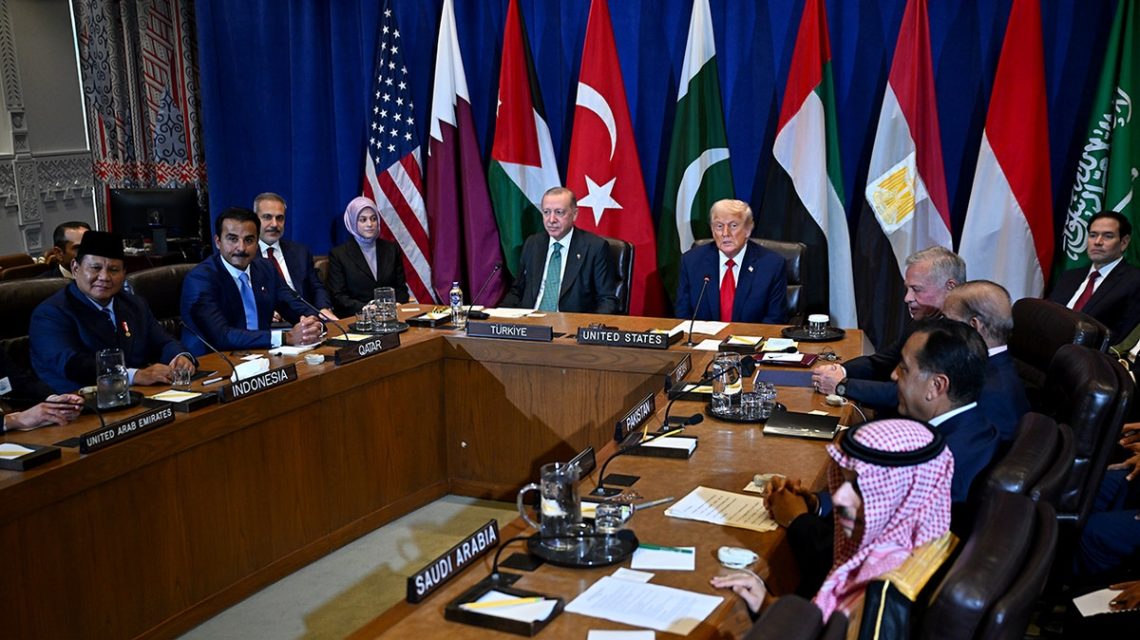
The Middle East will be a primary focus during the United Nations General Assembly’s annual debate in New York. Leaders from Jordan, Türkiye, Qatar, Egypt, and Israel will participate. These leaders, along with important Washington allies, face the challenge of outlining the region’s future amid ongoing conflicts with Iran, Houthi attacks, and the uncertain situation in Gaza.
U.S. President Donald Trump plans to meet with Gulf leaders on the sidelines of the UN meeting to discuss the Iran conflict and regional security. U.S. Ambassador Mike Waltz emphasized the importance of hearing Gulf leaders’ concerns, highlighting the meeting as a key diplomatic opportunity.
The war with Iran has shifted the strategic dynamics in the Middle East, creating potential for new energy partnerships and stronger collaboration between Israel and Arab countries,remarked Rich Goldberg, a senior adviser at the Foundation for Defense of Democracies.
Goldberg proposed a pipeline network carrying Gulf energy to the Mediterranean could reduce dependence on shipping routes vulnerable to disruption, such as the Strait of Hormuz, facilitating energy links between Saudi Arabia, Israel, and potentially connecting Qatar to the Mediterranean.
However, the threat extends beyond Hormuz, with Houthi offensives along Yemen’s Red Sea coast raising concerns over the Bab el-Mandeb chokepoint. Analysts from the Washington Institute noted that these attacks have destabilized the western coast of Yemen.
Diplomatic Challenges on Gaza and Beyond
Gaza remains a diplomatic challenge, with varying views on Palestinian statehood and the territory’s future. A joint statement from several countries, including Jordan, Egypt, and Qatar, opposed the forced displacement of Palestinians and reiterated support for a Palestinian state along pre-1967 borders.
In another joint statement, France, Britain, and Canada expressed plans to ban imports from Israeli settlements and pursue actions against them, emphasizing the pursuit of a two-state solution.
Palestinian President Mahmoud Abbas has been denied a U.S. visa again, leading to the General Assembly voting to allow his address via video. Israeli Prime Minister Benjamin Netanyahu is attending, despite Israel facing reduced international support as shown by recent surveys.
The U.S. must navigate maintaining regional security alliances, while addressing contested issues like Gaza, balancing its role among allies and adversaries.
Publicly, there may be criticisms regarding Israel and calls for Palestinian statehood, but behind closed doors, discussions will center on U.S. security assurances and the next steps in energy and strategic infrastructure,Goldberg predicted.
Goldberg believes that substantial talks will happen off the record, addressing how the U.S. can facilitate normalizing relations with Israel, alongside making necessary energy and security arrangements.
 Democrats Gain Trust on Economic Management
  U.S. Secures New Greenland Security Agreement
  Criticism of NYC’s Office of Mass Engagement
  Senator Calls for Investigation into Donald Trump Jr’s Affairs
  Diesel Prices Hit Record Highs Amid Global Tensions
  Trump Administration Sparks Outrage by Threatening Kennedy Center Closure