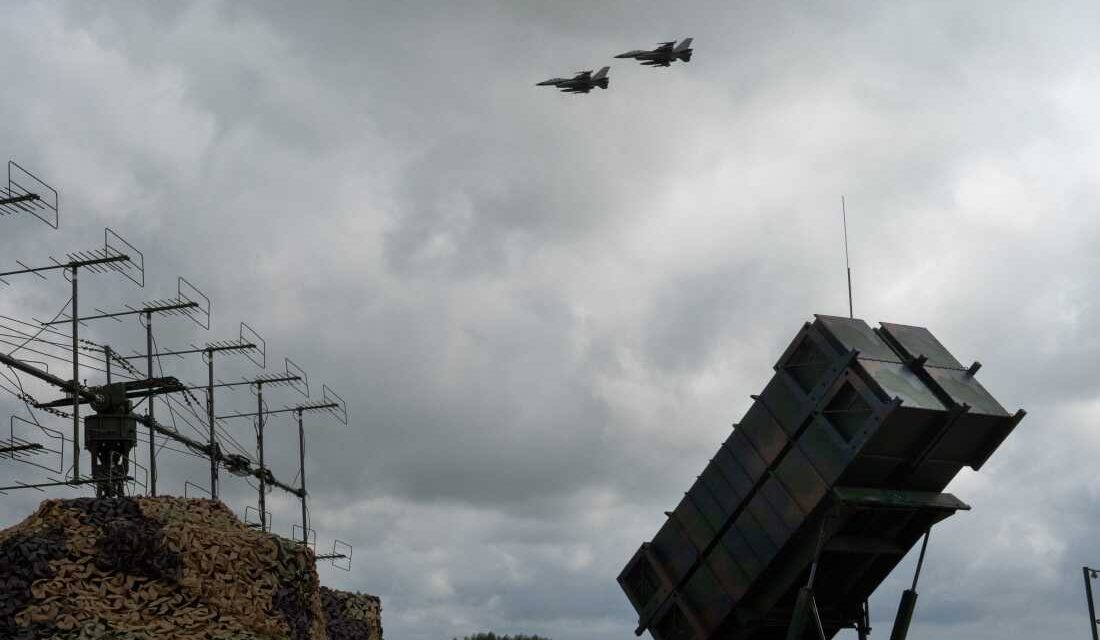
On August 4, 2024, F-16 fighter jets of the Ukrainian Air Force soared over a Patriot air and missile defense system situated in an undisclosed Ukrainian location. Despite technological advancements, Ukraine faces serious challenges as Russian forces carried out an intense air assault, launching 27 ballistic missiles on Kyiv early Saturday morning.
The overwhelming attack resulted in the deaths of nine individuals and injuries to over 30 people. The Ukrainian military’s defense faltered, with only one missile being intercepted. This was due to the insufficient number of available interceptors for the Patriot systems. President Volodymyr Zelenskyy underscored the urgency for more Patriot interceptors via social media.
Ukraine’s Defensive Needs
The U.S.-made Patriot system stands as Ukraine’s best line of defense against Russian missile threats. However, Ukraine’s defense capacity against similar attacks remains compromised. There is an immediate need for a fresh supply of interceptors, but concerns surround U.S. stockpiles, which have diminished significantly due to the ongoing war with Iran.
In June, U.S. Defense Secretary Pete Hegseth refuted claims of a Patriot missile shortage as a ‘manufactured story.’ Yet, replenishing these stockpiles, as reported by the Center for Strategic and International Studies in July, continues to pose a substantial challenge. The U.S. reportedly had over 2,300 Patriots before its engagement in Iran, now down to around 800.
Patriot System’s History and Production
Patriot systems, introduced by the U.S. military in the 1980s, first gained notoriety during the 1991 Gulf War. Today, nearly 20 global allies employ Patriots for defense. However, increased missile attacks by Russian and Iranian forces have outpaced the production of interceptors.
Raytheon, now known as RTX, along with Lockheed Martin, are the primary manufacturers of Patriot components. They plan to boost production but currently produce fewer than 1,000 missiles annually. This output proves inadequate under the heightened demand triggered by the Russia-Ukraine and U.S.-Iran conflicts.
Ukraine’s Appeal for Support
Since acquiring Patriot systems three years prior, Ukraine has effectively mitigated some of the damage inflicted by Russian strikes. The country repeatedly requests additional systems and accompanying missiles. Rob Lee, a U.S. military analyst, emphasizes the critical nature of securing more Patriots to address the ‘big stockpile problem.’
Zelenskyy urged global partners to send Patriots to Ukraine instead of reserving them for hypothetical scenarios. No nations have publicly committed additional support.
Challenges in Missile Production
Recently, former President Donald Trump initially expressed readiness to grant Ukraine a license to produce Patriots. However, he later withdrew, citing the complexity of sharing such technology. Despite backing from figures like Rep. Don Bacon, who sees production rights as a means to alleviate supply shortages, the materialization of this support is constrained by an already strained supply chain.
Germany and Japan are the only countries currently licensed to manufacture Patriots. Meanwhile, the U.S. relies on the THAAD (Terminal High Altitude Area Defense) system but reserves its distribution largely to Saudi Arabia and the UAE.
The growing missile requirements and bureaucratic challenges raise concerns about the timeline for bolstering Ukraine’s defense capabilities. The U.S. faces its own depletion of THAAD stockpiles, previously reduced during the Iran conflict, revealing wider strategic vulnerabilities.
Reporters Greg Myre in Kyiv and Tom Bowman in Washington contributed to this coverage.
 Ontario Synagogue Shooting During Yom Kippur
  Pope Leo XIV’s Upcoming Visit to Latin America
  Ukraine Deploys Ground Robots in Operation Vivaldi
  State Department’s Renewed Travel Warning for Middle East
  Impact of War on U.S. Military Families in Bahrain
  Princess Diana’s Brother Responds to Buckingham Palace’s Denial of Conversation with King Charles III