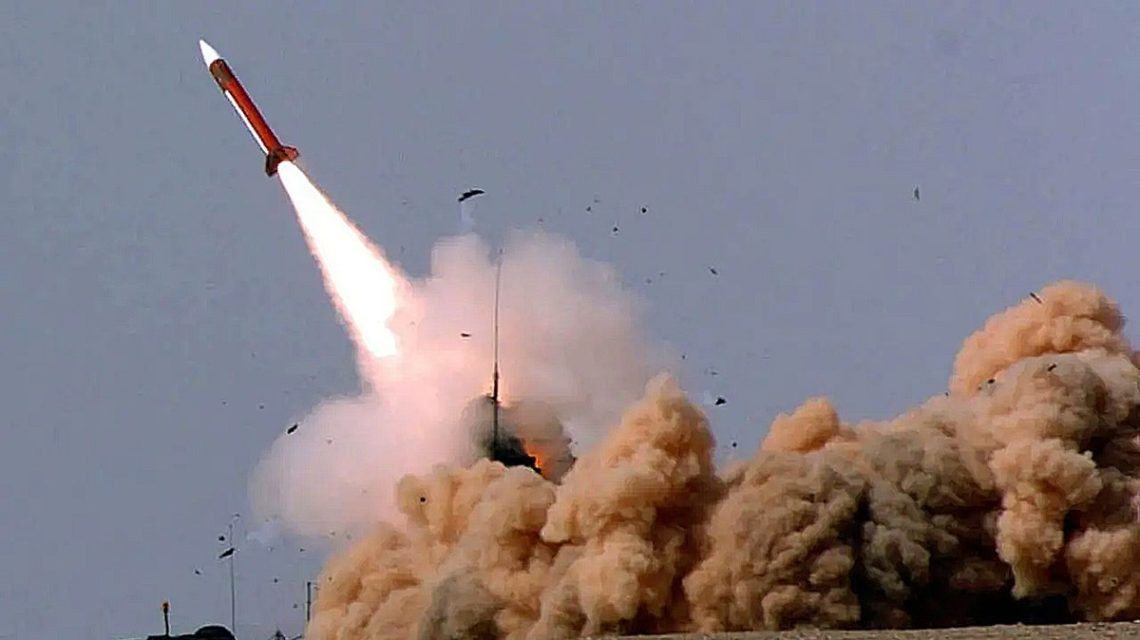
The Pentagon is grappling with a critical issue after several months of conflict with Iran: the depletion of America’s missile defense interceptor reserves. This challenge has prompted military officials to reconsider the sustainability of current limited retaliatory measures.
According to the Center for Strategic and International Studies, U.S. Patriot interceptor stocks have dwindled from around 2,300 pre-war to fewer than 827. THAAD interceptor numbers have decreased from 452 to below 278. A Patriot missile’s launch during the annual U.S.-Israeli Juniper Cobra air defense exercise highlights this strain. CSIS cautions that replenishing these stocks might take over three years, raising concerns about defending U.S. forces globally, especially if another major conflict breaks out, for instance, in the Pacific.
“If you look at what we’ve expended for the Patriots, for example, over half the global inventory has now been consumed in the Middle East,” noted Kelly Grieco, a missile expert at the Stimson Center. “This leaves us with little excess for other theaters, such as defending U.S. forces in Europe or the Indo-Pacific. It’s a significant constraint on U.S. capabilities.”
The Pentagon’s emergency funding request for fiscal year 2026 totals $67 billion, including $18.2 billion to replace advanced weapons like Patriot missiles, Navy Tomahawks, and THAAD. Jerry McGinn from CSIS highlights the challenge of scaling production for these intricate systems, which take two to three years from contract award to completion due to their complexity.
Recent Pentagon meetings have addressed these concerns. They gathered top defense firms to discuss replenishing U.S. weapons stocks, prompting questions about scaling production capacity. Companies have been involved in prototyping but face challenges in producing at scale for government needs.
Brandon Tseng, founder of SHIELD AI, attended one such meeting. He discussed the growth of his company, which started over a decade ago during a time when Silicon Valley hesitated to collaborate with the Pentagon. Tseng’s V-BAT system, used in Ukraine, exemplifies the shift toward innovative, cost-effective military technology.
Meanwhile, in Ukraine, defense tech startups test and refine their weapons under wartime conditions. An example is Tseng’s V-BAT, operating effectively even when GPS or communications are disrupted.
“It’s a scaled-down version of costly aircraft like the Predator but at a fraction of the price,” Tseng said, demonstrating the impact of new technologies in modern warfare.
The ongoing conflict with Iran has prompted discussions on broader military strategies. CENTCOM Commander Adm. Brad Cooper has proposed a focused air campaign to diminish Iran’s missile capabilities. Iran aims to exhaust U.S. resources by targeting U.S. bases, necessitating the use of valuable interceptors.
This strategy poses a long-term challenge to U.S. interests. As Kelly Grieco observed, “Iran fundamentally believes U.S. interests are limited in this war, while Iran views it as existential. By increasing the costs for the U.S., they hope to discourage further involvement.”
 Ukraine Missile and Drone Barrage Hits Russia Amidst Elections
  U.S. Strategic Goals Remain Unmet Amid Prolonged Conflict
  New Photos Reveal Damage from Iranian Strikes in the Middle East
  Assassin of Chilean Diplomat Orlando Letelier Faces Deportation 50 Years After Assassination
  Gorillaz and Macklemore Respond to Controversy Over Israel-Palestine Statements
  Investigation into Lion Deaths in Tanzania