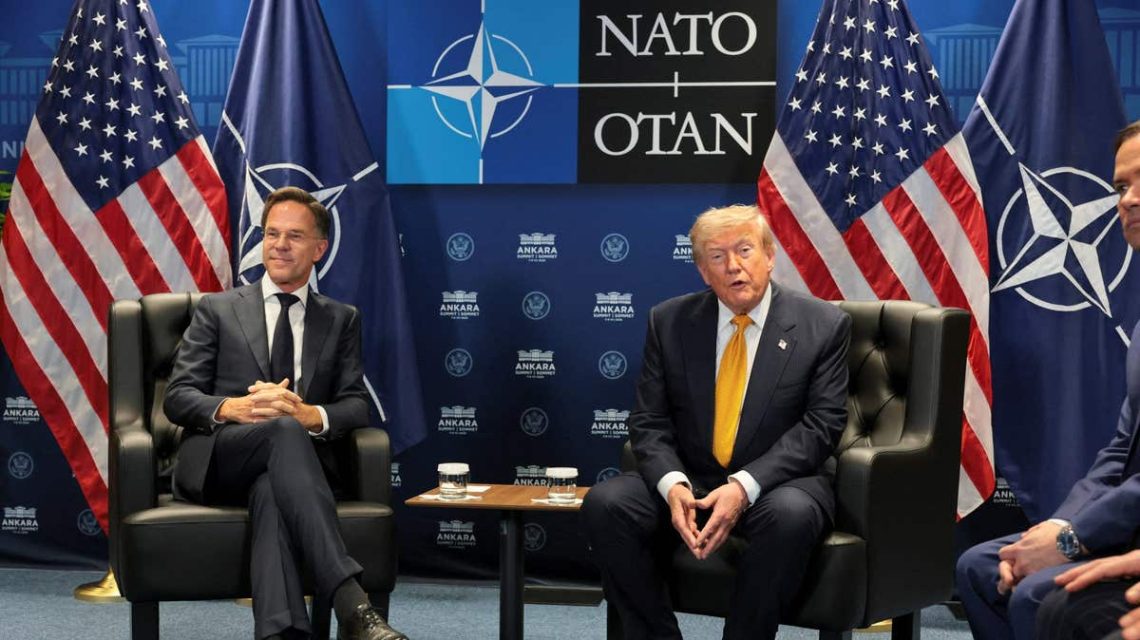
Reports have emerged that President Donald Trump discreetly transferred to a military jet during last month’s NATO summit in Turkey, highlighting a rare security trade-off. Amid a credible threat from Iran, Trump was shielded while White House staff, Secret Service agents, U.S. Military members, and journalists remained on a decoy aircraft.
The White House has not commented on whether any risk assessment was made for those left aboard the plane, potentially including Secretary of State Marco Rubio. Uncertainty remains regarding protective measures for them.
Air Force One is a call sign for any plane carrying the U.S. president, not specific to a particular aircraft. A report from The Washington Post revealed that Trump had switched to a military jet after initial appearances of boarding the older Air Force One in Turkey. Journalists and White House staff continued on the aircraft to the United Kingdom, later reuniting with Trump before returning home.
A report from the Wall Street Journal noted that Israeli intelligence alerted Trump’s administration about a threat involving shoulder-fired missiles targeting Air Force One, with Rubio among top aides remaining aboard the older plane.
Former Secret Service agent Bill Gage expressed that those aboard the aircraft ‘probably did face an elevated risk’ but described it as a calculated response to the threat surrounding Trump’s travels.
Gage emphasized the inherent risks associated with presidential travel, noting the calculus involved in not revealing the operation to those on the decoy Air Force One.
The threat apparently targeted the plane presumed to carry Trump, leaving others as potential collateral in case of an attack, with no public acknowledgment of additional protection for them given the heightened threat environment.
Journalists on the older Air Force One from Turkey to the UK recall closing their window shades as the plane took off. Later queried about this by reporters, Trump stated, “You’re probably on a dangerous flight because of the sleaze bags that we have to deal with.”
Trump humorously remarked that if any harm came to him, it would also affect the reporters, suggesting they might consider changing professions.
Former senior Secret Service official Robert “Bobby” McDonald stated that deceptive presidential movements, sometimes referred to as “shell games,” are rare but employed when intelligence demands extraordinary measures.
McDonald highlighted that the Air Force is responsible for presidential aircraft protection, indicating disbelief that the planes weren’t being tracked or escorted.
The Pentagon and the Air Force directed inquiries to the White House.
Trump’s maneuver is not unprecedented. During President Bill Clinton’s 2000 visit to Pakistan, a marked decoy aircraft was used, while Clinton landed separately on an unmarked plane.
The Turkey operation differed from traditional surprise trips, typically involving a small press pool under oath of secrecy.
CNN anchor Jake Tapper observed this operation differed from prior evasive maneuvers, emphasizing that previous administrations haven’t employed a decoy full of White House staff and journalists during an imminent threat.
Former White House press secretary Ari Fleischer defended the strategy, considering it crucial if the threat was credible.
Fleischer reiterated defense towards the reported actions taken to protect the president’s life, acknowledging the press’ potential deception but affirming the necessity of security measures.
 Severe Malnutrition Surges in Somalia Amid Aid Cuts and Drought
  Unveiling Jude Hall’s Legacy in Washington D.C.
  Trump Intensifies Economic Pressure on Iran Amidst Conflict
  American Veteran Released from Russian Detention
  Bashar al-Assad Sentenced to Death by Damascus Court
  Colombia Searches for Missing After Devastating Earthquake