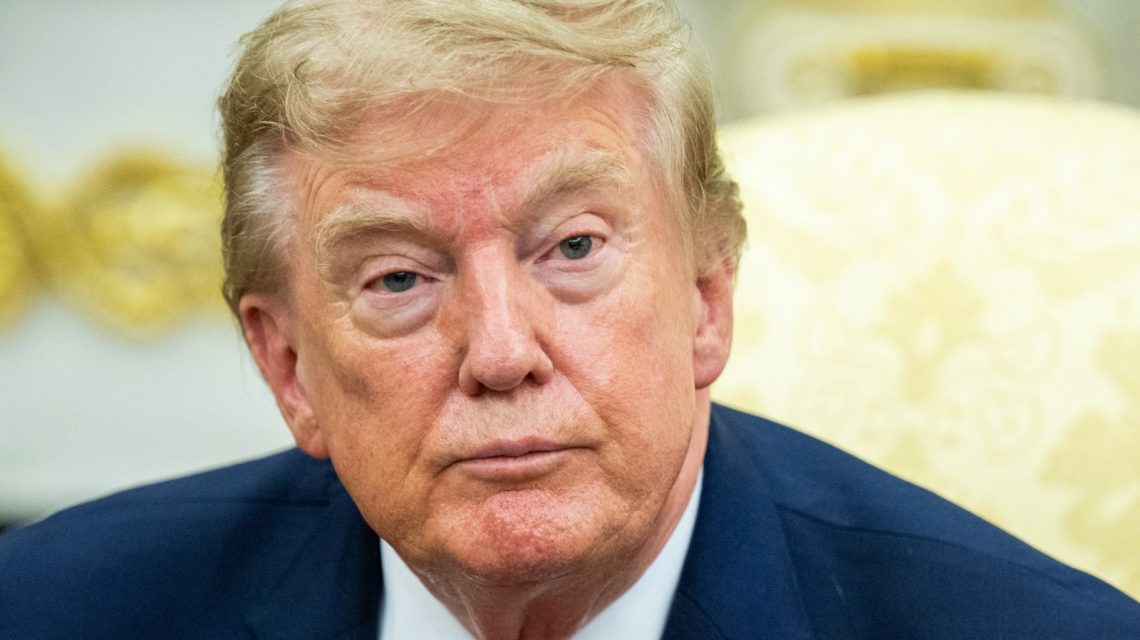
President Donald Trump recently criticized polling practices, referring to ‘fake polls’ as his approval rating continues to slide amid efforts by Democrats to challenge his policies in the upcoming midterm elections. Historically, a president’s low approval rating has been detrimental to their party during midterms, typically resulting in lost seats.
Throughout the pre-election period, key issues such as the economy and foreign policy have influenced public opinion toward Trump. His focus on affordability during the 2024 campaign facilitated his return to office, but persistent inflation and dissatisfaction with his economic policies have eroded public support according to recent surveys. Additionally, the Iran conflict has impacted gas prices and further affected his standing.
Trump Denounces ‘Fake Polls’
On Truth Social, Trump blamed the ‘Radical Left Democrats’ for disseminating misleading polls. He claims these polls aim to demoralize Republican voters and discourage participation. Nonetheless, he believes ‘actual’ polls reflect positively on his administration, asserting nation-wide enthusiasm remains high.
Trump’s Approval Rating: Current Status
Since reassuming office in January 2025, Trump’s approval rating has dropped considerably. A recent Reuters/Ipsos poll reported a disapproval rate of 65 percent from its 1,215 adult respondents between August 21 and 24, 2026, with a margin of error of ±3 percentage points. Echelon Insights’ survey last week indicated 59 percent disapproval among 1,002 likely voters. YouGov/The Economist polls showed similar trends with only 35 percent approval.
Morning Consult figures presented a slightly better scenario, with 43 percent approval and a margin of error of ±3.4 percentage points. Civiqs tracks approval by state, revealing fluctuations across states with some previously Trump-favorable states now reflecting disapproval.
Comparison to Trump’s First Term
Trump’s current approval falls short of his first term figures. RealClearPolitics’ aggregate displays an approval of 39.5 percent and 57.2 percent disapproval, contrasting with his August 2018 figures. Comparatively, Joe Biden’s August 2022 approval was slightly higher.
Impact on Midterms
Analysts predict Trump’s low approval rating may pose challenges for Republicans in defense battles during the midterms. Democrats aim to extend their influence, considering a possible House victory due to the Republicans’ narrow multipart majority. However, gaining Senate control presents greater difficulties.
Democrats believe Trump’s unpopularity enhances their chances in traditionally conservative states. Prediction markets like Kalshi and Polymarket reflect Democrats’ favorable probability for controlling the House, although the Senate remains uncertain.
Democrats’ optimism is fueled by historical midterm trends under previous presidents. During Biden’s term, Republicans made minimal gains compared to Trump-era elections.
Tracking Future Developments
Monitoring Trump’s approval rating presents valuable insights into public sentiment as the November 2026 midterms approach. Economic issues and the Iran conflict will likely play significant roles in shaping Trump’s support. Voters’ perceptions could sway electoral outcomes.
 UN General Assembly and Middle East Diplomacy Amid Rising Tensions
  Criticism of NYC’s Office of Mass Engagement
  Senator Calls for Investigation into Donald Trump Jr’s Affairs
  Diesel Prices Hit Record Highs Amid Global Tensions
  Trump Administration Sparks Outrage by Threatening Kennedy Center Closure
  DNA Investigation Confirms Thomas Jefferson’s Lineage