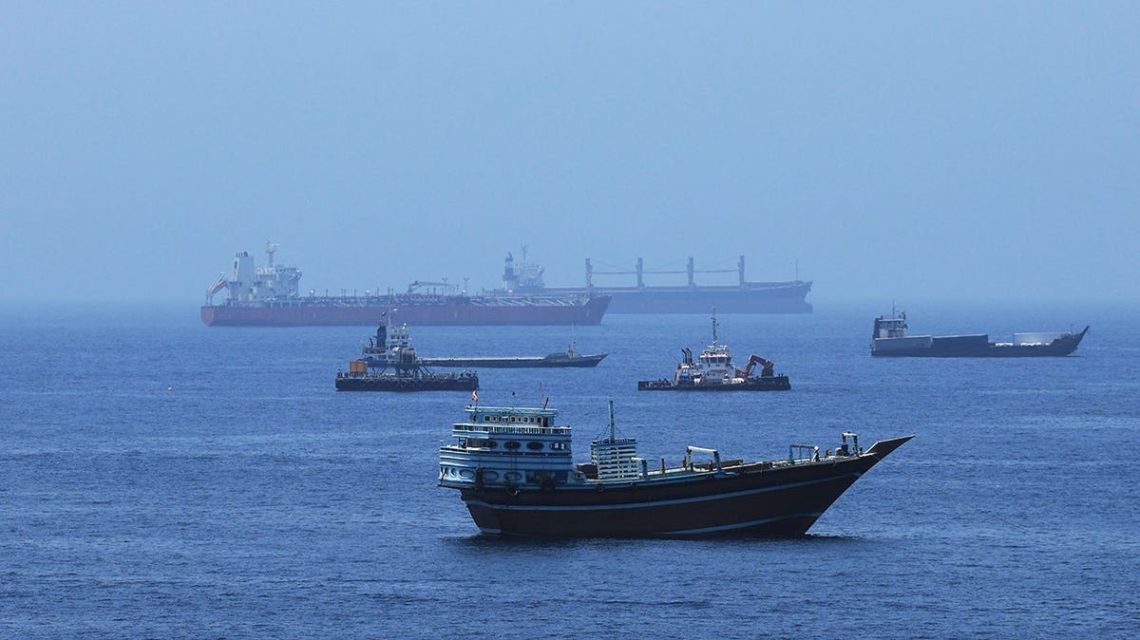
President Donald Trump has proposed the idea of declaring the Strait of Hormuz as a U.S. territory to secure vital oil passageways against Iran. The move comes amid discussions of a framework that may exclude military vessels, pushed forth by Iran and Oman.
Samir Kapadia analyzed the legal implications and economic risks on ‘Mornings with Maria’. He discussed potential maritime shipping tolls and U.S. sanctions’ impact on Middle Eastern trade.
Iran does not control the Strait of Hormuz. The strait is an international waterway where commercial vessels transit with U.S. military assistance.
This was stated by Capt. Tim Hawkins, spokesperson for U.S. Central Command. The Trump administration previously challenged Iran’s efforts to dictate passage through Hormuz, with Secretary of State Marco Rubio labeling any proposed toll system as illegal.
In response, the U.S. expanded sanctions through Operation Economic Outcast. Military and economic pressure intends to reopen the strait on U.S. terms. American forces have targeted Iranian military assets and maintained a blockade on Iranian ports, alongside securing commercial shipping.
Current oil flow through Hormuz is approximately 5 million barrels per day, down from pre-war levels of 20 million barrels, according to tracking data. Iran aims to maintain control via a joint temporary navigational corridor and mine-clearing project proposed with Oman.
The proposed arrangement directs commercial ships through Iranian and Omani waters, excluding military vessels if finalized. Despite the framework announcement, key terms remain unresolved, including revenue sharing.
Iranian officials have outlined that outbound commercial ships will transit through Iranian and Omani waters under the temporary arrangement. The framework awaits finalization, keeping important questions open regarding American military access.
 The Impact of Arts and Closure on Democracy
 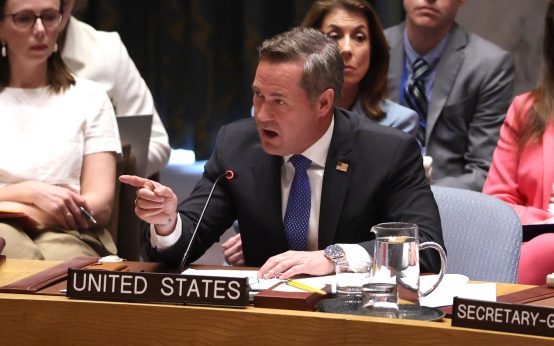 U.S. Ambassador Comments on Iran War Duration Amid Political Concerns
 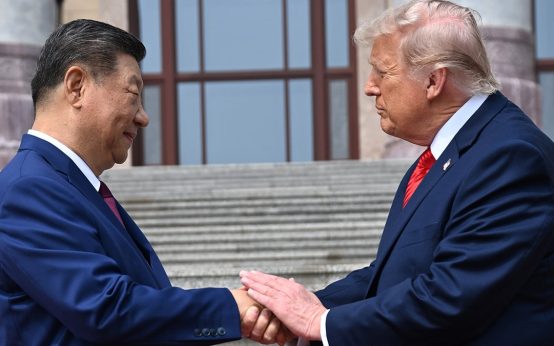 US-China Relations Under Scrutiny: Expert Warns of Escalating Tensions
  No Timeline for End of Iran Conflict
 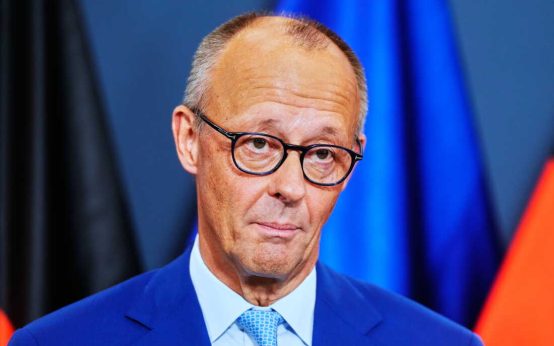 German Chancellor Merz Vows to Pursue Reforms Despite Election Setbacks
 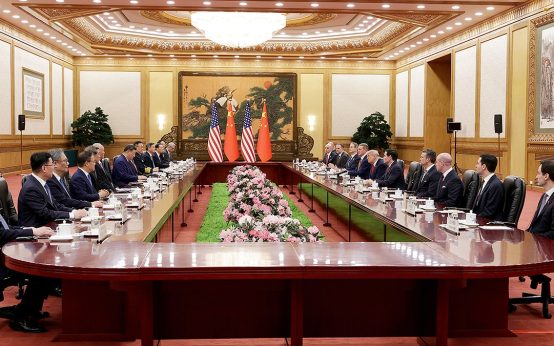 The Technology Rivalry: Trump’s Meeting with Xi and the AI Ecosystem Clash