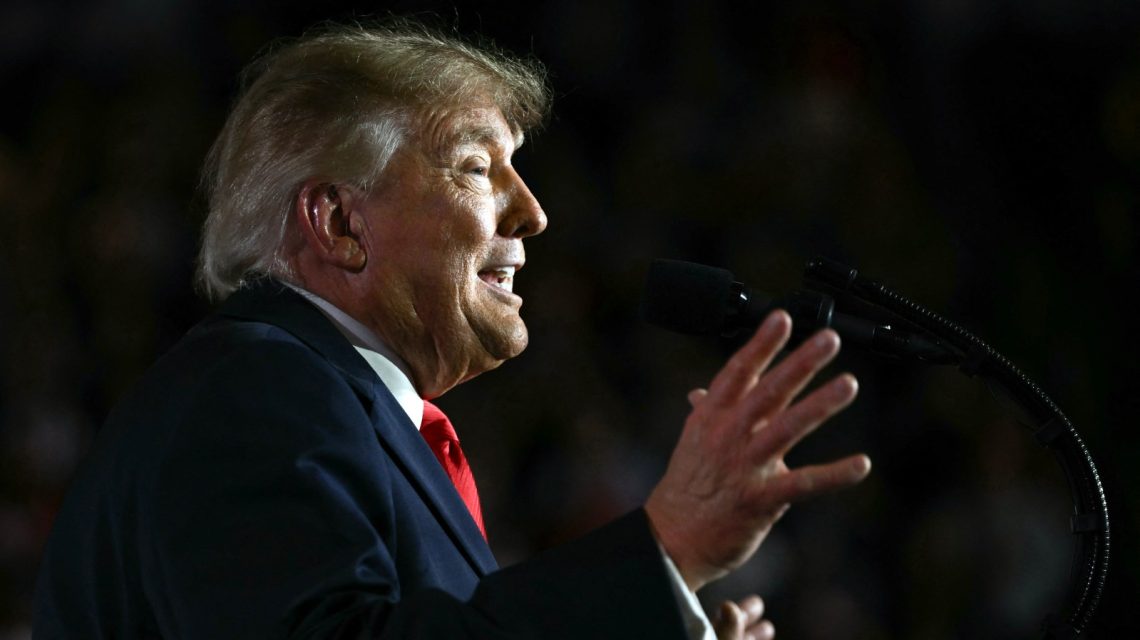
President Donald Trump has signaled a shift towards a more conciliatory stance with Canada as both nations prepare for trade discussions. This dialogue comes amid U.S. economic concerns that are crucial in the lead-up to Tuesday’s midterms.
Canadian Prime Minister Mark Carney announced via a post on X that he had conversed with Trump about resolving their prolonged trade dispute. Officials from both countries are ready to pursue continued negotiations.
Trump confirmed the conversation, indicating that a resolution might be close after months of tariffs and disagreements have affected the relationship between the nations.
The talks are timely for the president. Americans are voting in high numbers ahead of Election Day on November 3. The cost of living is a major concern, and Trump’s economic policies are facing scrutiny.
The tariffs on Canadian goods, intended to safeguard American industries and secure improved trade terms, have led to issues for U.S. businesses reliant on cross-border trade.
Carney described his conversation with Trump as productive. The two discussed an agreement that aims to support jobs, improve affordability, and protect Canada’s sovereignty. “Our teams will now work in the coming weeks to achieve this,” Carney stated.
Trump, while speaking in Iowa, also showed optimism. “We have the concept of a very good deal with Canada,” he noted. He suggested that an agreement could benefit American farmers and hinted at reviving the Keystone XL oil pipeline, previously halted by President Joe Biden.
No agreement terms have been disclosed, and negotiations are expected to continue past Tuesday’s election. The open dialogue represents a shift from the confrontational interactions that have characterized relations this year.
Earlier, Canada withdrew from negotiations in August due to American demands that threatened Canadian sovereignty, French-language protections, and the auto industry.
Trump then imposed 50 percent tariffs on about $20 billion worth of Canadian goods, resulting in Ottawa’s retaliatory measures. The tariffs have impacted industries on both sides of the border.
Many U.S. manufacturers rely on Canadian steel, aluminum, and automotive components, while farmers and exporters need Canadian customers. The tariffs raised costs for American businesses importing Canadian goods and made some U.S. products costlier for Canadians.
The trade dispute is especially sensitive in key midterm races, like Michigan, where the auto industry heavily depends on cross-border operations.
For Trump, resolving tariff tensions could be crucial politically. A Reuters/Ipsos poll from October 26 showed his approval rating at 32 percent, while 73 percent of respondents viewed the cost of living as worsening.
Democrats lead Republicans 47 percent to 36 percent among registered voters in the polls. Inflation pressures are evident with consumer prices rising 3.7 percent over the year to September, and gasoline prices up 9.1 percent for the month, according to the Bureau of Labor Statistics.
Consumer confidence has also dropped. The University of Michigan’s consumer sentiment index fell to 48.0 in October from 53.6 last year.
Trump insists tariffs will bolster American manufacturing, protect jobs, and improve Washington’s bargaining power. Yet, they have led to greater costs and uncertainty, especially for U.S. firms with supply chains across the Canadian border.
A potential agreement with Ottawa might relieve some pressures, although concessions remain uncertain.
While Trump’s language is more positive, Canada has shifted focus beyond the U.S. for future economic growth. Carney has committed to doubling Canadian exports to non-U.S. destinations over the next decade, although Canada’s economy is highly linked to the U.S., with around 70 percent of exports going south.
It is yet to be seen if Trump’s new approach will lead to a firm agreement between the two neighboring nations.
 Trump Dismisses Third Impeachment Prospects
 Custody Dispute Involving Rep. Max Miller Delayed
 Attorney General Addresses Post-Midterm Democratic Threats
 Senator Elizabeth Warren and the Future of Crypto Regulation
 Bipartisan Opportunities in Foreign Policy
 Political Shifts and Concerns Post-Midterms