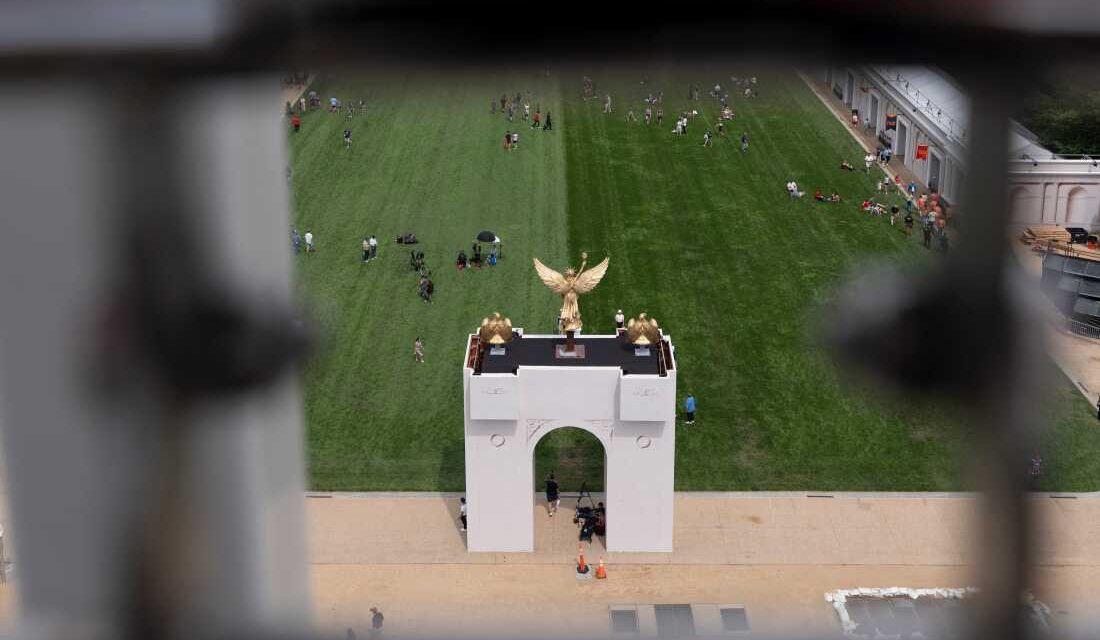
The Trump administration seeks to revise regulations surrounding historic preservation, aiming to bypass current procedural hurdles. The proposed changes involve weakening federal oversight of construction projects affecting historic sites. This initiative could impact historic and cultural sites across the U.S., raising concerns among preservation advocates.
Greg Werkheiser, from Cultural Heritage Partners, underscores the importance of protecting historic and culturally significant sites, which numerous Americans treasure. The National Register of Historic Places includes more than 1.8 million properties, covering various forms like houses, burial grounds, and landscapes. The effort to reduce protections, Werkheiser argues, threatens these cherished places.
Current law, under the National Historic Preservation Act of 1966, Section 106, requires federal agencies to assess the effects of new projects on historic areas. Agencies must consult affected parties, including preservation groups and local governments, examining potential adverse effects and exploring mitigations. The Advisory Council on Historic Preservation, largely featuring Trump appointees, now aims to dilute this review process.
With a majority controlled by Trump appointees, council members are likely to endorse revisions to Section 106. The proposed changes redefine what sites qualify as historic, make public comments optional, and remove consultation requirements with Native American tribes, potentially allowing projects that could damage historical resources to proceed unchecked.
The revisions, if passed, would undergo final steps in the federal rulemaking process, including a public comment phase. Despite criticism, Werkheiser believes the vote is a ‘foregone conclusion,’ setting up a legal battle to halt these changes. The National Trust for Historic Preservation warns that sites like the Grand Canyon could lose protection under the new language.
The Trump administration’s motivation stems from post-World War II urban renewal efforts that erased landmarks like Penn Station and devastated Black neighborhoods, causing backlash and leading Congress to pass the preservation law. The administration argues the current regulations lead to confusion, slowing federal projects.
The revisions would exclude landscape features from protection, dismissing indirect or cumulative effects from consideration. This shift lets agencies compile reports without involving third parties throughout the process, risking large-scale destruction of historic sites.
The changes eliminate public input, replacing ‘consent of the governed’ with unilateral decision-making. Critics like Charles Birnbaum from The Cultural Landscape Foundation equate these revisions with urban renewal tactics that historically demolished communities.
Simplifying the review process aids Trump’s projects, such as the proposed 250-foot arch near Arlington Cemetery. Critics caution against focusing solely on D.C., as the changes’ implications span nationwide.
Preservation organizations like the National Trust for Historic Preservation and the National Conference of State Historic Preservation Officers oppose these revisions. Elizabeth Merrit of the Trust warns they will cause widespread disruption, curtailing productive consultations.
Some experts, including Werkheiser, argue existing review processes offer predictability and foresight for developers. The push to speed up the procedure could deprive future generations of irreplaceable historical legacy, Werkheiser insists.
Public opposition during the comment period and direct communication with legislators is crucial, says Werkheiser. Historic preservation, he emphasizes, is a bipartisan concern uniting communities regardless of political affiliation. Congress may consider strengthening Section 106 through legislation, with Senate Democrats urging the council to collaborate with Tribes and states on improved proposals.
 American Public Opinion on Press Freedom
  Media Lawsuit Against Trump Administration for White House Ban
  The Cost of Challenging Beijing
  Analyzing Midterm Elections and Party Dynamics
  Allan Lichtman’s Framework for Assessing Presidential Greatness
  Florida Senate Race Tightens as Recent Polls Show Dead Heat