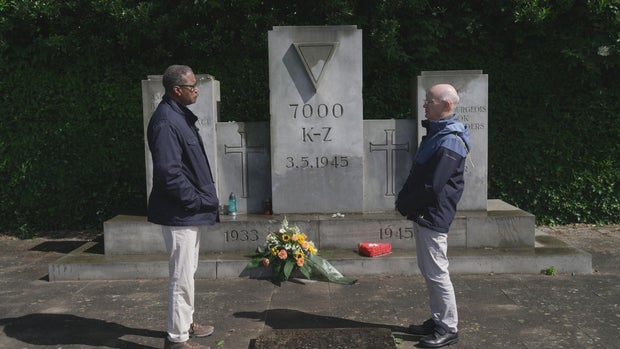
The Cap Arcona, a German ocean liner akin to the Titanic, is less known but equally tragic. Before World War II, it was a luxury cruise ship for affluent travelers. As the war ended, the Nazis turned it into a floating concentration camp. It became the site of a disastrous aerial attack in Lübeck Bay, killing nearly all onboard just hours before liberation.
The Historical Context
On Germany’s Baltic coast, a marker commemorates the Cap Arcona. It lists fear, panic, and grief in stark German words. British historian Bill Niven notes the serene landscape belies its dark past as a grave site.
“It’s so calm, so peaceful. And yet out there is a graveyard.” – Bill Niven
Niven has researched the Holocaust extensively and recalls how Lübeck Bay’s memory still resonates today. The bay was a Nazi stronghold and witnessed the tragic end of the Cap Arcona and a smaller vessel on May 3, 1945. Together, they took nearly 7,000 lives from diverse nationalities, including Jews, Italians, and Americans.
Remembering the Past
Every May 3rd, a somber ceremony honors the victims. Survivors and their families gather to reflect. Bruno Neurath-Wilson visits to pay tribute to his father Willi, a political prisoner aboard the Cap Arcona. Only about 400 survived, including his father.
The Cap Arcona launched in 1927 as the “Queen of the Atlantic,” offering two-week voyages between Europe and South America. It featured lavish amenities like a tennis court and swimming pool. However, the rise of Hitler in 1933 marked a turning point.
War and Transformation
By 1939, the Nazis repurposed the ship as barracks. In a grim irony, some German Jews had previously used the liner to escape to South America. While fortunate, many had no avenue for safety.
Manfred Goldberg, at age 11, faced relentless persecution. His family, taken to concentration camps, witnessed unspeakable tragedies like the disappearance of his brother Hermann.
Experiencing Loss and Survival
Goldberg’s memories of survival at several concentration camps testify to immense suffering. Stripped of identities, prisoners like him had their numbers ingrained in memory for fear of punishment.
Defiant Resistance
During this period, Bruno Neurath-Wilson’s father, not Jewish, opposed the Nazis and was detained. His journey included brutal camps like Buchenwald and Neuengamme, where forced labor prevailed.
The Fate of Cap Arcona
In 1945, as Allied forces advanced, the Nazis evacuated camps, packing masses onto floating installations. The Cap Arcona, debilitated and overcrowded, awaited an imminent disaster.
On May 3rd, British Typhoon fighters, unaware of the prisoners onboard, attacked Lübeck Bay. Billions died in an act designed to liberate them.
Survivor Accounts
Survivors shared harrowing accounts of the chaos during and after the attack. The confusion and loss remain among the most tragic events of this era.
Ultimately, despite knowing of prisoner placements before May 3rd, warnings failed to reach those executing the strike. A proposed inquiry went unheeded.
Legacy and Reflection
The Cap Arcona lay submerged for years before being dismantled. Families continue to commemorate and remind the world of its tragic fate. The story, though largely unknown, is profound in its memory.
Manfred Goldberg, whose experiences embody resilience, passed away at 95. He dedicated his life to maintaining Holocaust memory, honoring victims, and promoting peace.
 U.S. Strategic Goals Remain Unmet Amid Prolonged Conflict
  New Photos Reveal Damage from Iranian Strikes in the Middle East
  Assassin of Chilean Diplomat Orlando Letelier Faces Deportation 50 Years After Assassination
  Gorillaz and Macklemore Respond to Controversy Over Israel-Palestine Statements
  Investigation into Lion Deaths in Tanzania
  Merz Stays Resolute Amid Electoral Shifts in Germany