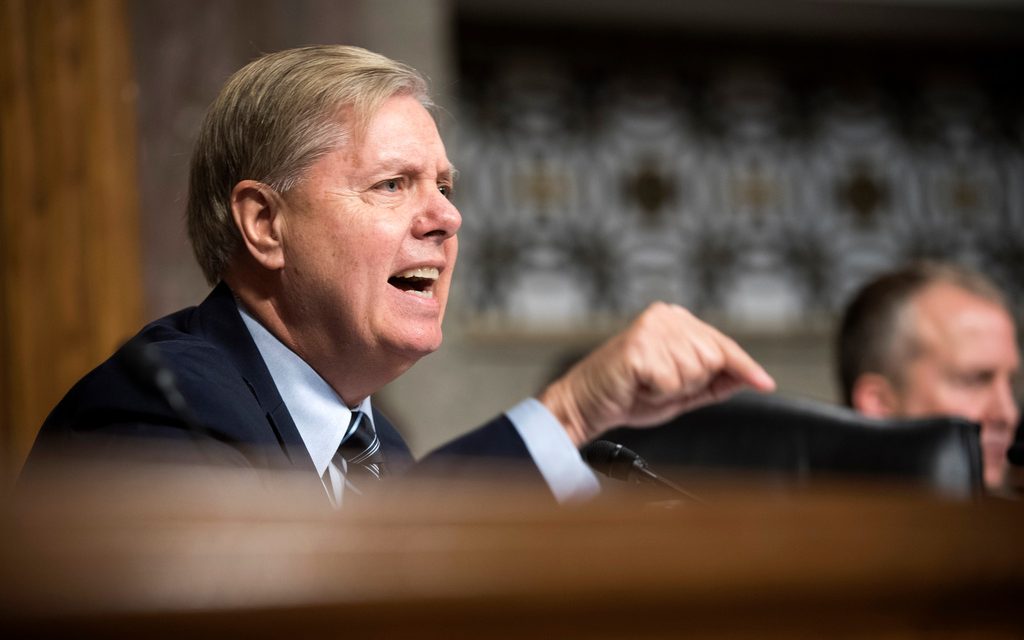
Senator Lindsey Graham, known for his robust advocacy of hawkish interventionism, has passed away. His death leaves a significant gap in the Senate. Graham was a key figure who bridged the gap between traditional Republican foreign policy and the populist “America First” approach of the current administration.
Graham’s influence extended beyond specific policies. He was adept at presenting ongoing conflicts as both moral necessities and pragmatic strategies for managing alliances. He consistently argued that Moscow and Tehran were interconnected issues, framing them as two fronts of a single anti-Western struggle. This perspective allowed him to simplify complex geopolitical challenges into a straightforward narrative of “good vs. evil.”
Graham’s strategic framing often portrayed diplomatic restraint as weakness. For instance, when advising Israeli leadership on Iran’s nuclear ambitions, he implied that military action was a logical step if it served regional stability. The recent U.S.-Iran conflict tests the principles of what could be considered the “Graham Doctrine.” The collapsing Islamabad Memorandum of Understanding and the renewed strikes following President Trump’s announcement reflect the volatile nature of the situation.
With Graham’s absence, there is a search for a replacement to fill his critical role in the Senate. Various figures, like Representatives Nancy Mace and Ralph Norman, express interest. However, none match Graham’s institutional knowledge or his ability to influence both legislative and executive branches.
The Trump administration, now managing the 2026 conflict, faces challenges without Graham’s input. Graham often reframed aggressive policy instincts into narratives of American values and global security. His ability to temper the administration’s rhetoric is lost, leaving the core intentions more exposed.
The partnership between President Trump and Benjamin Netanyahu may endure, but its presentation as statesmanship is at risk. Graham’s role added a veneer of diplomacy to their decisions. His absence means the administration must justify its strategy without this eloquent framing, making their actions harder to sell to a public tired of war.
Graham’s passing shifts the foreign policy debate. The effectiveness of the hawkish approach he championed now depends on whether his successors can package aggression with the same appeal for prudence and traditional statesmanship.
Authored by Charbel A. Antoun, a journalist specialized in U.S. foreign policy with a focus on the Middle East and North Africa.
 A Mother’s Tragic Journey Under Abortion Ban
  U.S. Strategic Goals Remain Unmet Amid Prolonged Conflict
  New Photos Reveal Damage from Iranian Strikes in the Middle East
  Assassin of Chilean Diplomat Orlando Letelier Faces Deportation 50 Years After Assassination
  Gorillaz and Macklemore Respond to Controversy Over Israel-Palestine Statements
  Investigation into Lion Deaths in Tanzania