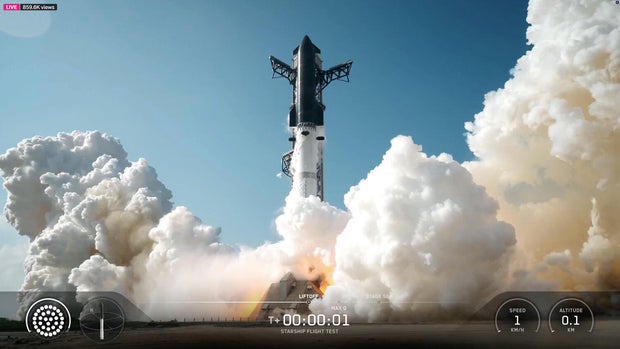
SpaceX conducted a test flight of the revamped Super Heavy-Starship rocket, aiming to evaluate enhanced engines, improved control systems, and other upgrades. During the ascent, one of the 33 Raptor 3 engines malfunctioned, impacting the climb and the plan to splash down off the Texas Gulf Coast.
First Flight of Upgraded Rocket
The launch from SpaceX’s Starbase in Texas marked the debut of the upgraded rocket, designed to enhance operational capabilities. The Starship upper stage, equipped with six Raptor engines, experienced an issue when one engine shut down early. The flight computer compensated by extending the burn time of the other engines, ensuring the craft maintained its path.
Despite engine issues, the Starship successfully deployed 22 Starlink satellite simulators. Two simulators captured images of the spacecraft, a feature useful for assessing the condition of the Starship’s heat shield on future flights.
Future Missions and Improvements
SpaceX plans to use this massive rocket to launch large numbers of next-generation Starlink satellites and various payloads. Missions to the moon and Mars are on the horizon. Multiple test flights will help refine the rocket’s functionality.
During this test, some engines failed during the booster’s return attempt. The upper stage continued its mission, reaching a sub-orbital trajectory and making a safe splashdown in the Indian Ocean. The test evaluated the Starship’s structural limits, simulating future landing maneuvers.
Milestone for SpaceX and NASA
This mission represented a significant step for SpaceX in developing a fully reusable rocket. The Super Heavy-Starship’s success is crucial for future NASA missions, including lunar landings under the Artemis program, scheduled for 2028.
NASA aims to utilize SpaceX’s vehicle to land astronauts on the moon. Currently, SpaceX and Blue Origin are working on landers, with final landings contingent on successful unpiloted missions.
The next stages include orbital missions and further tests of fuel-transfer systems for deep space missions. SpaceX anticipates conducting orbital refueling tests by year-end.