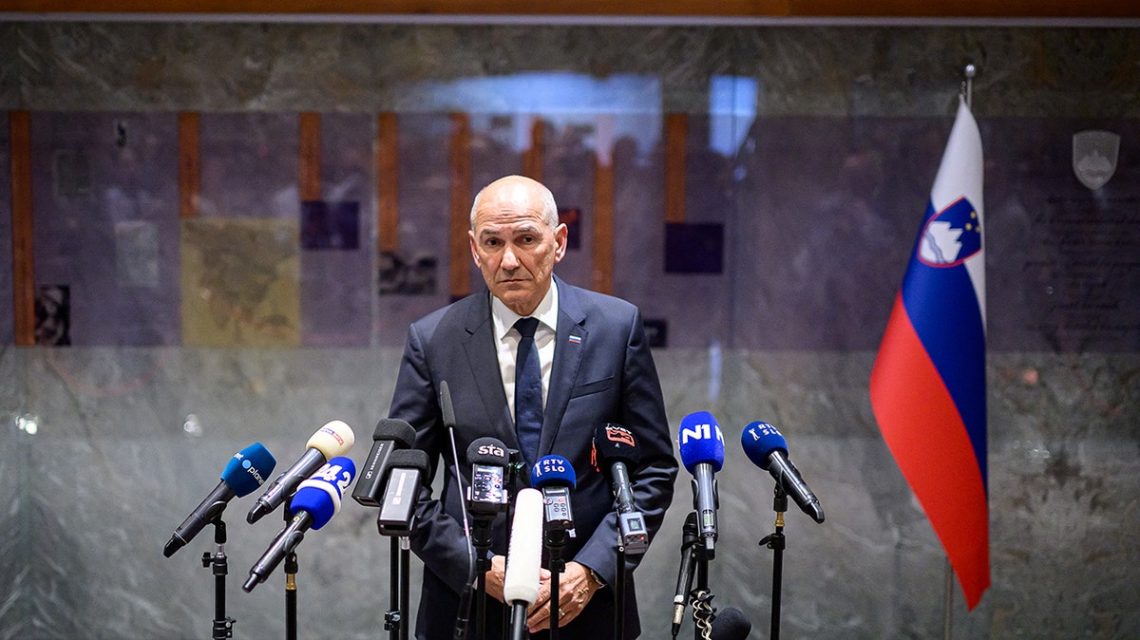
ŠKOFJA LOKA, Slovenia: Known for its ties to First Lady Melania Trump and NBA player Luka Dončić, Slovenia is witnessing significant political change. Janez Janša has taken office as the new Prime Minister, marking his fourth term. Janša formed a coalition that has replaced the leftist leader, Robert Golob.
Janša has initiated many policy changes that resemble former President Trump’s strategies. He plans to shift Slovenia’s stance on Israel by intending to move the Slovenian embassy to Jerusalem and freezing recognition of a Palestinian state. He has also revoked a planned 2025 ban on military trade with Israel.
Janša has emphasized strong U.S. relations. During an America 250 event, he highlighted America’s role as a model for Slovenian independence, aiming to position Slovenia as a land of opportunity and safety.
Domestically, Janša has promised to reverse previous policies he deems inefficient. He wants to cut government bureaucracy, support private education and healthcare, overhaul the pension system, reduce government size, and invest in infrastructure, including a second reactor at the Krško nuclear power plant.
Janša shares close ties with Viktor Orbán, former Prime Minister of Hungary, and supports Ukraine, having visited Kyiv during its conflict with Russia. He advocates for increased military support and sanctions against Russia.
On immigration, Janša holds strong anti-immigrant positions, similar to those during the 2015 European migration wave. He joined other EU leaders in calling for changes in immigration policies, focusing on reducing irregular migration and strengthening deportations.
Janša, known for his social media presence, frequently engages with his critics. He has a controversial past, including imprisonment in what he claimed to be politically motivated charges. Janša has navigated the Slovenian political system adeptly, forming coalitions even after electoral defeats comparable to losing the popular vote but winning via other means.
Slovenes voted on March 22 following Robert Golob’s four-year term. Although polls predicted a win for Janša, Golob’s party secured 29 seats in a 90-seat legislature, a drop from previous numbers. Despite fewer seats, Janša managed to form a ruling coalition in Slovenia’s complex political arena.
Janša’s political journey began before Slovenia’s independence. In 1988, he was arrested for sharing military information, leading to public outcry and his eventual release. He was a key figure in Slovenia’s fight for independence in 1991.
In 2013, Janša faced legal challenges related to a military supply contract, earning a two-year sentence. He claimed the case was politically motivated and was released after six months. The conviction was later overturned.
Janša is anticipated to visit the U.S. for the United Nations General Assembly in September, with no confirmed meetings with President Trump or the First Lady.
 Gorillaz and Macklemore Respond to Controversy Over Israel-Palestine Statements
  Investigation into Lion Deaths in Tanzania
  Merz Stays Resolute Amid Electoral Shifts in Germany
  The Impact of Arts and Closure on Democracy
  U.S. Ambassador Comments on Iran War Duration Amid Political Concerns
  U.S.-Iran Relations and Diplomacy at Upcoming U.N. Assembly