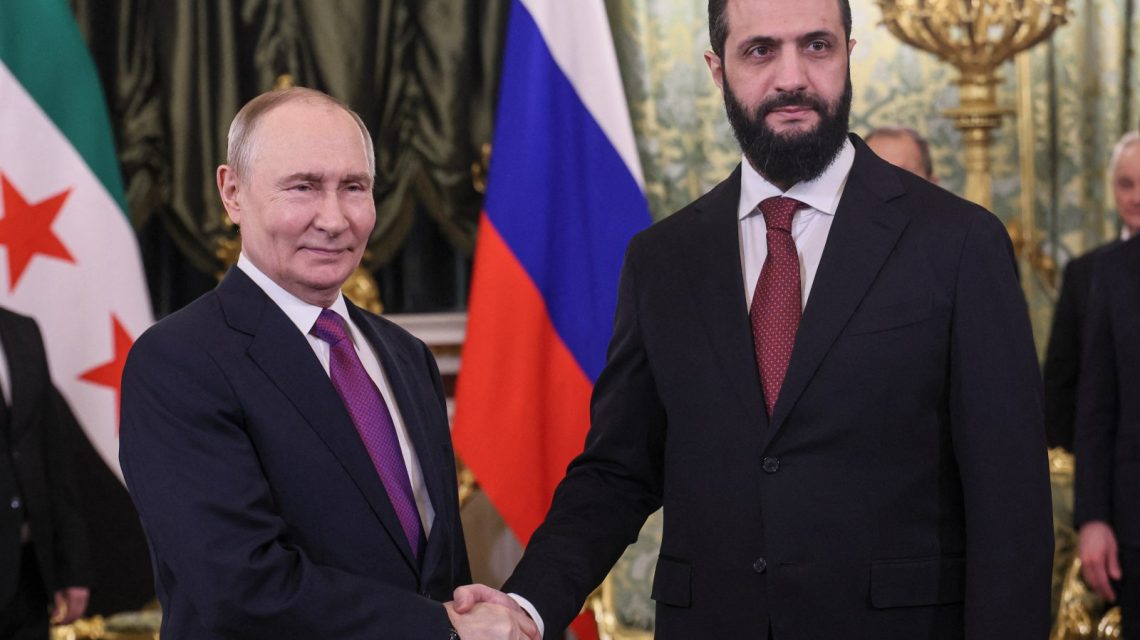
For the past two years, many believed Russia would lose its influence in Syria with the fall of Bashar al-Assad. Russia had invested significantly in military, political, and economic support to maintain Assad’s rule. However, the collapse of Assad’s regime in 2024 challenged these assumptions, particularly as Hayat Tahrir al-Sham took power in Damascus.
Despite these events, Russia has not lost influence in the region. A study by the Institute for National Security Studies in Israel indicates stronger ties between Moscow and Damascus, resulting from effective Russian diplomacy. Key efforts include shipments of wheat and fuel, diplomatic outreach, and high-level delegations, as noted in the study. Additionally, Russia offered economic and humanitarian cooperation, including rebuilding Syria’s energy infrastructure and increasing material assistance.
Russia’s support for Syria extends to military assistance, offering training and arms procurement for the Syrian army. The potential exists for limited military deployments to back Syrian forces, reflecting Russia’s historical role with Assad’s regime.
Moscow’s strategy now broadens beyond military support. The Kremlin plans to transform the Russian-leased port facilities in Tartus into a commercial logistics hub. This involves moving significant quantities of Russian goods through the port, linking Tartus directly with Russia’s Black Sea port of Novorossiysk. By doing so, Russia aims to establish a long-term commercial corridor, strengthening economic ties with Syria.
This shift represents a change in Russia’s regional strategy. Previously, Russia’s influence relied heavily on military support. Saving Assad’s regime from collapse in 2015 and maintaining naval and air base facilities in the Mediterranean were crucial. However, these assets depended on Assad’s regime’s survival.
Now, by playing a vital role in Syria’s economic recovery, Russia creates enduring relationships, impacting future leadership in Damascus. Moscow now provides 85 percent of Syria’s wheat, gaining influence over essential resources. Energy dependency has also increased; Syria imports approximately 60,000 barrels of Russian crude oil per day, about half of its energy needs.
The plan for a logistics hub would entrench these dependencies, making Russian goods central to Syria’s reconstruction. Such influence challenges Western efforts to sway Syria’s new leader, Ahmed al-Sharaa, towards the West. Although the U.S. and its allies have lifted sanctions to encourage cooperation, Russia’s role in Syria’s reconstruction, food security, and energy supply positions Moscow to shape the country’s future. History suggests these outcomes might not align with Washington’s objectives.
The article is authored by Ilan Berman, senior vice president of the American Foreign Policy Council in Washington, DC. The views expressed are the author’s own.
 Midair Altercation on Bangladesh to London Flight
  Ukraine Missile and Drone Barrage Hits Russia Amidst Elections
  U.S. Strategic Goals Remain Unmet Amid Prolonged Conflict
  New Photos Reveal Damage from Iranian Strikes in the Middle East
  Assassin of Chilean Diplomat Orlando Letelier Faces Deportation 50 Years After Assassination
  Gorillaz and Macklemore Respond to Controversy Over Israel-Palestine Statements