
On Tuesday, President Donald Trump retracted a previous announcement that countries would pay the United States for passage through the Strait of Hormuz. Instead, he stated that Gulf States would pursue trade and investment agreements with the U.S. Trump emphasized that these investments would be significant.
The decision followed productive conversations with Middle Eastern leaders, replacing the proposed 20% reimbursement tariff. While these investments are described as substantial, it remains unclear if they are in addition to previous commitments made after Trump’s visit to the region last year.
Early Tuesday, the United States launched an attack on Iran. This followed Trump’s claim that Washington was re-establishing a blockade over the Middle Eastern country in the Strait of Hormuz. Iran retaliated with strikes on U.S. allies in the region.
The recent actions have disrupted a provisional agreement that aimed to ease hostilities, reopen a critical navigation route for global energy supplies, and allow time for negotiators to secure a permanent peace. Instead, renewed conflict threatens the global economy, with warnings issued to commercial airlines.
Experts warn that without swift diplomatic action, the situation could escalate into full-scale war. The Strait of Hormuz, crucial for oil and natural gas supply, has become a focal point. Iran effectively closed access during the conflict, leveraging its strategic position to influence global oil prices.
The provisional agreement aimed to keep the route open, but Iran targeted ships on a U.S.-supervised path outside Tehran’s control.
The U.S. warned it might forcefully reopen the strait, though experts note this would require a larger military presence, potentially involving tens of thousands of American troops. Trump has reversed decisions in the past; his next steps remain uncertain.
Central Command reported targeting Iranian coastal defenses, missile sites, drones, and maritime capabilities. Iran confirmed these attacks but provided no casualty or damage assessments. Private shipping companies also suffered attacks, with vessels linked to the UAE coming under fire.
A Dutch shipping company reported that one of its tankers was attacked off Oman in the Arabian Sea, causing a fire in the engine room but sparing lives. The Iranian Revolutionary Guard claimed responsibility, stating that Emirati-linked ships ignored warnings.
Iran struck Bahrain, Jordan, and three tankers traveling through the Strait in retaliation. Bahrain, housing the US Navy’s 5th Fleet, activated missile alert sirens thrice, urging civilians to seek cover. Jordan intercepted four missiles, reflecting recent attacks by Tehran.
The European Union’s Aviation Safety Agency advised airlines against operations in airspace over Bahrain, Kuwait, Qatar, and the UAE, citing unpredictable military actions and elevated risks to civilian flights.
These exchanges cast further doubt on the provisional peace agreement, designed for a 60-day negotiation period addressing Iran’s nuclear program and other issues. Trump’s blockade threat further jeopardizes this fragile accord.
The interim agreement held that passage through the strait would remain toll-free for 60 days, with future regulations undefined. Iran argues it has the right to manage strait traffic and potentially levy tariffs. The U.S. contests this.
Imposing tariffs by either party would breach international navigation freedom norms and escalate tensions, threatening broader economic stability.
The Brent crude oil price peaked at over $87, still below the war’s high of $120, yet it poses global economic risks.
Regional mediators are striving to resume U.S.-Iran negotiations, working incessantly via Pakistan-led efforts to restore ceasefire. Lebanese and Israeli delegations planned talks in Rome under U.S. mediation.
After U.S. and Israeli forces initiated war on February 28, Hezbollah entered the conflict, supporting Iran. Israel responded with a Lebanon ground invasion.
Last month, a ‘framework agreement’ was announced, detailing Israeli military withdrawal from southern Lebanon in exchange for Hezbollah’s disarmament. Nonetheless, this agreement has stalled on the ground.
Prior to the strait tension escalation, Israel’s conflict with Hezbollah in Lebanon repeatedly jeopardized the provisional accord. While a Lebanese truce exists, its longevity amid potential U.S.-Iran warfare remains uncertain.
Reporter Samy Magdy contributed to this report from Cairo.
 Gorillaz and Macklemore Respond to Controversy Over Israel-Palestine Statements
 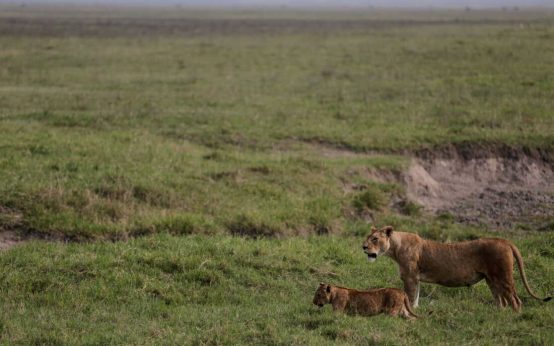 Investigation into Lion Deaths in Tanzania
 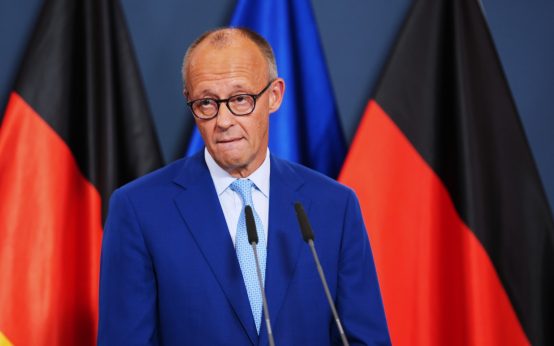 Merz Stays Resolute Amid Electoral Shifts in Germany
 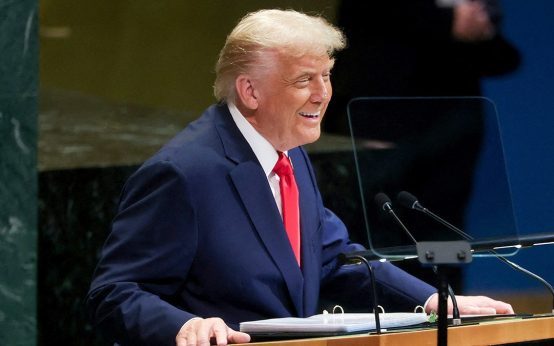 U.S.-Iran Relations and Diplomacy at Upcoming U.N. Assembly
 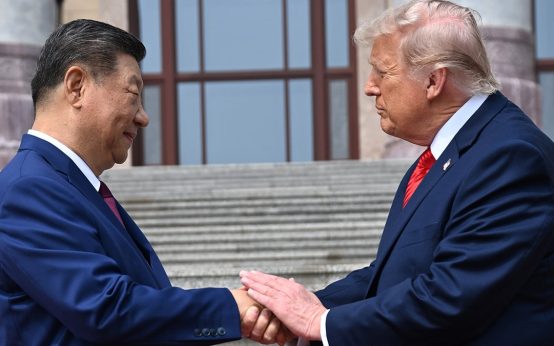 US-China Relations Under Scrutiny: Expert Warns of Escalating Tensions
  Extradition of Suspects in Haitian President’s Assassination