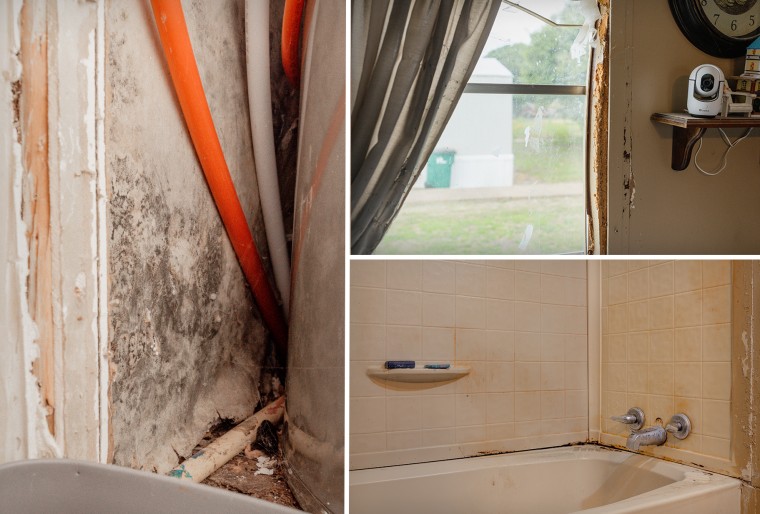
By 2023, Aliea Brown found herself in a problematic situation at Buck Island Manufactured Home Community in Mississippi. Upon moving into Unit 62, she faced issues such as an upside-down front door, black mold, unsealed windows, and pest invasions. During winter, a sewer pipe burst, hiking her water bill and allowing sewage to accumulate beneath her unit.
Brown, living with her partner Mason Obradovich, was paying $675 monthly for their two-bedroom home. “The rancid sewage smell came up through the cracks,” explained Brown, who struggles with COPD. Lacking funds to relocate, they requested necessary repairs but received a letter from Homes of America, stating repair costs exceeded the unit’s value and it was no longer available for rent. The park offered to sell Brown the unit for $1,000, using part of her security deposit.
About 22 million people across the U.S. reside in mobile home communities, which are often the only affordable housing solutions for many. Recently, large corporations have bought many parks, raising rents and fees. NBC News interviewed 20 residents across different states, who reported increased rents, declining maintenance, and strained relations with management.
John Calabrese from Florida Federation of Manufactured Home Owners noted that while some corporate owners are fair, others have no concern for residents. The focus often shifts to revenue rather than resident welfare.
Buck Island, managed by Homes of America—part of Alden Global Capital—owns 170 such communities across 22 states. The management declined to comment on individual experiences. Equity LifeStyle Properties, another prominent owner, affirmed that their communities maintain competitive costs and quality.
Manufactured homes make up 5.4% of U.S. housing. Despite rising purchase costs, they are still cheaper than traditional homes. Recent discussion under former President Donald Trump aimed at barring institutional investors from purchasing single-family homes did not extend to mobile homes.
Maine saw recent legislative changes granting mobile home residents the right of first refusal, providing them an opportunity to buy communities when sold.
Brown wasn’t alone in her experience; others faced similar challenges at Homes of America parks. A lawsuit by Elvin Zapata, a former regional manager, highlights practices like avoiding mold remediation and targeting low-income renters. Reports of the “Abandoned Trailer” scheme allege that rundown units are sold cheaply to offload financial burdens.
Jim Hodgkins from Illinois described a decline in conditions at Greenmount Station after Homes of America took over. Despite operational challenges, he bought his unit to provide stability for his daughter with mental health issues.
Even with support from groups like HEED, Brown’s housing woes persist. The nonprofit deemed their rental unit “uninhabitable,” yet alternative solutions offered similar issues. The couple collaborates with Legal Aid, as management refuses rent payments, leaving them facing eviction.
This growing trend of corporate ownership demands attention as economically vulnerable Americans continue to struggle with affordability and security in housing.