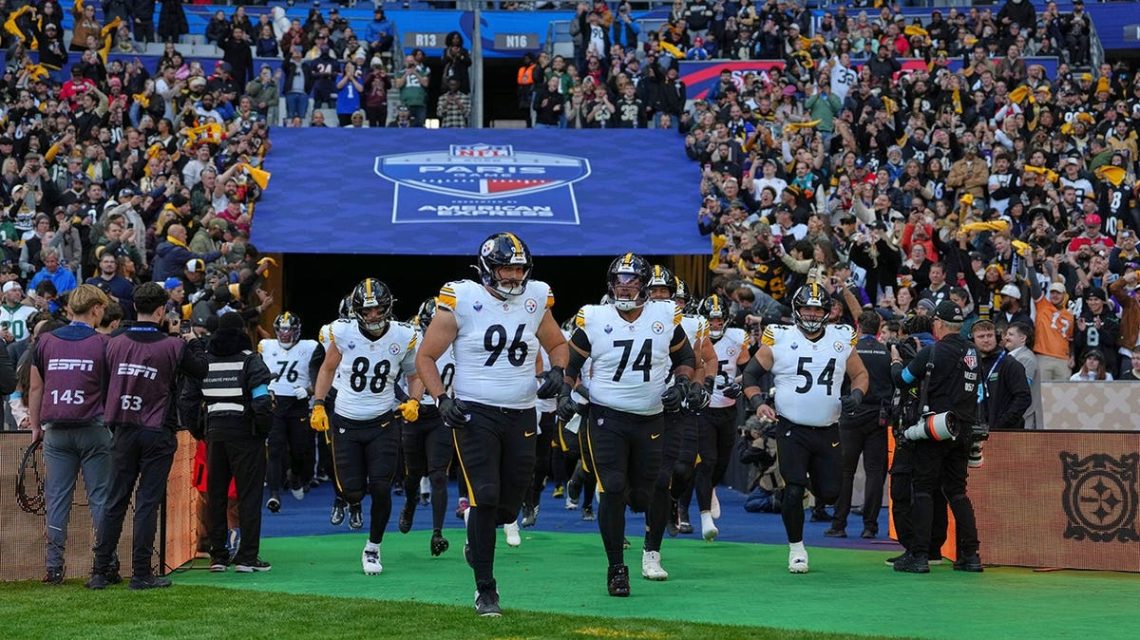
Greg Gutfeld and the ‘Gutfeld!’ panel recently discussed reactions to two controversial national anthem renditions. The first involved Motown legend Martha Reeves at a Women’s Pro Baseball League game. The other was singer Nina Tonji’s performance of La Marseillaise at the Stade de France, which sparked significant backlash due to a lyrical change.
Amendment of French Anthem
Nina Tonji, a singer from Montreal, performed La Marseillaise before an NFL game featuring the Pittsburgh Steelers and New Orleans Saints. She altered the line “Qu’un sang impur abreuve nos sillons!” to “Qu’un sang uni abreuve nos sillons!” The original phrase translates to “May impure blood water our furrows/fields,” referring historically to enemies. Tonji replaced “impure” with “united,” shifting the focus from exclusion to unity.
This change comes as immigration and foreign relations remain sensitive topics in France. The adjustment intended to foster solidarity but led to criticism. Many in France reacted negatively, viewing the alteration as a sign of disrespect.
Immigration Tensions in France
The anthem change occurs amid ongoing civil unrest in France. Some protests included immigrant involvement, with calls for political change and anti-Israel sentiments. Tonji’s alteration coincided with tensions, further intensifying reactions.
Online Reaction and Media Coverage
The song change drew widespread media attention. Accounts with large followings shared the performance, highlighting the lyrical adjustment. Responses varied; some accepted the change, while many criticized it, labeling it a “scandal” and “controversial.”
Media outlets such as Cerfia, RMC Sport, and Francetvsport covered the rendition, each reaching significant audiences. Cerfia’s post reached 1.3 million followers, RMC Sport’s reached 2.7 million, and Francetvsport’s reached nearly 300,000.
Suggestions for the NFL
The NFL, which has faced past controversies over national anthem performances, might consider implementing stricter guidelines. The league could enforce contracts requiring artists to perform songs as written, avoiding unintended political statements.
Encouraging artists to focus on interpretation without altering lyrics would mitigate potential public relation issues. This approach ensures that performances convey respect for the original compositions.
 Chicago Blackhawks Fall Short Against Florida Panthers
 Donald Trump’s Ongoing Frustration with the Nobel Peace Prize
 Zelensky Accuses Russia of Intensified Attacks, Musk Restores Starlink Services
 Australia Moves to Regulate Social Media Usage Among Children
 NASCAR’s YellaWood 500 at Talladega: A Race of High Stakes and Dramatic Moments
 Miami Dolphins Secure Their First Victory of the Season Against the New York Jets