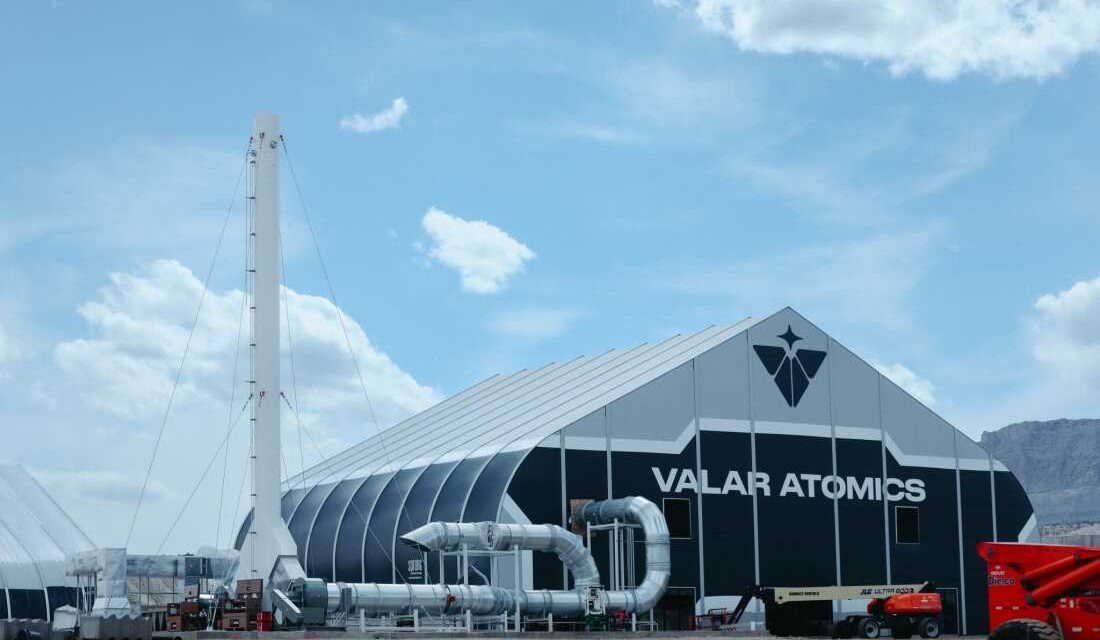
Valar Atomics recently achieved a significant milestone in the nuclear industry by activating its new nuclear reactor. This experimental design operates in a tent-like structure within the Utah desert and went into action on June 18. This achievement is part of a larger nuclear race initiated by President Trump, who set an ambitious goal for American businesses to build at least three new experimental reactors by July 4, 2026, coinciding with the 250th anniversary of the Declaration of Independence.
Following the executive order from President Trump, the Department of Energy launched the Reactor Pilot Program. This initiative aims to expedite the construction and operation of test reactors by significantly reducing regulatory requirements. As a result, two companies have already met the target of activating their reactors, with Antares Nuclear going critical on June 4 and Valar Atomics following shortly after. Valar Atomics is generating tens of kilowatts of heat from its reactor core, contributing to the swift advancements in the industry.
“We haven’t done anything this fast, basically ever,” said Nick Touran, chief nuclear officer at Ocean Atomics.
The rapid pace has caught the attention of industry experts. Nick Touran, not part of the program but watching closely, believes this initiative could be a catalyst for revitalizing America’s nuclear industry. He expressed optimism about the tangible development of reactors and the opportunity to explore market potential.
However, the accelerated efforts also raise concerns about safety and regulation. Edwin Lyman, director of nuclear power safety at the Union of Concerned Scientists, criticized the program for focusing on public relations and dismissing safety lessons learned over decades in the nuclear industry. He warned that eliminating regulations could bring standards back to outdated practices from the 1950s.
Innovations and Challenges
The department’s Idaho National Laboratory is a hub of activity, with several companies working on innovative reactor designs. Radiant aims to develop smaller reactors for diverse applications such as disaster relief and data centers. Rita Baranwal, the firm’s chief nuclear officer, mentioned that Radiant is building its reactor inside a secure building known as the DOME.
Baranwal anticipates that testing will begin by July 4, though full operation might not meet the deadline. Radiant’s reactor design differs from traditional models, utilizing tiny nuclear fuel balls filled with uranium grains, akin to gobstoppers. This approach allows for higher operating temperatures and increased resistance to meltdowns. Radiant is among the companies planning to use this technology to produce smaller, mobile reactors, with a goal of mass-producing 50 units annually.
Safety Concerns
The quick development of these reactors has spurred changes in safety and security standards by the Department of Energy. These modifications are intended to facilitate regulatory approval, with the department deeming certain regulations unnecessary. Companies were consulted during this process, but public input was not sought. Environmental reviews were also exempted, leading to skepticism regarding safety and environmental impact.
“Yes, of course, if you bend all the rules, you can do things quickly,” said Lyman, expressing his concerns about the deregulation.
Despite the progress in testing, there are concerns about the stability and safety of these reactors in long-term electricity production. The relaxation of regulations might jeopardize standards for security and environmental monitoring, raising questions as mass-produced reactors become more prevalent across the nation.
 The Technology Rivalry: Trump’s Meeting with Xi and the AI Ecosystem Clash
  Ways to Protect Your Finances from Cyber Threats
  Interview with Nvidia CEO Jensen Huang: AI Outlook and Business Strategy
  Concerns Rise Over Addictive Design of Sports Betting Apps
  Seton Hall National Security Graduate Fellowship Provides Hands-On Experience
  Concerns of AI Experts