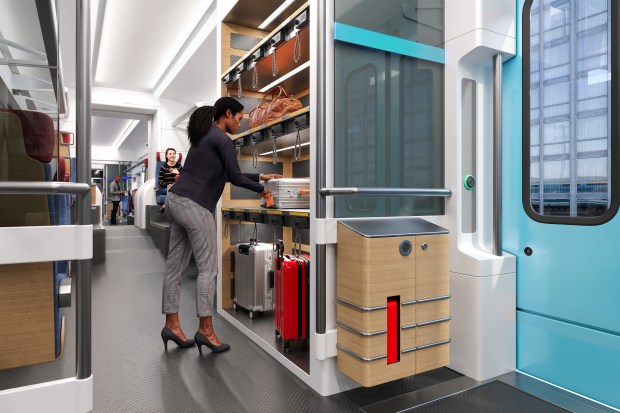
A group of business and transportation leaders is proposing a new express train service, dubbed the O’Hare Flyer, designed to take travelers from downtown Chicago to O’Hare International Airport in about 15 minutes. This ambitious project hinges on utilizing freight railroad tracks and faces significant planning, financial, and regulatory challenges.
Project Details and Costs
The leaders expect the O’Hare Flyer to be a cost-effective alternative, priced between a taxi or rideshare service and the Chicago Transit Authority’s Blue Line, which currently costs between $2.50 and $5 and takes approximately 45 minutes. With a schedule running every 15 minutes from 4 a.m. to 10 p.m., the train promises convenience and efficiency.
The initiative is led by Dave Lundy, CEO of strategic communications firm Aileron Communications, along with rail veteran Mark Walbrun and Kristi Lafleur, former executive director of the Illinois Tollway. They estimate the project could be operational within five years, fully funded privately with a budget of around $2.25 billion. Notably, no government subsidies are being sought.
Historical Context and Supporting Statements
The concept isn’t new. In 2018, Elon Musk’s The Boring Company proposed a similar express train using tunneling technology that ultimately didn’t proceed. Mayor Brandon Johnson has expressed support for the current proposal, indicating growing confidence among private investors, particularly in Chicago’s transportation infrastructure investments.
“Innovative, sustainable, and affordable transportation solutions are central to our vision, and our administration looks forward to further discussions,” Johnson stated.
Support for the project comes from several sectors, including World Business Chicago, United Airlines, and the Chicago and Cook County Building and Construction Trades Council.
Obstacles and Agreements Needed
Before the project can become a reality, substantial obstacles remain. Although they have secured a letter of intent with the CSX railroad, agreements are also required from Union Pacific and Canadian National railroads.
The project requires regulatory approval from federal agencies such as the Federal Railroad Administration, the Surface Transportation Board, and potentially the Federal Aviation Administration. Additionally, the approval of Chicago’s City Council could be necessary.
Funding efforts are ongoing, with private investors completing an initial funding round. Lundy anticipates an $18 million second round soon. Though the initiative has budgeted for potential revenue sharing with the city, specifics have yet to be determined.
Service Specifications and Comparisons
The train’s route would begin in Chicago’s Loop, departing from city-owned land near Canal Street and connecting to Union Pacific tracks around 16th Street, eventually reaching O’Hare’s Terminal 2. Lundy pointed to express train models in London and Hong Kong as benchmarks.
Concerns about fare revenue impacts on CTA have arisen. However, the O’Hare Flyer is marketed towards airport travelers, offering luggage racks and baggage check options rather than competing with CTA’s regular services.
“Our service is designed for different needs, centered around airport travelers,” Lundy explained.