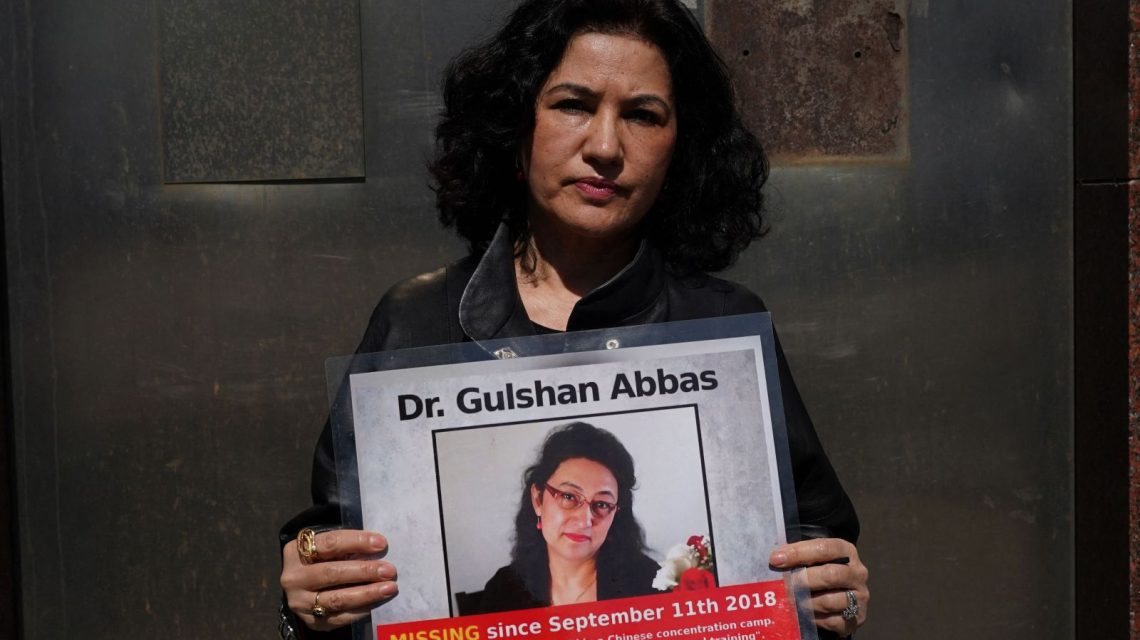
As President Xi Jinping prepares to visit the White House later this month, Ziba Murat remains hopeful that her mother’s situation will be addressed during the leaders’ discussions. Murat’s mother, Dr. Gulshan Abbas, has spent eight years imprisoned in China. The U.S. government and human rights organizations claim that her charges are fabricated accusations of terrorism.
This meeting marks the third this year between President Xi and President Trump, following summits in Busan and Beijing. For Murat’s family, it represents the strongest opportunity yet to secure Dr. Abbas’s release. “When the president discussed Pastor Ezra Jin Mingri’s case with Xi in May, Jin was released and reunited with his family in the U.S.,” Murat shared in a Newsweek interview. “I hope the president highlights our case this time around.”
Dr. Abbas was arrested in 2018, shortly after her sister, Rushan Abbas, spoke out publicly about Uyghur disappearances and China’s treatment of Uyghurs. Rushan, who has long campaigned for her sister’s release, views the upcoming summit as a chance to press the matter. “It’s critical that President Trump prioritizes my sister’s case,” she told Newsweek. “Her return could unite a family and restore a mother and grandmother to her loved ones in the U.S.”
This case has gained bipartisan backing in Congress, with a resolution from Representative Chris Smith urging President Trump to prioritize the release of political and religious prisoners in China, including Abbas. The resolution passed unanimously, highlighting the broad support for such humanitarian endeavors.
Senator Chuck Grassley, co-sponsor of a Senate resolution focused on political prisoners, affirmed the importance of including Abbas’s case in discussions with Xi. The State Department condemns China’s actions and calls for an end to the repression of Uyghurs and religious groups, noting the troubling practice of transnational repression.
“China targets family members in an attempt to silence American citizens,” a State Department representative told Newsweek.
Rushan Abbas believes her sister was detained in response to her own outspoken advocacy—an attempt to retaliate against her freedom of speech. “Five days after I spoke at the Hudson Institute, my sister disappeared,” she recounted. The family was kept in the dark until years later when China’s state media accused Rushan of fabricating the existence of her sister. Later, it was revealed that Dr. Abbas had been secretly tried and sentenced to 20 years in prison.
Dr. Abbas’s health is a growing concern. Age-related ailments have worsened, including severe vision issues requiring medication. Family members worry about her condition, unable to visit her throughout her incarceration.
Despite United States citizenship shared by 24 of her relatives, including her children and sister, the years have passed without Dr. Abbas meeting her grandchildren or communicating with her loved ones. Rushan Abbas emphasizes the bipartisan support from Republicans advocating for her sister’s return, asserting the shared humanitarian urgency transcends politics.
Amid frustrations with the Biden administration, Murat continues stressing the priority of her mother’s case. Despite assurances of attention from U.S. officials, Dr. Abbas remains detained. While other U.S. citizens were released in prisoner swaps, Dr. Abbas, a non-citizen, never fell under the same advocacy channels.
Sarah Makin, formerly with the National Security Council, highlights structural barriers in prioritizing cases like Dr. Abbas’s, noting the broader issue of transnational repression. “China leverages this repression tactic, threatening family members to silence American citizens,” she said.
With President Trump’s reentry to the White House, Dr. Abbas’s family sees an opening. Past meetings between Trump and Xi Jinping have demonstrated potential for successful negotiations. Advocates point to successful releases negotiated by Trump’s administration, emphasizing the opportunity for replicating the model.
“I believe President Trump has cultivated the sort of relationship with Xi that can help achieve this,” Makin stated. Enos believes negotiations with China should capitalize on the U.S.’s advantageous position.
Ultimately, the family’s focus is simple: “Our hope hinges on President Trump’s engagement with Xi,” Murat concluded. “Dr. Abbas is aging with declining health. She deserves the chance to return home.”
 The Cost of Challenging Beijing
  Analyzing Midterm Elections and Party Dynamics
  Significant Events in Chicago History on September 21
  Allan Lichtman’s Framework for Assessing Presidential Greatness
  Presley Gerber Passes Away at 27 in Rehab Facility
  Florida Senate Race Tightens as Recent Polls Show Dead Heat