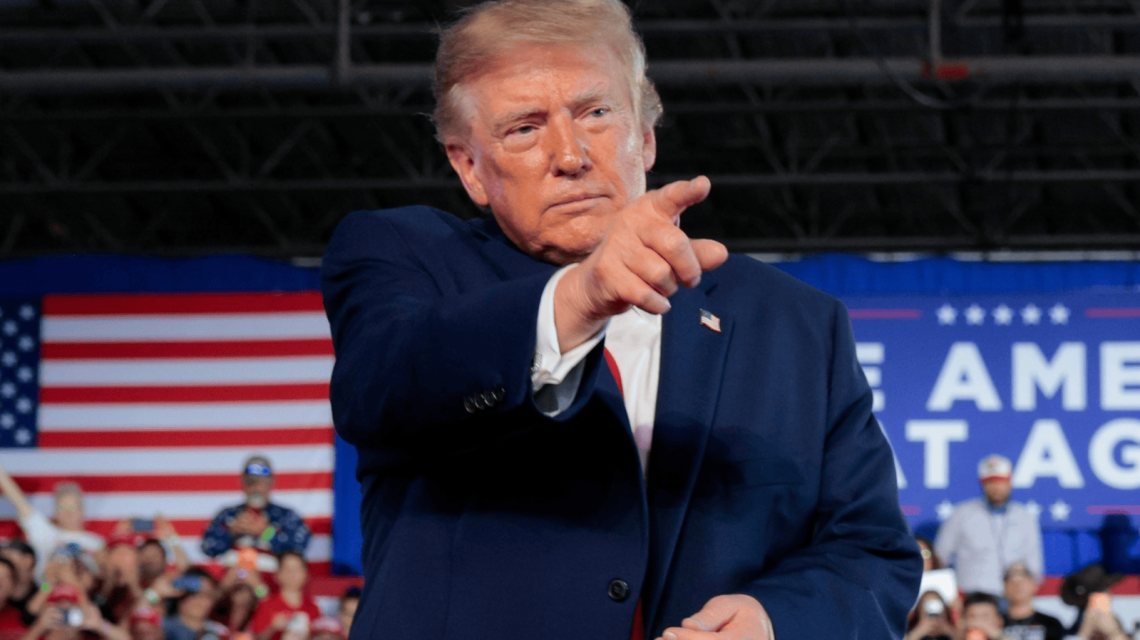
President Donald Trump’s approval rating has shown limited change in the final month before the midterm elections. However, his rating is significantly weaker than at the year’s start, according to a Newsweek analysis of four national polling trackers. Data from Civiqs, Silver Bulletin, The New York Times, and RealClearPolling reveal his net approval over 20 points underwater as of October 1. This presents a challenging national backdrop for Republicans aiming to retain congressional control.
On October 29, Trump’s approval ranged from 33 percent to 38.4 percent, while disapproval stood around 60 percent across all measures. Net approval was 11 to 11.8 points worse in late October compared to early 2026. Historically, midterms have been tough for the incumbent party, putting Republican candidates under pressure as voters evaluate the initial two years of Trump’s second term.
In many ways, midterms are referenda on incumbent party performance,said Costas Panagopoulos, a professor of political science at Northeastern University.
Civiqs data indicated a slight October decline. Averages from Silver Bulletin, The New York Times, and RealClearPolling showed minor improvements, but none indicated a meaningful recovery. These averages are derived from different surveys and methodologies, offering directional rather than combined insights.
White House spokesperson Davis Ingle described Trump as the Republican Party’s “unequivocal leader” and “unmatched motivator,” highlighting his influence within the MAGA movement and record in office as assets for defending congressional majorities.
Current Tracker Positions
Civiqs reports Trump’s approval at 33 percent and disapproval at 60 percent, resulting in a net rating of -27. Silver Bulletin shows 37.3 percent approval and 60.1 percent disapproval, leaving him 22.8 points underwater. The New York Times places approval at 37 percent and disapproval at 60 percent, for a net of -23. RealClearPolling indicates approval at 38.4 percent and disapproval at 60.1 percent, a net rating of -21.7.
Newsweek analyzed Trump’s standing on January 1, October 1, and October 29. Net approval is calculated by subtracting the disapproval percentage from the approval percentage. A rating of -27 means disapproval exceeds approval by 27 points.
Civiqs, offering a continuous trend line, surveys registered voters over time. The averages from other sources validate whether broader polling reflects a similar trend. Newsweek opted not to combine these diverse sources into a single average due to distinct polling methods.
Civiqs Tracks Further Decline in October
On January 1, Civiqs reported Trump had 40 percent approval and 56 percent disapproval, netting -16. By October 1, those figures shifted to 34 percent approval and 60 percent disapproval, widening the deficit to 26 points. On October 29, approval fell to 33 percent while disapproval remained unchanged, widening the net rating to -27. From January, this amounts to an 11-point decline.
Civiqs accumulated 139,382 responses from registered voters from January 20, 2025, to October 29, 2026. Participants indicated their approval or disapproval of Trump’s job performance. Civiqs continuously updates rather than conducting separate surveys, so its data points lack discrete fieldwork periods, sample sizes, or traditional margins of error.
Silver Bulletin Suggests a Modest Rebound
Initially, Silver Bulletin pegged Trump at 42.2 percent approval and 53.7 percent disapproval for a net of -11.5. As of October 1, these shifted to 37.2 percent and 60.5 percent respectively, widening the net to -23.3. By October 29, approval rose slightly to 37.3 percent while disapproval decreased to 60.1, narrowing the gap to -22.8. Still, this reflects an 11.3-point worsened position since early 2026.
Approval dropped to an all-time low of 36.3 percent before rebounding by one point. Only 20 percent strongly approved of Trump, while nearly half strongly disapproved.
The Times Observer’s One-Point Movement in October
The Times reported 42 percent approval against 54 percent disapproval on January 1, a net of -12. By October 1, this shifted to 37 percent approval and 61 percent disapproval, doubling the gap to -24. On October 29, approval remained at 37 percent, whereas disapproval dropped to 60 percent, thus slightly improving the net rating to -23.
The Times’ data reflects a daily average of multiple polling surveys. Every survey carries weight in the visualization, with more significant polls shown prominently.
RealClearPolling Shows Minimal Change
RealClearPolling recorded the narrowest January gap with 43.4 percent approval and 53.3 percent disapproval, netting -9.9. By October 1, those numbers shifted to 38.3 percent approval and 60.2 percent disapproval, adjusting the net rating to -21.9. The latest average from October 9 to 28 showed a minor change: 38.4 percent approval and 60.1 percent disapproval, with a net -21.7. This is a slow 0.2-point improvement during October but an 11.8-point downfall over the year.
Polls used varied demographics like adults, registered and likely voters, highlighting the challenge of directly equating these scores with others like the registered-voter series.
Why Estimates Differ
Polling organizations aim to capture the preferences of probable voters, but identifying these voters requires both art and science,according to Panagopoulos.
This explains why surveys might deliver different estimates even during overlapping fieldwork periods. Current RealClearPolling ratings range from 34 percent in a CNN survey of registered voters to 42 percent in an RMG Research poll.
Implications for Republican Prospects
Presidential approval creates the backdrop against which Republicans compete, yet doesn’t dictate congressional shift outcomes. Panagopoulos points to the growing focus on national issues in down-ballot elections, noting that unhappy voters hold the governing party accountable.
If voters are unhappy, they know where to lay the blame,Panagopoulos said.
Independent voters, critical during this cycle, seem especially influential. Some voters from Trump’s 2024 coalition have distanced from Republican support. Local dynamics could yield exceptions, where candidates with strong personal brands, effective campaigns, or weaker foes outperform Trump’s state-specific standing.
The results will reflect the constellation of candidates and other factors in play,according to Panagopoulos.
A nationwide wave involves numerous competitive races trending similarly across diverse locales. This trend may not change party control, but could show decreased share in past strongholds.
Next Steps
The real test comes post-November 3, unveiling how well the congressional landscape mirrors the prevailing national mood.
 Chuck Schumer Faces Potential Leadership Challenge from Chris Van Hollen
 Mississippi State Auditor Shad White Announces Gubernatorial Bid
 Trump Dismisses Third Impeachment Prospects
 Custody Dispute Involving Rep. Max Miller Delayed
 Attorney General Addresses Post-Midterm Democratic Threats
 Senator Elizabeth Warren and the Future of Crypto Regulation