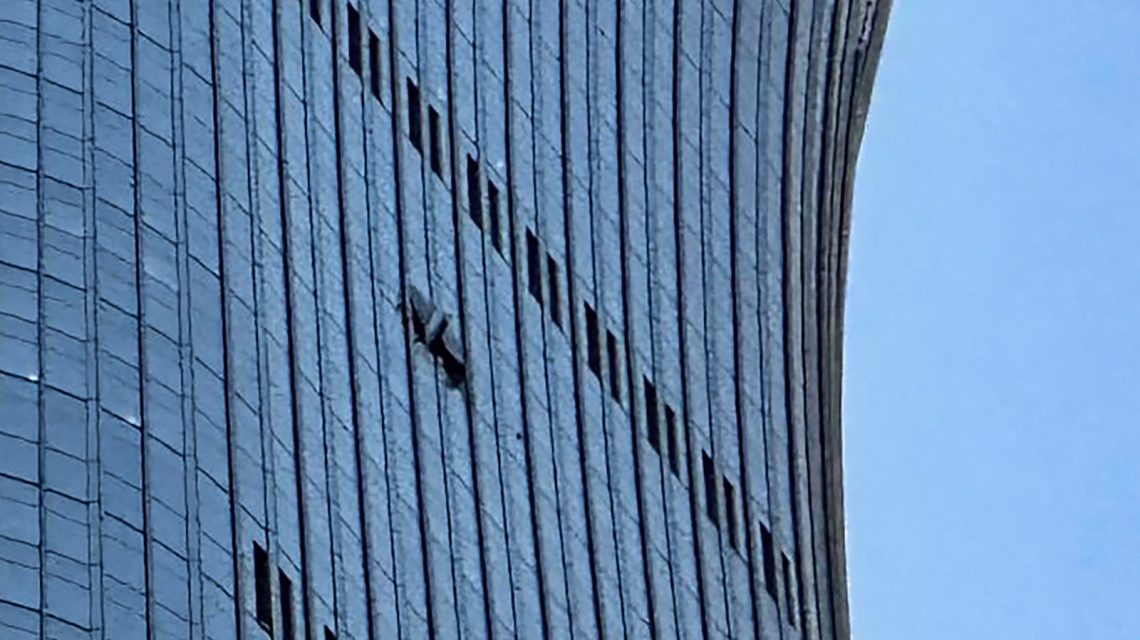
A pilot who crashed a plane into Beijing’s tallest skyscraper suffered from chronic insomnia and anxiety, officials reported. The 66-year-old pilot, identified by his surname Liu, collided with the 108-story CITIC Tower, also known as China Zun, for personal reasons, according to a statement by officials in Beijing’s Chaoyang district.
Liu, who worked as a freelancer and lived alone, frequently documented his mental struggles in his diary. The diary included several mentions of suicidal thoughts, officials noted. In their statement, the officials explained that ‘the comprehensive investigation concluded that this was a case of endangering public safety caused by personal reasons.’
Footage of the crash, which injured 13, displayed debris falling from the skyscraper’s upper floors. The skyscraper reaches over 1,700 feet in a bustling business area.
The government confirmed Liu’s death in the wreck, although his identity was not initially released. Reports indicate civilian flights are typically limited over Beijing’s central regions due to the city’s heavily controlled airspace. Major airports are located outside central districts and low-altitude flights face strict restrictions.
Flight data revealed that the aircraft, a Sunward SA 60L Aurora, left an airport approximately 30 miles from Beijing before heading towards the city. The unexpected flight path ended near the East Third Ring Road at around 6 p.m. Observers heard a loud explosion, followed by falling debris and quick emergency responses. Nearby streets were blocked as evacuations occurred, while ambulances arrived at the incident site.
Flying light sport aircraft in Beijing requires approval from the Civil Aviation Administration of China and the People’s Liberation Army Air Force. Unauthorized flights are rare, and restrictions on low-altitude airspace recently became stricter, even impacting recreational drones. The new rules demand prior approval for all outdoor flights, and the use of drones within the city is heavily regulated.
Ben Lewis, a Washington, D.C.-based analyst and founder of the website PLATracker, discussed the defenses in Beijing, noting they are designed to prevent military threats rather than low-speed general aviation aircraft. Lewis questioned how Liu’s aircraft diverted into the city’s center.
Liu received a sport pilot license in 2021 and a private pilot license in 2024. A pilot who flies in China explained that one requires a medical certificate every two years, proving medical fitness and mental health stability, to qualify for a private pilot license.
The circumstances of Liu’s solo crash flight, following an earlier accompanied flight that day, remain unclear. Authorities continue to investigate how the flight path allowed the aircraft to breach restricted airspace next to a permanent no-fly zone.
If you or someone you know is considering suicide, contact the 988 Suicide and Crisis Lifeline by dialing 988, text “988” to the Crisis Text Line at 741741, or visit 988lifeline.org.
 Gorillaz and Macklemore Respond to Controversy Over Israel-Palestine Statements
  Investigation into Lion Deaths in Tanzania
  Merz Stays Resolute Amid Electoral Shifts in Germany
  U.S.-Iran Relations and Diplomacy at Upcoming U.N. Assembly
  US-China Relations Under Scrutiny: Expert Warns of Escalating Tensions
  Extradition of Suspects in Haitian President’s Assassination