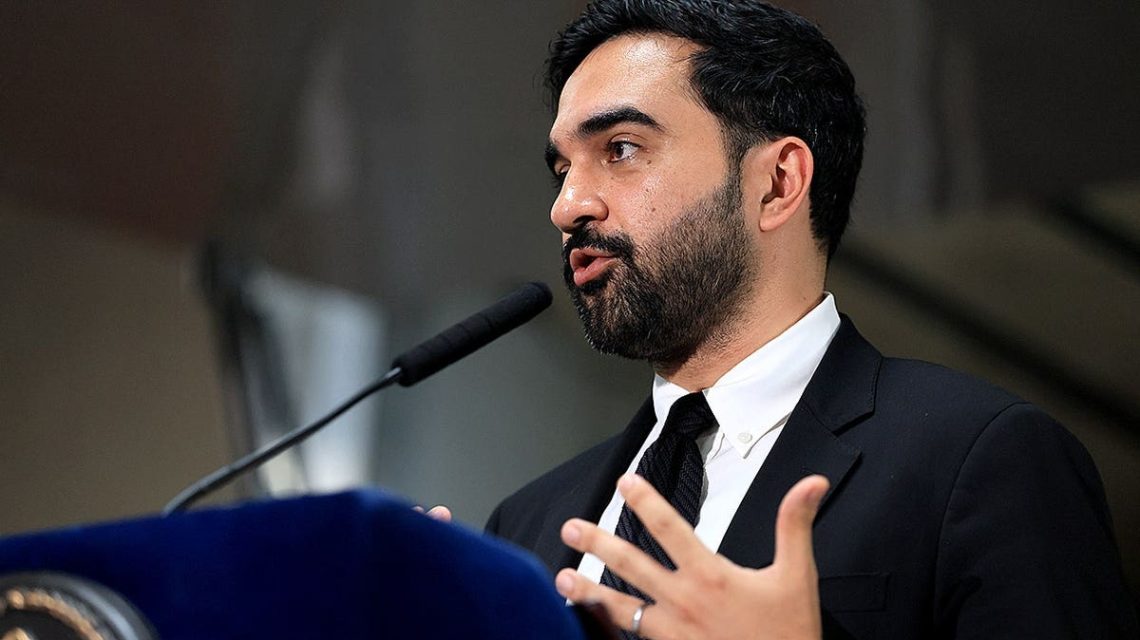
New York City Mayor Zohran Mamdani has not ruled out the possibility of awarding cash reparations to those affected by slavery in the city. This topic was explored during an interview on Tuesday. Mamdani expressed anticipation for the results from the city’s commission. When questioned by Charles Blow during an interview for “The Root,” about supporting a recommendation for cash reparations, Mamdani reflected on his campaign statement. He acknowledged New York City’s active participation in the slave trade and the perpetuation of its legacy through discriminatory institutions, policies, and laws.
“I stand by what I stated. It’s a fact, not a personal view. Many associate slavery with particular regions, but New York City was deeply complicit. I await the findings. Answering before receiving them would be premature, but acknowledging history’s truth is crucial,” Mamdani stated.
The New York City Commission on Racial Equity (CORE), established in 2024 under Local Law 92, investigates how NYC’s government has contributed to slavery and the resultant harms. A separate “Truth, Healing and Reconciliation” process outlined in Local Law 91 provides a platform for New Yorkers to openly recognize the history and ongoing impacts of slavery.
According to CORE’s schedule, the final report for the “Truth, Healing and Reconciliation Planning Process” will be available in June 2027, with the reparations study concluding in July 2027. Implementation of the “Truth, Healing and Reconciliation” plan is expected by June 18, 2028.
Linda Tigani, chair and executive director of NYC CORE, emphasized the importance of recognizing New York City’s complicity in slavery. She noted that New York housed the second-largest slaveholding population after Charleston, South Carolina. Wall Street’s earliest trades included enslaved people, whose forced labor fueled a powerful economic engine.
“We must address the longstanding debt and address the racial wealth gap linked to slavery’s legacy in New York City,” Tigani commented.
The commission criticized Mamdani when he released his Preliminary Citywide Racial Equity Plan, arguing it failed to meet NYC charter requirements. Tigani noted that community feedback indicated a city responsibility to lead with accountability and investment in communities most affected by inequity.
CORE’s findings highlight community concerns regarding Mamdani’s plan, noting the lack of a comprehensive racial equity strategy, race-disaggregated data, neighborhood accountability metrics, and transparent funding tied to equity outcomes.
The commission organized various rallies and events, including a significant Juneteenth reparations gathering reported by Forbes. Tyrik Washington, a political strategist involved in studies on NYC reparations, believes that implementing reparations policies could lead to measurable improvements in occupational segregation and pay equity for Black New Yorkers within five to ten years.
In January, CORE released a progress update noting $500,000 allocated to community groups in 2026 to participate in a Reparations, Truth, Healing, and Reconciliation Network. This funding supports discussions on developing a reparations study and gathering input for the citywide Truth, Healing and Reconciliation plan.
Much of the funding allows community members to receive incentives for their time and covers participant refreshments.
 Teen Arrested in Penn State Student’s Murder; Second Suspect at Large
  Carnival Panorama Passenger Jumped Overboard During Final Leg of Cruise
  Nikole Hannah-Jones Reflects on Educational Choices for Her Daughter
  Life and Challenges at Chennai’s Kasimedu Fishing Harbour
  Chicago Bears Eye Potential Move to Indiana: A Look at the Developments
  Amazon Offers Discounts to Employees at Whole Foods