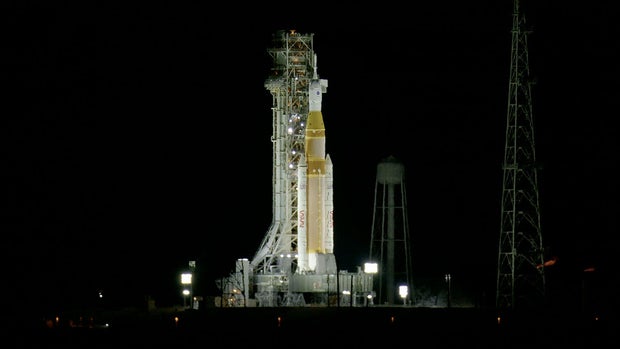
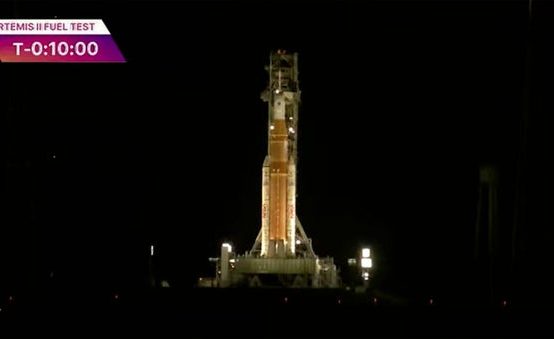
NASA is working on repairing a hydrogen fuel leak on the Artemis II rocket after a dress rehearsal countdown was halted. This took place at the Kennedy Space Center, where the Space Launch System (SLS) rocket sat atop pad 39B. The intent is to conduct another fueling test before aiming for a March launch that will send four astronauts on an important mission around the moon.
According to Lori Glaze from NASA’s Exploration Systems Development office, repairs will likely be conducted directly on the launch pad. She stated, “We believe that the repairs can be carried out on-site, and that is our expectation.” A previous trial was called off due to the hydrogen leak, prompting a shift in the launch timeline to March at the earliest.
Members of the Artemis II crew, including commander Reid Wiseman, Victor Glover, Christina Koch, and Canadian astronaut Jeremy Hansen, wrapped up a pre-flight medical quarantine and continued their training efforts at the Johnson Space Center in Houston.
Wiseman shared on social media, “Immense pride seeing the rocket reach 100% fuel load last night, especially knowing how challenging the scenario was for our launch team doing the dangerous and unforgiving work.”
Technical Challenges and Past Experiences
The issue involves a hydrogen fuel line connection at the base of the rocket, where sensors recorded high hydrogen levels, forcing a stop in fueling. Although the team managed to stabilize the leak, it intensified during the practice countdown as the hydrogen tank was pressurized, leading to an automatic halt.
John Honeycutt of NASA’s Mission Management Team noted, “The test allowed us to learn what we needed. It was an opportunity for the system and team to be assessed before launching our crew.” Following this, NASA Administrator Jared Isaacman confirmed the postponement of the flight to March, offering more days for launch attempts.
This mission marks only the second flight of the SLS booster, the strongest operational rocket worldwide. During the preliminary phase of the rocket’s initial flight, engineers encountered multiple leaks and other issues delaying an unpiloted test flight for over six months.
Handling liquid hydrogen is particularly challenging due to its properties; it is extremely cold and can easily escape through minuscule gaps. Testing the repairs requires simulating launch conditions, which can only occur at the launch site—a significant task.
Artemis II and Concurrent Space Missions
As preparations for the Artemis II launch continue, a separate crew is set for a mission to the International Space Station. This mission, led by Crew 12 commander Jessica Meir along with Jack Hathaway, European astronaut Sophie Adenot, and Russian cosmonaut Andrey Fedaev, will lift off aboard a SpaceX Falcon 9 rocket.
Their launch, originally set for February 15, has been rescheduled to February 11. The flight is contingent on clearance from the Federal Aviation Administration, following a Falcon 9 anomaly in a recent satellite deployment. The affected second stage did not perform as anticipated, prompting SpaceX to review and rectify the issue before future flights.
The expedited timeline follows the early return of Crew 11 due to health concerns within the crew, leaving Chris Williams, the lone U.S. astronaut, on the space station. NASA seeks to restore full capability for research and emergency procedures, emphasizing the importance of maintaining an adequate crew presence.
 Impacts of Recent Solar Flares on Northern Lights and Communication
  NASA’s Artemis II Moon Mission Experiences Launch Delays