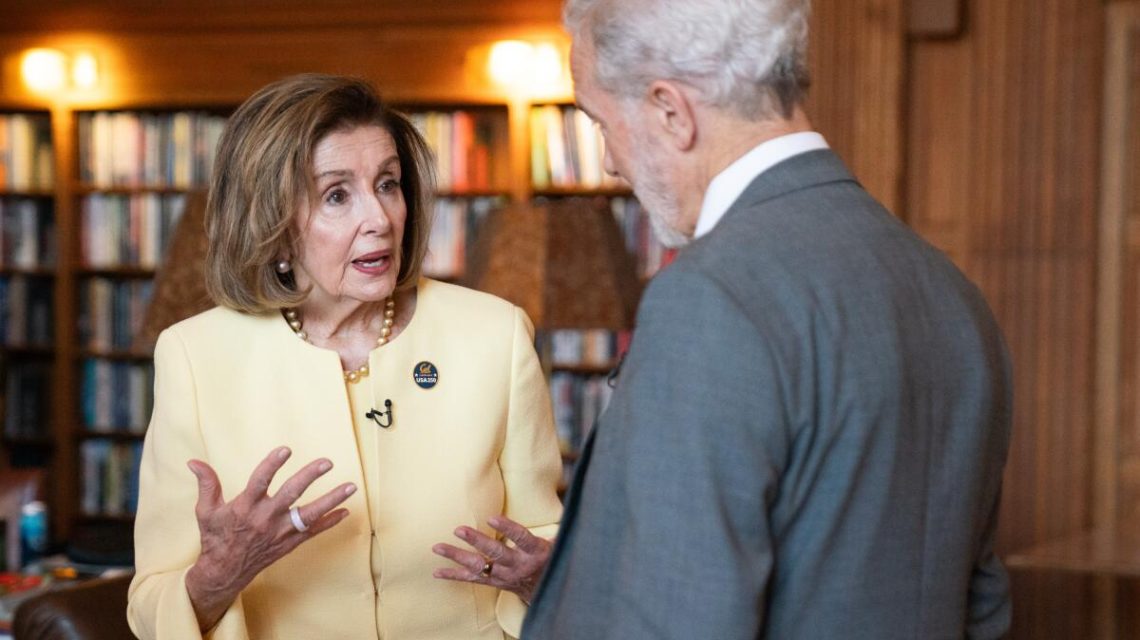
Rep. Nancy Pelosi, known for her influential career in Congress spanning nearly four decades, has announced her plans post-retirement. She will engage with UC Berkeley students through the founding of the Nancy Pelosi Institute for Representative Democracy. This initiative will begin with substantial donations from Pelosi and other contributors.
The institute aims to draw leading scholars, inspire students towards public service, and act as a Bay Area counterpart to other prominent university-level political institutes engaging former political figures. Pelosi aligns herself with a tradition of political figures establishing academic connections, reminiscent of Harvard’s Institute of Politics and USC’s Jesse M. Unruh Institute.
At a university renowned for its historical involvement in activism, Pelosi commits to a nonpartisan academic pursuit. She intends to create a space for bipartisan dialogue, including possibly Trump-aligned figures, focusing on the foundational aspects of American democracy.
The work of democracy is never finished, and securing its future is our greatest calling.
The institute will feature several courses accessible to undergraduates, host visiting fellows, and support faculty research in areas like climate change and electoral reforms. Pelosi will co-teach with Berkeley’s Eric Schickler to provide insight into Congress while learning about broader political discussions.
Pursuing a nonpartisan ethos, UC Berkeley Chancellor Rich Lyons emphasizes the commitment to maintaining a balanced political stance. Pelosi acknowledges managing the institute through Berkeley, lending her expertise and connections, while ensuring academic independence.
The transition to academic life is not new for Pelosi, previously associated with Georgetown’s Walsh School. However, the Berkeley institute stands as her most ambitious academic effort, with significant fundraising goals partially met.
Sustaining its nonpartisan purpose, the institute will host diverse political voices, supporting students from varied backgrounds, thus strengthening public service training.
As her legacy unfolds, Pelosi’s investment in the academic field aims to influence future leaders. She reflects on historical unity, hoping the institute will reflect such ideals.
Looking forward to the ideas and leaders that will emerge, Pelosi envisions a united future.
 The Importance of Financial Responsibility in Higher Education
  The Financial Expectations on Universities: A Parental Perspective
  A Mother’s Tragic Journey Under Abortion Ban
  U.S. Strategic Goals Remain Unmet Amid Prolonged Conflict
  The Impact of Arts and Closure on Democracy
  U.S. Ambassador Comments on Iran War Duration Amid Political Concerns