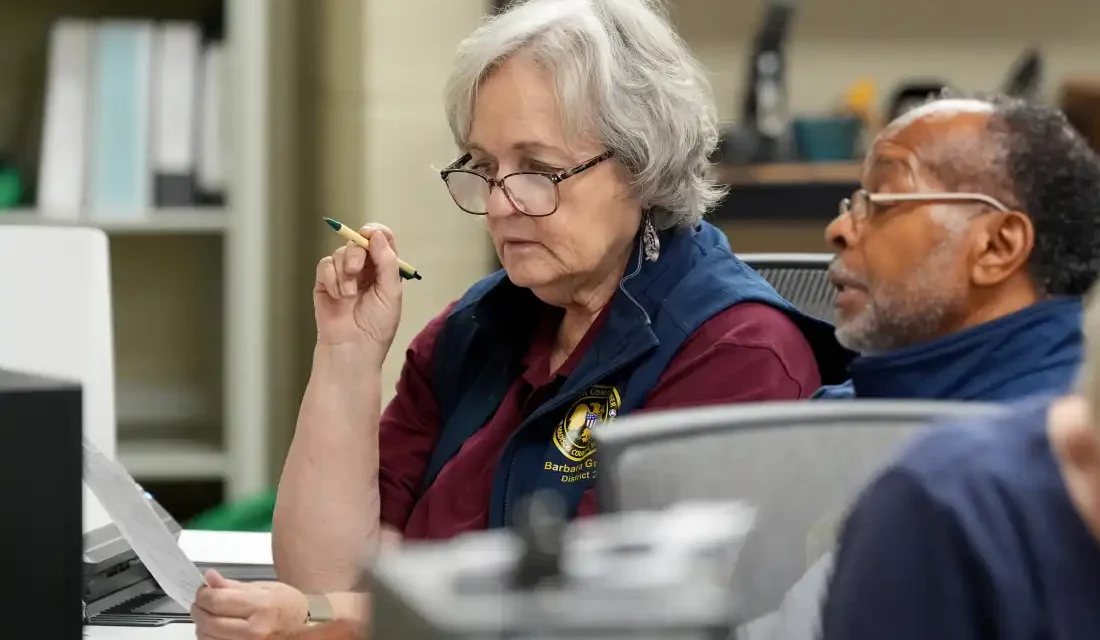
In Mississippi, the U.S. Senate race between Republican Sen. Cindy Hyde-Smith and Democratic challenger Scott Colom is extremely close. Every vote matters, yet the exact number of ballots left to count remains uncertain. This situation sheds light on Mississippi’s slow and decentralized election process.
Mississippi is not a model of election administration,
said Michael Morse, a law professor at the University of Pennsylvania. By midday Friday, fewer than 2,000 votes separated the candidates. Information about how many ballots were still uncounted was scarce.
The Colom campaign reported more than 15,000 provisional ballots, which need verification before counting. Meanwhile, the state Republican Party estimated 20,000 outstanding ballots, including absentee votes postmarked by Election Day, received by officials until November 10.
Republican Secretary of State Michael Watson explained that counties manage their own elections. Even his office lacked knowledge of the remaining provisional ballots. He reported about 7,000 have been processed, with approximately 80% accepted.
There are 82 counties in Mississippi, and they are not obliged to report election results to the state until the following week. Morse expressed surprise at the limited information for this high-profile race.
Understanding the Provisional Ballot Situation
Mississippi appears to have a high rate of provisional ballots, known locally as affidavit ballots. Such ballots are used when voter eligibility is questioned. They are decided on a case-by-case basis whether they count.
If Colom’s estimate holds, these ballots represent roughly 1.5% of the Senate race’s total ballots. In 2022, only four states had a higher provisional ballot rate. Mississippi’s rate seems nearly double North Carolina’s, based on preliminary data.
One reason may lie in Mississippi’s voter registration system. Inactive voters, moved to this status due to inactivity or eligibility concerns, must vote provisionally. Their information is reviewed before counting.
This approach differs from other states where inactive voters can cast regular ballots for a few years.
Morse noted attention on Mississippi’s use of credit data to update voter lists, although this is not the whole picture. This method, coupled with unique procedural processes, adds complexity.
Debate over Mississippi’s Voter Registration Process
Watson defends the state’s registration process, stating that affidavit ballots maintain voter roll integrity. However, Kathy Boockvar, former Democratic secretary of state of Pennsylvania, argues the provisional process doesn’t foster trust among voters.
It feels like you have to go talk to the teacher or something in the back room,
Boockvar stated. She noted that despite some voters being ultimately deemed eligible, the process creates suspicion.
The lack of clear information is attributed to Mississippi’s limited exposure compared to traditional battleground states. Boockvar emphasized the importance of transparency and accurate data to combat suspicion and distrust.
 Mississippi State Auditor Shad White Announces Gubernatorial Bid
 Trump Dismisses Third Impeachment Prospects
 Custody Dispute Involving Rep. Max Miller Delayed
 Attorney General Addresses Post-Midterm Democratic Threats
 Senator Elizabeth Warren and the Future of Crypto Regulation
 Bipartisan Opportunities in Foreign Policy