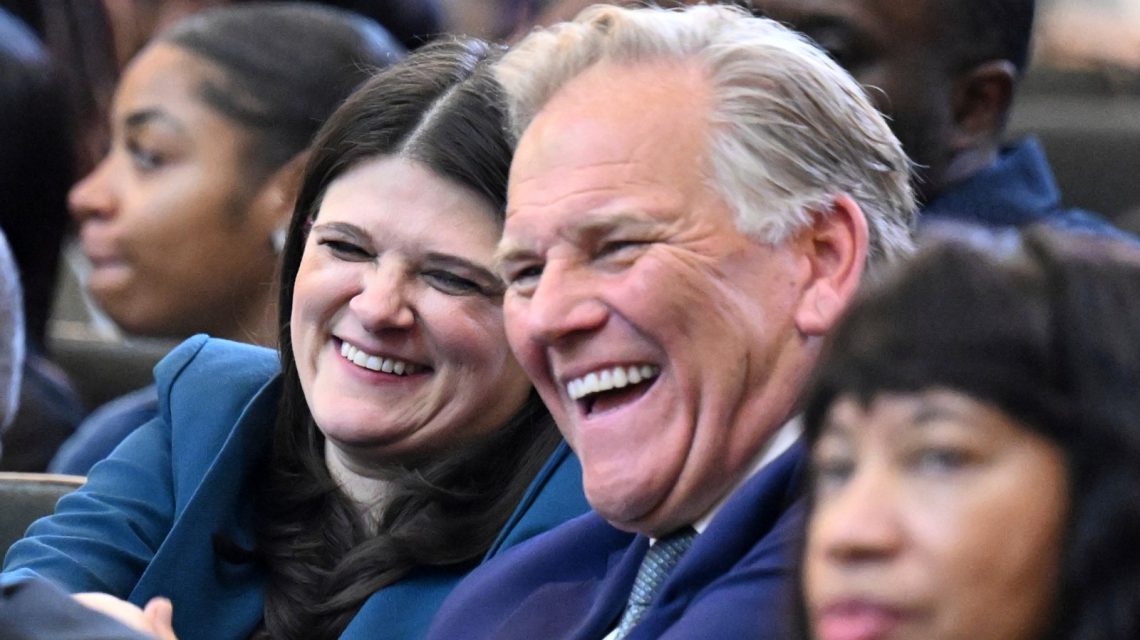
Democratic Representative Haley Stevens made a significant move Sunday by endorsing Republican Mike Rogers in Michigan’s Senate race. This came mere days before an election that could sway control of the Senate. Stevens had narrowly lost the Democratic primary to Abdul El-Sayed in August.
The endorsement happened at a church service in Detroit, where Stevens stood with Rogers after being removed from a planned appearance with El-Sayed. This change followed a disagreement over Israel escalating in the final days of the campaign.
El-Sayed made it clear I was not welcome in his campaign. He’s right, which is why I am endorsing Mike Rogers for the Senate today,
Stevens stated in a video.
For Democrats, retaining Michigan is crucial to gaining control of the Senate. Currently, Republicans have a 53-47 majority. Democrats must defend all 13 seats they hold and gain four more to secure a 51-seat majority. Losing Michigan would mean they need to pick up an additional Republican seat, complicating their path to control the Senate.
Stevens-El-Sayed Dispute
The tension between Stevens and El-Sayed stems from a tightly contested Democratic primary earlier this year. El-Sayed emerged victorious over Stevens with 48.4 percent to her 47.6 percent; a difference of less than 14,000 votes.
This primary revealed significant ideological splits within the Democratic Party, with Stevens supported by the establishment and El-Sayed backed by progressives. Disagreements on Israel and the Gaza conflict were notable issues between their supporters.
In an October debate, El-Sayed was questioned about which country, Iran or Israel, posed a greater threat to the U.S. He replied, Both are dangerous in their ways, one risking attacks against us and the other leading us into wars we shouldn’t fight.
Some Republicans attempted to associate El-Sayed with the Muslim Brotherhood, a claim he denied.
Rising Tensions
Stevens criticized El-Sayed’s stance on Israel, saying he uses it to explain why Michigan can’t afford certain things. El-Sayed accused Stevens of revisiting a primary that concluded months ago.
Controversy arose over a pro-El-Sayed ad linking U.S. aid to Israel with grocery prices, including a statement about funds for killing Palestinians.
Stevens called the ad antisemitic, urging El-Sayed to denounce it. El-Sayed distanced himself from the ad.
The dispute disrupted a planned Democratic show of unity. Stevens was supposed to join El-Sayed and Jim Clyburn, but Debbie Dingell asked Stevens not to attend due to the distractions caused.
Stevens instead appeared with Rogers in Detroit, where she announced her support for the Republican.
El-Sayed’s Alleged Muslim Brotherhood Ties
Some Republicans, including Senator Ted Cruz, have suggested ties between El-Sayed and the Muslim Brotherhood without evidence. During a subcommittee hearing, Rogers confronted El-Sayed with these claims during their debate. El-Sayed denied belonging to the group.
Former President Donald Trump added fuel to the issue, calling El-Sayed a Muslim radical
and a Brotherhood member, accusations El-Sayed has rejected.
Michigan Senate Race Polls
Polling has generally shown El-Sayed leading Rogers, though margins vary. A CNN/SSRS poll conducted in late October showed El-Sayed ahead 49 percent to 42 percent among likely voters. A Marist poll in mid-October indicated a tighter race, with El-Sayed at 50 percent to Rogers’ 48 percent.
An earlier YouGov poll also suggested a close contest. These surveys, however, did not account for the potential impact of Stevens’ endorsement of Rogers.
 Chuck Schumer Faces Potential Leadership Challenge from Chris Van Hollen
 Mississippi State Auditor Shad White Announces Gubernatorial Bid
 Trump Dismisses Third Impeachment Prospects
 Custody Dispute Involving Rep. Max Miller Delayed
 Attorney General Addresses Post-Midterm Democratic Threats
 Senator Elizabeth Warren and the Future of Crypto Regulation