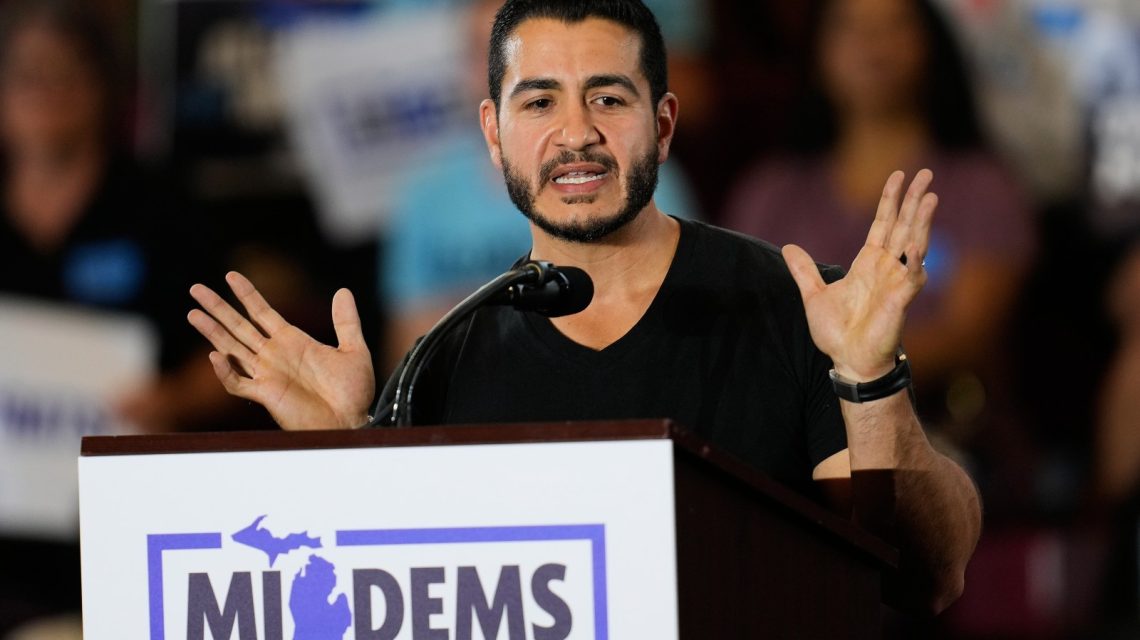
Abdul El-Sayed’s Apology to Jewish Democrats
Abdul El-Sayed, the Democratic Senate nominee in Michigan, apologized to Jewish Democrats for comments following an attack on a synagogue in suburban Detroit. The apology came as polling indicates a tight Senate race against Republican Mike Rogers.
The contest for the Michigan Senate seat is crucial as it could influence Senate control post-2026 midterms. Democrats are defending an open seat after Senator Gary Peters’ retirement, drawing attention due to El-Sayed’s progressive stance and criticism of Israeli policies.
Context of Controversial Comments
El-Sayed’s remarks post-synagogue attack have raised concerns among Jewish Democrats, key voters in the battleground state. After the March attack on Temple Israel by Ayman Ghazali, inspired by Hezbollah, El-Sayed stated, “hurt people hurt people.” Critics perceived this as making excuses for the attacker.
Michigan Attorney General Dana Nessel, among others, criticized this as appearing to justify attempted murder of children in a sensitive area, further adding complexity to the Senate race dynamics.
El-Sayed admitted that his attempt to provide context failed to adequately acknowledge the Jewish community’s pain and fear, stating, “if my statement caused pain, I’m sorry.” Jewish Democrats present during the apology felt his sincerity was clear.
Polling Insights on the Senate Race
Despite the controversy, El-Sayed remains competitive in polls against Rogers. The race shows a narrow margin, with various polls indicating slight leads for both candidates.
A RealClearPolling average indicates El-Sayed leading by 1.8 percentage points. An EPIC-MRA survey showed him ahead 47% to Rogers’ 43%, whereas a Fabrizio/Anzalone poll showed only a 1-point lead for El-Sayed. Contrastingly, a Fox News poll had Rogers leading by 4 points.
El-Sayed’s appeal among progressives and young voters is strong, despite Republican claims that his progressive stances might hinder support from moderate and suburban voters.
Sources for the initial publication can be contacted through Newsweek editors Jenni Fink and Anthony Murray.
 The War on Poverty: A Lesson on Intentions and Outcomes
  Reporters Blocked from White House by Trump Administration
  Universities Should Reject Political Influence on Research Funding
  Trump’s Approach to China: Trade Dynamics and Challenges
  Media Outlets Sue After White House Ban
  American Public Opinion on Press Freedom