
Michael Burry, famous for his role in ‘The Big Short,’ believes Nvidia can recover from its recent controversy. However, Burry remains skeptical about the AI chipmaker’s long-term prospects. In a Substack post, he expressed surprise at the market’s reaction to the company.
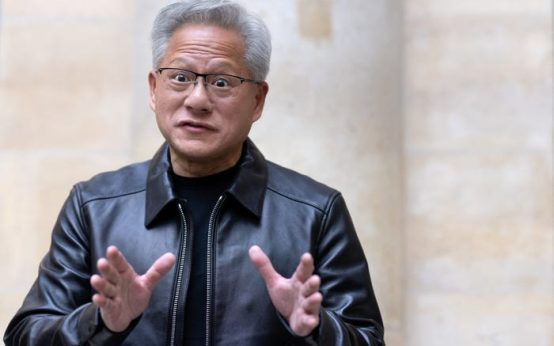
Nvidia’s CEO, Jensen Huang, admitted to an affair, following reports about his ties to a suspected Chinese spy. Since this revelation, Nvidia’s stock has dropped nearly 10%, closing at around $169 per share. The stock has also fallen over 30% from its peak of $243 on October 6. Concerns include high AI spending and fears of stricter regulations as Democrats gained control of Congress. This decline has wiped out more than $1.7 trillion from Nvidia’s market capitalization, surpassing Meta’s total value.
Burry doubts the scandal will severely impact Nvidia’s business. However, he warns that Nvidia’s competitive edge might erode faster than previously anticipated. He sees a potential risk if the US government decides to examine Nvidia’s chip trade in China and the company’s business methods. Burry labeled Nvidia’s AI investments and demands on other players as ‘mafia-like.’ He suggests that enforcement agencies might raise questions if investigations begin.
Although currently not inclined to buy Nvidia stock, Burry indicated many might soon see this as a trading opportunity. He predicted Nvidia’s strong market position would face challenges from evaluation multiples while maintaining high margins.
Nvidia did not comment when approached by Business Insider. The company’s stock rose by about 4% during premarket trading on Wednesday.
Long-term Skepticism
Michael Burry has been betting against Nvidia for some time. On October 11, he revealed shorting the VanEck Semiconductor ETF, where Nvidia comprises nearly 20%. Earlier, on September 28, Burry shared that he replaced his Nvidia short with bearish put options, targeting mid-$100s, set to expire next September. He opted for more leverage.
In January, Burry explained his stance on shorting Nvidia. He found it to be the key play for those doubtful about the AI boom, considering the company’s reliance on hyperscaler spending. Burry consistently warned against aggressive accounting, circular financing, hidden debts, overinvestment in microchips and data centers, and excessive stock-based compensation.
Burry is renowned for betting against the mid-2000s housing bubble, depicted in ‘The Big Short.’ Besides managing a hedge fund, he has been discussing his investments for about a year.
 Tech Founders Who Faced Ouster from Their Own Companies
 Microsoft Outage Disrupts Global Systems and Services
 Voter Resistance to AI and Data Centers in the 2026 Midterms
 The Huang Affair: Espionage, Export Controls, and AI Tensions
 Singapore’s Megaspeed and U.S. Export Restrictions