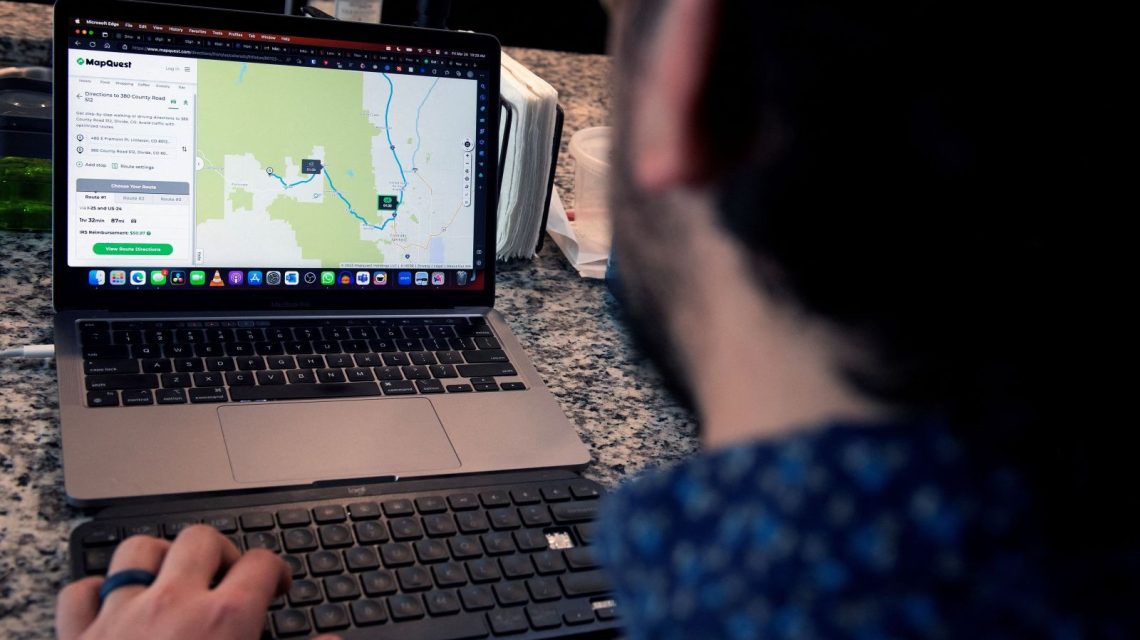
MapQuest gained national attention for refusing to change the name of Lake Ontario to ‘Lake America’ on its maps, a renaming ordered by President Donald Trump amid rising tensions in the U.S.-Canada trade war. President Trump’s executive order last week initiated this renaming, yet MapQuest chose to ignore it, consistent with its prior rejection of renaming the Gulf of Mexico to the Gulf of America.
The decision not to update its maps was publicly supported by MapQuest’s general manager, Doug Berger, who stated the choice was simple. With downloads soaring over 300% and the app becoming the top navigation download, Berger noted the public’s appreciation for MapQuest’s stance. ‘People let us know we were making the right decision with their downloads,’ said Berger. The naming dispute has exacerbated worsening relations between the U.S. and Canada following failed trade talks and new tariffs.
Federal agencies within the U.S. are adopting the ‘Lake America’ designation; however, Canada maintains recognition of Lake Ontario’s traditional name. Allison Schuster, a White House spokeswoman, stated the lake’s majority within U.S. territory justified the renaming. Meanwhile, MapQuest is owned by System1, a California-based advertising firm led by CEO Michael Blend, known for his political donations to Democrats.
Among Blend’s contributions are donations to Kamala Harris, Joe Biden, and Democratic candidates such as Sara Gideon and Jaime Harrison. While it’s unclear if Blend influenced MapQuest’s decision, his donations reflect his political affiliations.
MapQuest originated in 1996, pioneering online directions before smartphone navigation apps emerged. Acquired by AOL and later Verizon, System1 purchased the service in 2019. Despite being overshadowed by Google Maps and Apple Maps, MapQuest’s refusal to rename Lake Ontario has reignited interest.
Apple was reportedly approached by Trump regarding Lake Ontario’s name change, indicating the president’s determination. MapQuest took advantage of the publicity, allowing users to generate custom labels for the lake online. The move drew mixed reactions yet successfully revived interest in the platform.
Similarly, MapQuest resisted the Gulf of Mexico’s renaming, providing users with tools to name the body of water themselves. This consistent stance forms part of the company’s brand messaging, humorously labeling Lake Ontario ‘Lake Are We Doing This Again?’ while rejecting federal designation plans.
The renaming was driven by Trump’s argument that the lake significantly impacts American commerce and logistics. The executive order directed updates to U.S. geographic databases, yet Canada’s Prime Minister Mark Carney maintained that Lake Ontario’s historic name, stemming from the Wendat language, should remain.
Critics, including Democratic leader Hakeem Jeffries, called the renaming ‘ridiculous,’ emphasizing its triviality amid trade war repercussions. The Treaty of Canandaigua, honoring Indigenous land rights since 1794, has been invoked against changing the name.
Google Maps updated its results post-GNIS database revisions, showing ‘Lake America’ to users in the U.S., while maintaining ‘Lake Ontario’ for Canadian users and a dual label elsewhere.
Historically, Lake Ontario’s name originates from the Wendat term ‘Ontari’io,’ signifying beauty and antiquity. Canadian officials highlight the name’s Indigenous roots, as Representative Joe Courtney criticized the renaming as disparaging tribal nations.
As MapQuest reinstates its relevance amidst contentious debates, it highlights alternative mapping choices and cultural significance tied to historical naming conventions.
 Data Centers in Virginia face Growing Opposition
  Texas Leads Air Taxi Innovation with Project Nexus
  Experts Warn Against Alarmism in AI Governance
  AI and the Changing Nature of Google Searches
  Data Centers Stir Controversy in Texas Amid Growth Boom
  The Technology Rivalry: Trump’s Meeting with Xi and the AI Ecosystem Clash