
Overview of Lindsay Clancy’s Murder Trial
The murder trial of Lindsay Clancy in Massachusetts is reaching its final stages with closing arguments scheduled to be presented. After 21 days of testimony, Clancy is facing charges of first-degree murder for the deaths of her children: 5-year-old Cora, 3-year-old Dawson, and 8-month-old Callan. Clancy has entered a plea of not guilty.
The prosecution argues Clancy meticulously planned the murders and asserts that her subsequent suicide attempt lacked seriousness. Conversely, the defense claims she should not be held accountable due to being overmedicated and suffering from postpartum psychosis.
If convicted of first-degree murder, Clancy could face a life sentence without the possibility of parole. Alternatively, if found not criminally responsible, she may be sent to a psychiatric hospital in Massachusetts.
If you or someone you know is in emotional distress or a suicidal crisis, you can reach the 988 Suicide & Crisis Lifeline by calling or texting 988. Additionally, you can chat with the 988 Suicide & Crisis Lifeline online.
For comprehensive mental health care resources and support, contact The National Alliance on Mental Illness HelpLine, available Monday through Friday, 10 a.m.–10 p.m. ET, at 1-800-950-NAMI (6264) or via email at [email protected].
Activity Inside Plymouth Superior Court
The court proceedings are taking place at the Plymouth Superior Court in Massachusetts. Photography within the courthouse is prohibited. As of 8:43 a.m., media personnel and members of the public have formed lines outside the courtroom and are proceeding through security checks.
The trial will resume at 9 a.m. with closing arguments streamed live on CBS News Boston and YouTube.
Crowd and Public Interest
Significant public interest is evident at the courthouse. By 8:10 a.m., over 90 individuals, a mix of media and general public, were waiting to enter. The crowd comprised approximately 60% media members. Some attendees are wearing pink in a show of support for Lindsay Clancy.
Expectations for Closing Arguments
Kevin Reddington, Lindsay Clancy’s defense attorney, anticipates “fireworks” during his closing argument. Reddington plans to speak spontaneously rather than prepare written statements, aiming for impactful delivery.
Overview of Sentencing Options
If convicted of first-degree murder, Clancy faces life imprisonment with no parole option. Lesser charges like second-degree murder or manslaughter could also result. A verdict of not guilty is unlikely, as Clancy admits to the killings and no evidence was presented suggesting she didn’t commit the acts.
Judge and Legal Representation
Judge William Sullivan presides over the trial at Plymouth Superior Court. Recently, Sullivan denied a defense request for a mistrial after improper testimony about Clancy’s religious beliefs was presented. He instructed jurors to disregard this testimony.
The prosecution is led by Jennifer Sprague and Shanan Buckingham from the Plymouth District Attorney’s office. Defense efforts are spearheaded by attorney Kevin Reddington.
Understanding Postpartum Psychosis
A pivotal aspect of Clancy’s trial centers on postpartum psychosis, a condition argued to have influenced her actions. This rare disorder affects 1 to 2 per 1,000 women postpartum. Experts describe it as a mental health emergency impacting reality perception, sometimes leading to delusions and confusion.
Dr. Uruj Kamal Haider explained postpartum psychosis on “Healthful,” emphasizing recovery potential with timely, effective treatment. The condition demands immediate intervention to ensure safety for both the mother and the child.
 Failed Execution in Tennessee Sparks Outrage
  Federal Judge Rules Police Use of Flock Cameras Unconstitutional
  Police Capture and Legal Proceedings of Luigi Mangione
  Murdaugh’s Defense Accuses Prosecutors of Withholding Evidence
 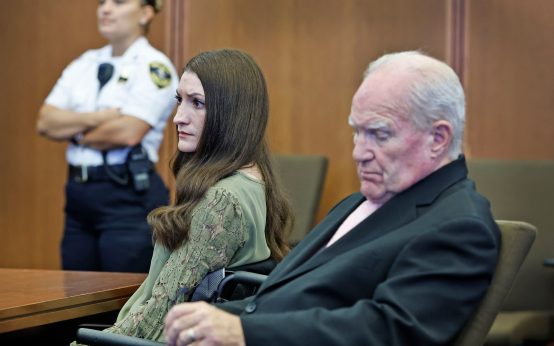 Massachusetts Judge Denies Lindsay Clancy’s Bid to Dismiss Murder Charges
  Botched Execution Leaves Tennessee Killer Christa Pike Hospitalized