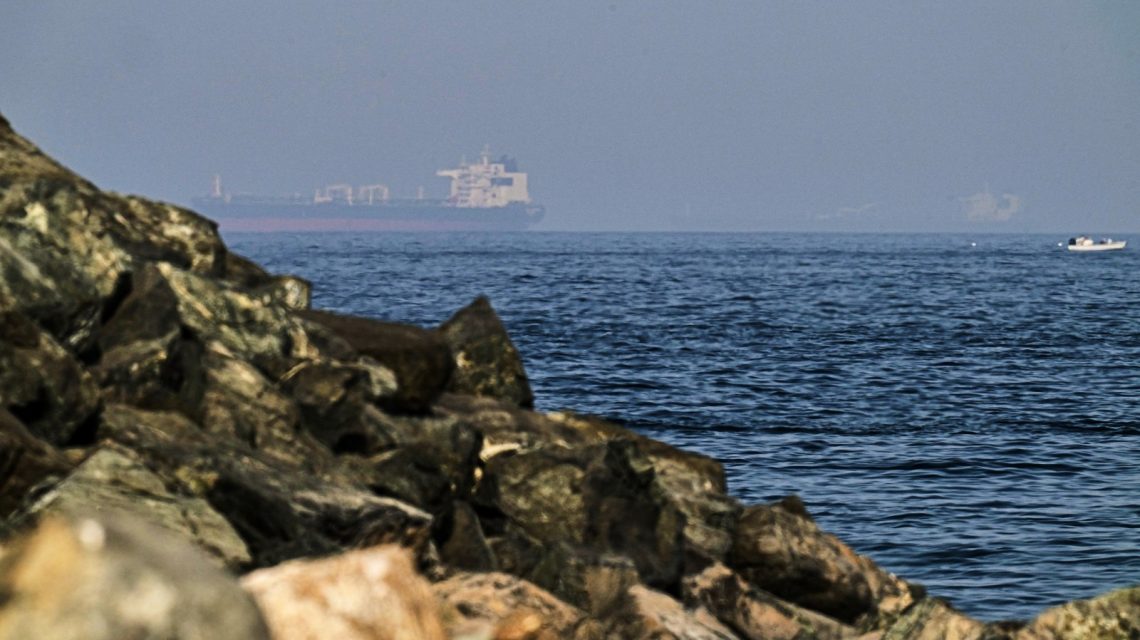
Iran’s Persian Gulf Strait Authority (PGSA) announced a new initiative on Sunday to regulate maritime traffic through the Strait of Hormuz, a crucial global shipping lane. The “Non-Compliant Vessels” list targets ships accused of violating Iranian transit regulations.
In an official statement, the authority warned that listed vessels might face restrictions such as fines, detention, or confiscation in the future. This move is part of Iran’s ongoing effort to assert control over the strategic waterway amid the Iran war.
Since mid-March, Iran’s Islamic Revolutionary Guard Corps has enforced a “tollbooth” procedure requiring foreign vessels to undergo vetting before passing through Iranian waters. These vessels must also pay fees intended to cover services like navigational help, vessel insurance, and environmental protection, as stated by the Iranian Foreign Ministry.
The Strait of Hormuz is a vital corridor for global energy traders, linking the Persian Gulf to international routes. Its narrow passage sees a large percentage of the world’s oil and gas exports, making new regulations critical for international stakeholders, including governments and energy markets.
Earlier in the month, former President Donald Trump commented on U.S. actions in the region, suggesting a controversial claim that the Strait might soon fall under U.S. control. Iranian officials dismissed this notion as “delusion.” Newsweek has approached the White House for clarification.
Impact on Shipping Operations
The PGSA’s decision complicates operations for vessel owners and cargo companies using this route. Vessels violating protocols may face future transit bans or penalties. Ships engaging with blacklisted vessels face similar risks.
Working Mechanism of the List
The PGSA advises cargo owners to check the list prior to chartering ships to avoid transit issues. Vessels found non-compliant face ongoing passage restrictions and penalties for engaging with blacklisted vessels.
For removal from the list, vessel operators must submit a request and explanation to PGSA for review. Updates on the list will be provided on the agency’s website.
Current Status of the List
The list presently includes 46 vessels deemed non-compliant with Iran’s transit rules. These vessels represent 17 different flag states, with many flying the Liberian and Marshall Islands flags.
The significant presence of open-registry countries such as Liberia reveals the complex nature of vessel registration targeted by Iranian authorities.
Future Developments
Stakeholders in the maritime industry are likely to scrutinize the list further to evaluate its impact on their operations. Monitoring by industry observers will focus on Iranian enforcement actions against listed vessels.
This development introduces new uncertainty to shipping through the Strait, already affected by geopolitical tensions and security issues in 2026. It remains to be seen how this influences product prices, which have escalated since the start of the conflict.
 The Cost of Challenging Beijing
  Tensions Escalate in Iran Conflict as Global Leaders Weigh Options
  White House Approves F-35 Sales to Saudi Arabia Amidst Regional Tensions
  Inside the Secret Deals Powering the President’s Push to Deport Migrants to Countries Not Their Own
  Navigating the Challenges of Third-Country Deportations
  Midair Altercation on Bangladesh to London Flight