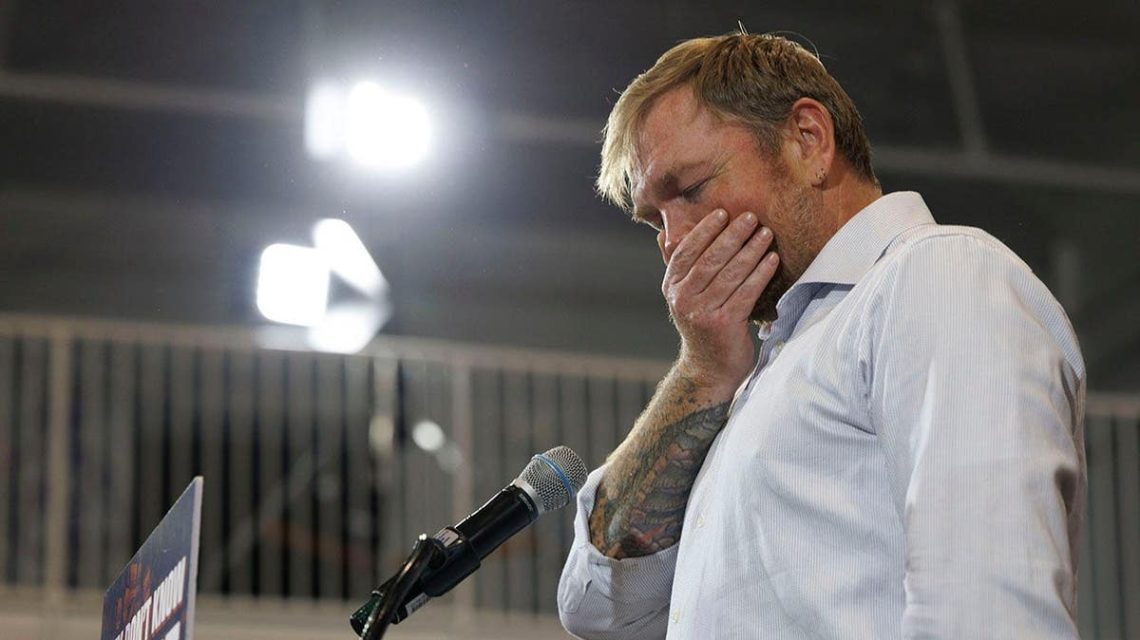
Graham Platner, a Democratic Senate nominee in Maine, announced the suspension of his campaign following accusations of rape by an ex-girlfriend, which he denied. Platner’s decision comes amid increasing calls for him to leave the race from Democratic leaders across the nation. Platner was a populist Democrat, supported by Sen. Bernie Sanders, and had been running against Republican Sen. Susan Collins in what was considered a vital race for determining the Senate majority.
Platner stated in a social media video that for the movement to continue, he could no longer be involved, thus freezing campaign operations. This decision emerged just before a crucial deadline that would allow Maine Democrats to replace Platner on the ballot.
Platner emphasized his innocence, addressing the allegations as false, and accused political figures of using such claims to undermine his campaign.
Jenny Racicot, the woman who brought forth the allegations, detailed the alleged incident, stating that Platner had forced her into non-consensual sex while intoxicated. Racicot revealed that Platner entered her home uninvited and proceeded against her wishes.
The accusations raised questions about Platner’s previous remarks on women and sexual assault, pointing to Platner’s repeated denial of the claims and his counterarguments regarding the brutality of politics taking away campaign necessities.
Platner’s campaign suffered a blow with other allegations including removing condoms during sex and physical misconduct towards Lyndsey Fifield, another former girlfriend. Despite the denials, major Democrats and supporters withdrew their endorsements, including Rep. Ro Khanna and Sen. Elizabeth Warren. Progressive organizations and figures distanced themselves from Platner, urging him to step down.
Platner’s campaign previously gained traction due to his strong populist approach but was marred by controversies over past online comments and tattoos resembling Nazi symbols, which he later amended. His victory in the primary was overshadowed by mounting allegations and criticism.
After Platner’s withdrawal, the Maine Democratic Party must select a new nominee by July 27. If Platner hadn’t exited by the deadline, Democrats would have been unable to replace him on the ballot.
Sen. Susan Collins responded to the allegations facing her opponent with a statement, highlighting the severity of the claims but maintaining that the choice of nominee rests with the Democratic Party.
The unfolding controversy provides Republicans with ammunition against Platner, and Platner’s initial popularity may transform into a liability for Democrats in the contested Senate race. Despite Platner’s suspension, the battle for the Senate seat in Maine continues to be a critical point for Democratic aspirations to regain control of the chamber.
 Trump’s Approval Rating Drops Below 30%
  American Tariff Rebate Act Introduced by Rep. Valerie Foushee
  The War on Poverty: A Lesson on Intentions and Outcomes
  Reporters Blocked from White House by Trump Administration
  Universities Should Reject Political Influence on Research Funding
  Trump’s Approach to China: Trade Dynamics and Challenges