
Support for Israel is a significant aspect of the religious identity for many Jewish adults aged 45 and older in the United States. However, younger Jewish adults tend to focus on other forms of connection, such as celebrating Jewish holidays, according to an AP-NORC poll. This indicates that the generational divide regarding Israel’s actions since the Hamas attack on October 7, 2023, is not only political but also tied to religious identity.
Cameron Bernstein, a 27-year-old medical student in New Orleans, reflects this shift. Raised with strong ties to Israel, where she celebrated her bat mitzvah, Bernstein now feels Israel is no more significant in her life than any other country where she has loved ones. She states, “I pray for people in the land of Israel. I don’t need to pray for the state.”
The survey conducted by The Associated Press-NORC Center for Public Affairs Research included 1,022 Jewish adults and reveals a noticeable split in support for Israel, especially among those identifying as religiously Jewish. Jewish adults who are religiously unaffiliated but identify culturally or ethnically as Jewish often have weaker emotional connections to Israel.
Survey Methodology
The survey included 3,040 U.S. adults and took place from June 11-17, 2026, using the AmeriSpeak Panel by NORC, designed to be demographically representative. The survey sample had 1,022 Jewish adults, with survey weighting ensuring accurate population representation.
Participants were classified as Jewish if they reported Judaism as their religion or identified as Jewish based on ethnic, cultural, or familial ties. Among religiously Jewish adults, about 6 in 10 regard being Jewish as “extremely” or “very” important. Approximately half of older Jewish adults say supporting Israel is as crucial as celebrating Jewish holidays. In contrast, only 4 in 10 younger adults prioritize Israel, with 7 in 10 placing more importance on Jewish holiday celebrations.
Views on Israel and Jewish Identity
Susan Boyer, a 72-year-old from Southern California, equates supporting Israel with maintaining a Jewish homeland. She sees Israel as a necessary refuge amidst rising antisemitism, recalling childhood experiences of discrimination. “I’ve been defending myself as a Jew since I was a child,” Boyer says. She emphasizes the importance of constantly defending Jewish identity.
Meanwhile, Ari Pollack, a 30-year-old arts fundraiser, criticizes Israel’s military actions over recent years, citing increased antisemitism as a result. “I’m personally opposed to basically everything Israel’s doing these days,” Pollack comments. He attributes his distance from synagogue activities to the pressures of indoctrinated pro-Israel ideologies.
Pollack’s view aligns with about 3 in 10 religious Jewish adults under 45 who accuse Israel of genocide in Gaza, a claim Israel denies. In comparison, only 2 in 10 Jewish adults over 45 share this view. Younger Jewish Americans often regard elements such as Shabbat or dietary restrictions as important to their identity.
Phoebe Wapnitsky, 32, opposes Israel’s military actions, seeing them as incompatible with Jewish values of social justice. Similarly, Brian Ebarb, a 47-year-old attorney, emphasizes both community action and Israel’s support in his Jewish identity, cautioning against conflating criticism of the Israeli government with criticism of the Jewish people.
The Associated Press’s religion coverage benefits from AP’s partnership with The Conversation US, funded by Lilly Endowment Inc., though AP retains full content responsibility.
 The Cost of Challenging Beijing
 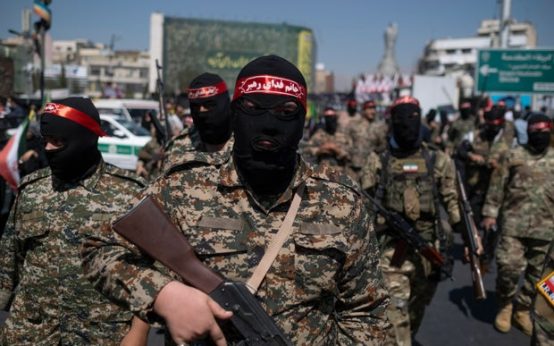 Tensions Escalate in Iran Conflict as Global Leaders Weigh Options
  White House Approves F-35 Sales to Saudi Arabia Amidst Regional Tensions
  Inside the Secret Deals Powering the President’s Push to Deport Migrants to Countries Not Their Own
  Navigating the Challenges of Third-Country Deportations
  Midair Altercation on Bangladesh to London Flight