An American fighter jet was shot down over Iran on April 2, leaving two U.S. Air Force officers stranded and pursued by Iranian forces. To prevent their capture five weeks into a controversial war that claimed 18 U.S. service members, the U.S. military launched one of its largest rescue operations.
This mission unfolded during a war initiated in February, combining sea and air strategies. Adm. Brad Cooper, commanding the operation, confirmed that by then, they had carried out around 13,000 missions. The U.S. maintained air superiority, yet the mission’s complexity was clear.
Mission Goals and Initial Incident
The downed aircraft, an F-15E with the call sign DUDE 44, aimed to strike industrial sites related to Iran’s drone and missile programs. It was not targeting the Isfahan nuclear facility, according to Adm. Cooper. A shoulder-fired missile, approximately costing $100,000, took down the $30 million jet.
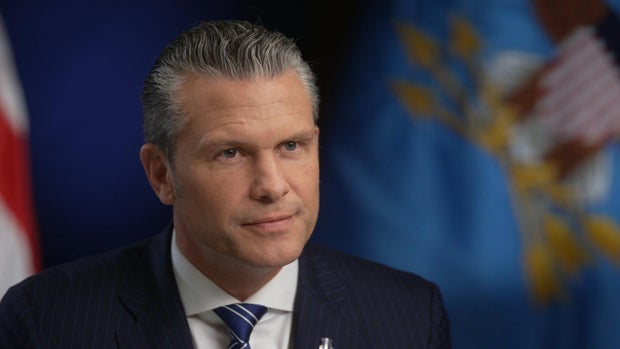
Iranian media released wreckage evidence shortly after the incident. Defense Secretary Pete Hegseth was notified late at night about the plane’s fate.
Secretary Pete Hegseth: “You always knew it was possible. The immediate thought was, ‘Are they okay, and does Iran know that?’ Whether confirmed alive or not, retrieval was imperative.”
Ejection and Survival
The weapon systems officer, using the mission call sign Bravo, and his pilot Alpha, ejected from the jet. They found themselves separated by five miles upon landing in the rugged Iranian desert. Bravo’s parachute malfunctioned, resulting in a perilous descent.
Despite severe injuries, including a broken back, Bravo quickly fled his landing site. The remote area featured high valleys and cliffs, requiring him to climb a 7,000-foot ridge despite his condition.
Iranian Pursuit and Stealth Operations
Iranian forces neared Bravo, with U.S. military estimates indicating 1,500 Iranian troops within a 10-mile radius. Videos of armed groups searching for the crew circulated online. Concerns of capture and public exhibition loomed, intensifying the U.S. resolve to retrieve Bravo.
Six hours into the ordeal, the U.S. secured Alpha. Bravo undertook tactical navigation and communication methods, sending a message indicating his gratitude for surviving, which confirmed his status to the U.S. command.
Securing Bravo
The rescue of Bravo involved extensive coordination and support. The CIA played a key role, employing deceptive tactics and precision technology to pinpoint his location. American bombers and drones engaged to neutralize nearby threats.
The second extraction mission comprised 92 personnel on the ground, marking the first U.S. operation within Iran in decades. Hundreds more were involved in other support roles. Despite complications, Bravo was safely extracted with the aid of elite Air Force pararescue operators known as PJs.
Returning to the makeshift airstrip, further challenges arose as planes faced takeoff difficulties in the sand. Ultimately, the U.S. bombed its marooned aircraft to prevent technological capture.
Aftermath and Reflections
The operation concluded as Bravo returned safely, having endured a harrowing 50-hour ordeal. Secretary Pete Hegseth shared his appreciation for Bravo’s resilience and the significant logistics undertaken to fulfill the mission.
Bravo: “This mission highlights teamwork, training, faith, decisive leadership, and a commitment to leave no one behind.”
The narrative of professional collaboration and strategic execution in high-stakes situations serves as a testament to the capabilities and resolve of the U.S. military.
 U.N. Secretary-General António Guterres Addresses Final General Assembly
  Suspects in Haitian President’s Assassination Extradited to U.S.
  UN General Assembly: Global Leaders Seek Influence Amid International Conflicts
  US Embassies Warn Americans After Houthi Missile Attack
  Understanding Iran’s Political Landscape Amid Ongoing Conflict
  China’s Surveillance Expansion in Djibouti Sparks Concerns