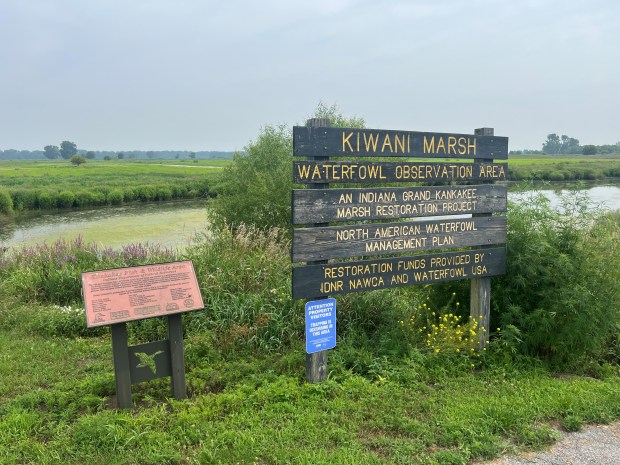
This year, as the nation marks its 250th anniversary, I find a personal connection in the historical significance of our local Kankakee River and marshland. Every day, I cross the Kankakee River on my way to our family farm. It is a journey steeped in history, with stories dating from the mid-1700s to the 1930s.
The Historical Importance of the Kankakee River
According to historian John Hodson, president of the Kankakee Valley Historical Society, the stretch of the Kankakee River near Baums Bridge Road in Kouts is of great historical significance. Hodson purchased the Collier Lodge, adjacent to the bridge, in 2000 to save it from disrepair. Built in the late 1800s, this lodge was one of many premium sportsmen’s lodges in the area.
These lodges thrived thanks to the accessibility provided by the bridge and Baums Road. My father, Chester, like many historians, regretted the early 20th-century governmental decision to drain the Grand Kankakee Marsh. This move aimed to create more farmland but turned out to be a mistake. More than 500,000 acres of marshlands were lost.
From Sportsmen Era to Modern Restoration
Today, the Collier Lodge remains the last standing relic from the 1880-1910 sportsmen era. This was a time when President Theodore Roosevelt and other notable figures, like Grover Cleveland and General Lew Wallace, visited the area to hunt and fish.
Recently, while visiting my niece in North Judson, I drove past the revitalized Kiwani Marsh, managed by the Indiana Department of Natural Resources. Spanning over 125 miles, the marsh is now a vibrant habitat for waterfowl and wildlife, thanks to restoration efforts initiated in 2010 and completed in 2012.
The Indiana DNR utilized the expertise of Ducks Unlimited to restore the Kiwani Marsh. Historically, the Potawatomi referred to ‘kiwani’ as ‘lost,’ a fitting name for this once-drained wetland now brought back to life.
The Legacy of President Teddy Roosevelt
President Teddy Roosevelt, known for his robust stature and love of the outdoors, also had a notable appetite. His favorite dish was his mother’s fried chicken with pan gravy. Both he and his successor, President William Howard Taft, were known for their hearty appetites.
Teddy Roosevelt’s Favorite Fried Chicken Recipe
Serves: 4
Ingredients:
- 4 boneless, skinless chicken thighs
- Brine: 1 cup buttermilk, 1 egg, 1 1/2 teaspoons salt
- Coating: 1 1/2 cups flour, 1/2 cup cornstarch, 1 teaspoon baking powder, 2 teaspoons paprika, 2 teaspoons garlic powder, 2 teaspoons onion powder, 2 teaspoons black pepper, 1 1/2 teaspoons salt
- 4 cups peanut oil
- Gravy: 2 tablespoons bacon fat, 2 tablespoons flour, 1 1/2 cups whole milk, 1 teaspoon white vinegar
Directions:
- Brine the chicken: Flatten thighs to half-inch thickness. Mix buttermilk, egg, and salt. Soak chicken in mixture for at least 4 hours. Keep brine.
- Coating: Combine coating ingredients. Add a few spoonfuls of brine to flour mixture for flaky bits.
- Fry: Heat oil to 400°F. Coat chicken in flour mixture, pressing it well. Fry until golden and cooked through.
- Gravy: Melt bacon fat, whisk in flour, cook for a minute. Gradually add milk, simmer until thick. Stir in vinegar, season with salt and pepper. Serve over chicken.
Columnist Philip Potempa is a published cookbook author and radio host. Contact him at [email protected] or mail From the Farm, PO Box 68, San Pierre, Ind. 46374.
 Controversial Claims in Charles Spencer’s Book about Princess Diana’s Divorce
  Life Through Cancer: A Family’s Journey of Love and Resilience
  The Curious Case of Mark Jackson’s NBA Hoops Card
  Communities Continuing Recovery from Hurricane Helene Explored through Graphic Novel
  Art Institute of Chicago Returns Nazi-Looted Painting to Heirs
  ICE Officer’s Shooting of Venezuelan Driver Without Body Camera Raises Concerns