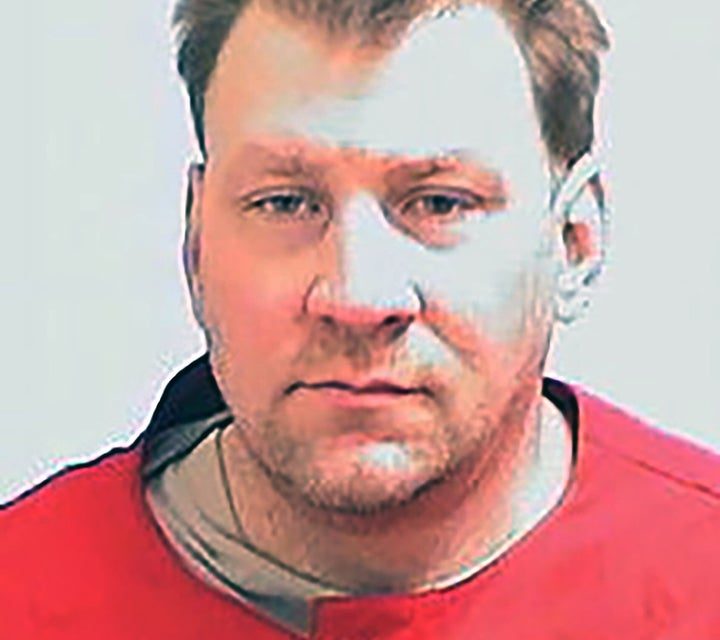
An Indiana man named Jeffrey Weisheit was executed early Thursday, marking the first of three scheduled lethal injections in the U.S. on the same day. Weisheit had admitted to killing his girlfriend’s children by setting fire to their Evansville home in 2010. He was executed at the Indiana State Prison in Michigan City, where the procedure began just after midnight, and he was declared dead at 12:45 a.m., as confirmed by Noelle Russell, the Indiana Department of Correction’s chief communications officer. Weisheit’s last meal included barbecue ribs, and he offered no final words.
Florida and Alabama were also preparing executions for Thursday. This would be the second instance this year of three individuals facing execution on a single day in the U.S. Florida, under Republican Governor Ron DeSantis, was on track for its 19th execution this year. Indiana had not executed anyone this year until now.
“These reviews have never resulted in an overturned sentence,” said Governor Mike Braun, confirming the execution followed legal scrutiny.
The death penalty recently faced renewed examination after a failed execution in Tennessee. Lawyers for Weisheit had argued for a life sentence, seeking brain scans to highlight his history of head injuries and mental health issues. Governor Mike Braun dismissed these requests, maintaining the original sentence. Weisheit’s objections also included the source of the lethal drugs used for his execution. The Indiana Department of Correction expressed confidence in their actions.
Following the execution, Indiana Attorney General Todd Rokita remarked on achieving ‘long-awaited justice’ for the victims, Alyssa Lynch and her brother Caleb, whose lives were tragically taken.
In Florida, Jesse Guardado confessed to a 2004 murder in Walton County. He was found guilty of stabbing a 75-year-old woman who had supported him with a job and housing. A federal appeals court upheld his sentence, finding the decision process thorough. Florida has conducted more than half of the 32 executions in the U.S. this year.
In Alabama, Michael Taylor faced execution for a 1988 crime committed when he was 19. He had been convicted of killing an elderly couple in Gadsden. Despite appeals citing his youth at the time, Governor Kay Ivey maintained the death sentence. His execution method, initially preferred as nitrogen gas, was later switched to lethal injection.
“If the state kills Michael, it is not the 19-year-old who made the worst mistake of his life who it kills,” said Esther Brown from Project Hope to Abolish the Death Penalty. “But the mature, well-respected, God-fearing man sitting in that cell today.”
As the debate over the death penalty persists, these cases spotlight the ongoing discussions surrounding legal processes and ethical considerations in capital punishment.