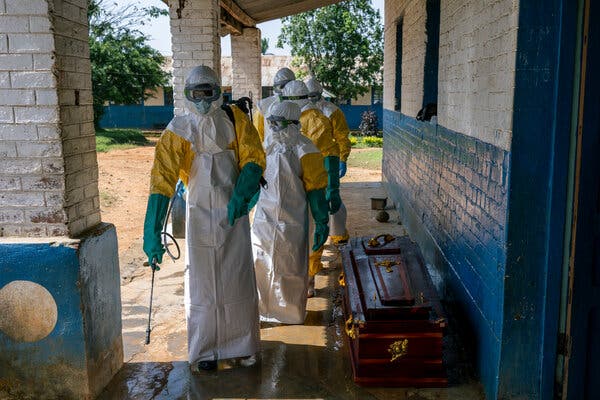
The Bundibugyo virus, previously responsible for just two small outbreaks, is now at the center of a quickly expanding epidemic in Africa. The Ebola outbreak is affecting regions in the Democratic Republic of Congo and Uganda, necessitating urgent action from health workers. They are working hard to provide supportive care, hoping some patients will recover independently, while prioritizing isolation of the sick and contact tracing of the infected.
However, there is a notable absence of vaccines and drugs that could potentially contain the virus. This has frustrated scientists and intensified the urgency to develop these medical tools. Recently, two significant nonprofit vaccine organizations announced funding in the tens of millions to support the development of vaccines. Additionally, the World Health Organization experts have advised testing several monoclonal antibodies and other drugs as possible treatments.
Researchers estimate it could take months to determine the effectiveness of these measures. Yet, even if treatments take time to prove effective, their eventual availability is expected to be crucial, given that the outbreak seems set to persist. According to Richard Hatchett, the CEO of CEPI, an organization that fosters the development of vaccines, addressing this outbreak will require a prolonged, dedicated response.
One of the complexities of combatting Ebola is that it is not attributed to a singular virus type. The term “Ebola virus” generally refers to a species first identified in 1976 in what was then known as Zaire.
 Managing Parenting Stress: Practical Tips from Cassidy Freitas
  Trump’s Executive Order Targets Mosquito and Tick Control
  Understanding the Impact of GLP-1 Weight-Loss Drugs on Brain Health
  Gene Editing and Ethical Debates at Origin Genomics
  Supporting Child Mental Health: The Role of Home Environments
  Abdul El-Sayed Aims to Attract ‘Make America Healthy Again’ Supporters in Michigan Senate Campaign