
On Wednesday, House Democrats exhibited a split over U.S. military assistance to Israel. A proposal from Representative Thomas Massie, a Republican from Kentucky, aimed to cut $3.3 billion in annual military aid to Israel. However, the amendment did not gain sufficient support.
Division Within the Democratic Party
The vote saw Democratic leadership divided, with 103 votes supporting the amendment and 98 opposing it. This division reflects ongoing debates within the party regarding U.S. assistance to Israel. Historically, Israel has been a major recipient of U.S. military aid, but changing public opinion is influencing the political landscape.
Public Opinion Trends
A New York Times/Siena College poll from May revealed that 74% of Democrats oppose additional U.S. aid to Israel, while only 8% strongly support it. Among potential Democratic voters, 48% believe the party has been too supportive of Israel. Similar views were echoed in an August 2025 Quinnipiac University poll, where 75% of Democrats opposed further military aid amid conflicts in Gaza.
Details of Massie’s Amendment
Massie’s amendment proposed eliminating the $3.3 billion in Foreign Military Financing (FMF) intended for Israel as part of the fiscal 2027 appropriations bill. Currently, Israel receives about $3.8 billion in aid annually under a 10-year agreement established in 2016, which includes funding for missile defense cooperation.
This proposal came after significant humanitarian and security events involving Israel, including emergency military aid authorized by the U.S. in response to attacks and military campaigns involving both Israel and Gaza.
Democratic Votes and Statements
While the majority of Democrats opposed the amendment, some voted in favor, expressing the need for a reevaluation of U.S. foreign assistance policy. Former House Speaker Nancy Pelosi and Representative Seth Moulton highlighted concerns over the current Israeli government’s policies and their alignment with U.S. interests.
Changing Views on Israel
The U.S. has maintained a closeness with Israel over decades, but recent shifts in public opinion reveal deepening divisions. Polls show an increasing number of Americans, specifically Democrats, question the level of support provided to Israel compared to the support given to Palestinians.
In various surveys, including those from AP-NORC and Pew Research, Democratic respondents demonstrated support for a more balanced U.S. policy towards the Israeli-Palestinian conflict. These findings suggest a growing sentiment among Democrats toward reassessing traditional alliances.
House Minority Whip Katherine Clark emphasized that foreign assistance should align with American laws, interests, and values, a stance resonating with many Democratic voters concerned about the direction of U.S. foreign policy involving Israel.
 The Impact of Arts and Closure on Democracy
 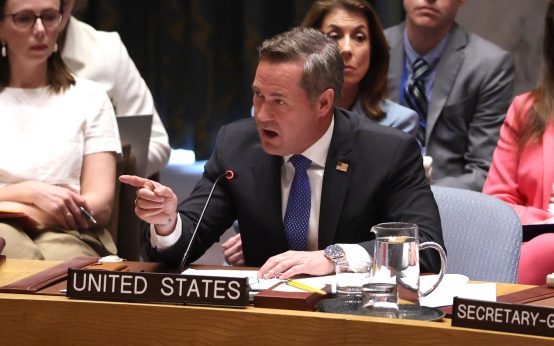 U.S. Ambassador Comments on Iran War Duration Amid Political Concerns
 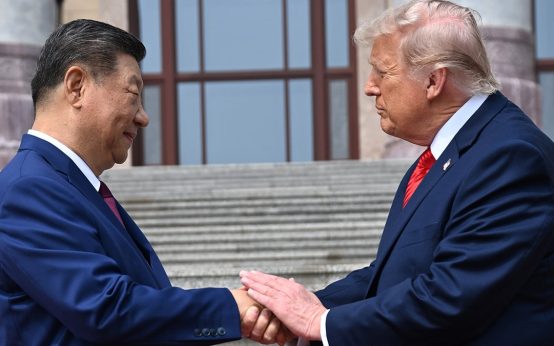 US-China Relations Under Scrutiny: Expert Warns of Escalating Tensions
  No Timeline for End of Iran Conflict
  German Chancellor Merz Vows to Pursue Reforms Despite Election Setbacks
  The Technology Rivalry: Trump’s Meeting with Xi and the AI Ecosystem Clash