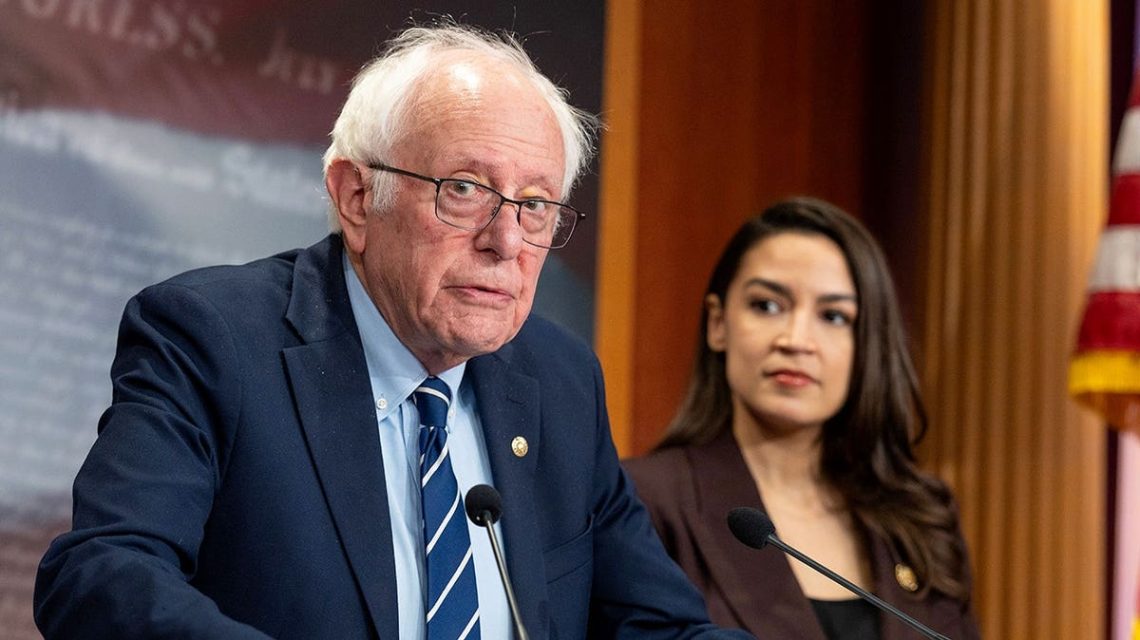
Top Democrats, including Sen. Bernie Sanders, have recently expressed concerns about artificial intelligence (AI) and its potential effects on employment. They advocate for government action to address these worries. “How do you proceed and displace millions without planning for the future?” Sanders questioned during an April press conference.
However, since AI chatbots launched in late 2022, the U.S. labor market has shown resilience. Jobs have been added while unemployment remains low, according to the Bureau of Labor Statistics. This discrepancy highlights the difference between free-market and centrally planned perspectives.
Richard Stern, an economist at Advancing American Freedom, a conservative think tank, views this as a fundamental ideological clash. “It highlights the contrast between free market and central planning but also how one views human purpose. Is it to simply follow orders or to provide new value and service?” he stated.
Historically, innovation led to job evolution rather than permanent loss. Stern cites the weaving industry’s disruption after the 1820s’ invention of the Jacquard loom, an early automated tool using punch cards. This allowed the creation of patterns without human memorization.
Despite the rise of AI, the U.S. workforce continues growing. Non-farm payroll employment increases each year, and unemployment stays below 4.5%. Some companies adapted by maintaining junior workers, realizing AI isn’t replacing them as feared.
Democrats argue for government intervention to mitigate AI’s labor impact. Sanders states, “AI will profoundly affect every American’s life, possibly taking jobs.” A Stanford study found a 16% employment drop for younger workers in AI-exposed jobs like programming and customer service.
Rep. Greg Casar, chair of the Congressional Progressive Caucus, echoes these concerns, noting that the government seems unaware of AI’s threat. He criticized a failed AI regulatory attempt, arguing, “AI enriches a few, eliminates jobs for millions, and receives no government action.”
Conversely, Trump’s former deputy chief of staff, Taylor Budowich, argues that AI will enhance productivity and employability. He rebuffs fears, asserting that the current administration’s AI initiatives aim to help American workers.
Lawmakers like Rep. Alexandria Ocasio-Cortez and Sen. Elizabeth Warren have also warned about AI’s potential to disrupt employment. Warren stated in June, “We can’t wait for job losses to act,” while Ocasio-Cortez noted growing public concern over AI-induced unemployment.
Stern suggests trust is central to adapting to technological change. People must decide whether to trust entrepreneurs or government intervention. He compares reliance on AI to government trust, saying both involve seeking solutions without acknowledging potential errors.
 Keurig Dr Pepper Introduces AltaRounds to Reduce Coffee Pod Waste
  Impact of Trump’s AI Accord in Washington
  Fox News Achieves Top Spot on YouTube and Social Media Platforms
  Understanding the RatHat Android Malware Threat
  AI Responsibility and Liability: Examining the Risks
  Latest Developments in Small Business Tech and Innovation