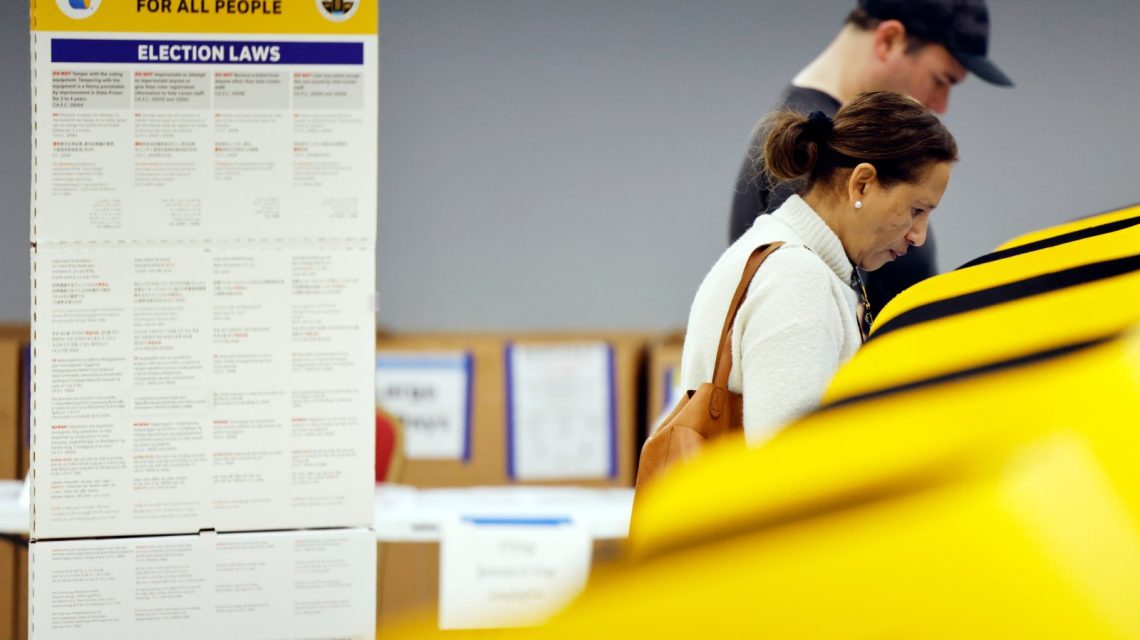
A Trump administration official critiqued California’s voter ID policies, claiming the state does not ensure voters are American citizens. This comment comes amid reports of a federal crackdown on alleged voter fraud in select states.
California’s Voter Registration System
In an interview, U.S. Attorney for Central California, Bill Essayli, expressed concerns about the state’s voter registration process. He claimed it operates on an honor system without sufficient checks for citizenship verification.
“There isn’t anybody in government checking to confirm you are a citizen,” Essayli noted.
The Department of Homeland Security (DHS) plans to announce investigations into potential voter fraud in states like New York, Pennsylvania, and California.
A DHS spokesperson stated that Homeland Security Investigations (HSI) is examining alleged election fraud actively. “Under President Trump, HSI is committed to restoring integrity to our election systems and ensuring that American citizens and only American citizens are electing American leaders,” the spokesperson said.
Comparing Voter ID Rules Across the U.S.
Nationwide, some states require documentation of citizenship when registering to vote, while others do not. This discrepancy has fueled the administration’s push for a national voter ID approach. The U.S. Constitution assigns the responsibility of election administration to states, leading to a variety of rules and practices.
According to the National Conference of State Legislatures, several states have enacted laws demanding proof of citizenship. Others, like Arizona and Georgia, use database checks or request documentation when a voter’s status is questionable.
Currently, 36 states require or request voters to show identification at polling places. In contrast, other states use alternative methods of verifying voter identity, resulting in different standards nationwide.
California Under Scrutiny
Essayli reported that about 400,000 people registered to vote in California without identification records, though it was not clear if this group participated in elections. As California voters consider Proposition 39, which mandates government-issued ID for voting and enhances citizenship verification, debate continues.
Supporters argue the proposal aligns California with other states’ practices, building public trust in election outcomes. Critics, however, claim that such measures could negatively impact lower-income voters, seniors, and people lacking the necessary documentation.
Ongoing National Dialogue
The national debate on voter ID continues as states, courts, and Congress explore election integrity initiatives endorsed by Republicans but opposed by many voting rights groups. Efforts to enforce proof of citizenship when registering for federal elections have been a focal point.
President Trump has advocated for tighter citizenship verification to protect election integrity. However, reports from the DHS show that while thousands of potential non-citizen voters have been identified, critics stress that noncitizen voting is already illegal and infrequent.
Court challenges have raised concerns that increased documentation requirements may discourage eligible voters who do not possess necessary documents like passports or birth certificates. Despite this, conservative groups continue to lobby for nationwide policies demanding citizenship verification in voter registration.
 American Tariff Rebate Act Introduced by Rep. Valerie Foushee
  The War on Poverty: A Lesson on Intentions and Outcomes
  Reporters Blocked from White House by Trump Administration
  Universities Should Reject Political Influence on Research Funding
  Trump’s Approach to China: Trade Dynamics and Challenges
  Media Outlets Sue After White House Ban