
The United States military announced it targeted another merchant vessel attempting to breach the blockade on Iranian ports. As Iran launched attacks on U.S. strongholds around the Persian Gulf, tensions have remained high with no signs of de-escalation. Both nations have been in conflict for the thirteenth consecutive night, with diplomatic efforts stalling. In response, U.S. embassies throughout the Middle East have warned Americans of limited exit options, while Iran’s Revolutionary Guard advised populations in neighboring countries to avoid U.S. military bases.
Rising Military Actions
Saudi Arabia initiated an attack on Yemen’s Hodeida port in retaliation for Houthi strikes against Saudi oil tankers in the Red Sea. Teheran-backed Houthis have vowed to intensify their operations after weeks of tensions disrupting long-standing peace. In response, U.S. forces disabled the M/T Lavine in the Gulf of Oman for attempting to break the blockade multiple times, stated Captain Tim Hawkins of the U.S. Central Command. Despite numerous warnings, the vessel’s crew defied instructions, leading to military action against the ship’s engine room. This is the second commercial vessel neutralized after the blockade was reinstated. U.S. forces have redirected 12 other ships during the blockade.
The day the naval blockade was reestablished, U.S. forces reported firing at the Curacao-flagged tanker Belma, which headed to Iran’s main oil terminal, Kharg Island. Ignoring multiple warnings, a U.S. aircraft disabled the tanker with a missile on its smokestack on July 15. Earlier, President Donald Trump described negotiations with Iran as the most serious yet seen, even as daily attacks continue. Trump stated he is not in a rush to end the conflict.
Strategic Region and Economic Impact
At the center of this battle lies the Strait of Hormuz, a vital passage for global energy supplies, currently closed by Iranian assaults, leading to soaring fuel prices and widespread economic unrest. U.S.-Iranian exchanges have extended into various regions, such as northern Iraq, where U.S.-led forces reportedly shot down five explosive drones. Recurrent explosions resounded in Irbil, Iraq’s Kurdish region capital, and black smoke was visible near its airport, a base for U.S. forces.
The Revolutionary Guard asserted it struck a U.S. base in Udairi, Kuwait, destroying munition depots and damaging a 5th Fleet surveillance tower in Bahrain. U.S. Central Command did not comment on these reports. On the other hand, U.S. forces targeted a Revolutionary Guard naval base in northern Iran, resulting in explosions reported by Iranian news agencies Fars and ISNA.
Ongoing Maritime Concerns
The proxy conflict in Yemen also saw Saudi vessels targeted in the Red Sea. Iran’s Houthi allies escalated tensions by attacking two Saudi oil tankers, threatening the strategic Bab el-Mandeb strait, crucial for Middle Eastern oil transit. Saudi Arabia vowed to protect its ships and warned of military retaliation against Houthi hostility.
Approximately 12 percent of global trade, including significant container traffic, passes through the Bab el-Mandeb. Saudi Arabia has rerouted millions of oil barrels daily to bypass the Hormuz Strait. The price of Brent crude slightly declined to $96 but remains above the pre-war rate of $72 per barrel, impacting U.S. gas prices.
Humanitarian and Negotiation Obstacles
Beyond economic effects, the human toll grows. Iran’s Health Ministry reported over 3,400 deaths since the conflict began. Approximately 6,000 sailors are stranded across 400 ships near the Hormuz Strait, according to the International Maritime Organization. The UN’s human rights chief requested urgent measures for these mariners exposed to danger and abandoned by shipowners.
Despite rising tensions, diplomatic progress is absent. Pakistan’s Foreign Minister Ishaq Dar, involved in prior talks, met with Iran’s Foreign Minister Abbas Araghchi. However, Araghchi downplayed mediation efforts, suggesting the U.S. needs a policy shift.
U.S. and Israeli forces initially attacked Iran on February 28, stating changing objectives, including regime change and eliminating Iran’s nuclear program. Israel remains poised to rejoin the conflict, as expressed by Israeli Prime Minister Benjamin Netanyahu, who plans to meet with Trump in the upcoming week.
 Gorillaz and Macklemore Respond to Controversy Over Israel-Palestine Statements
 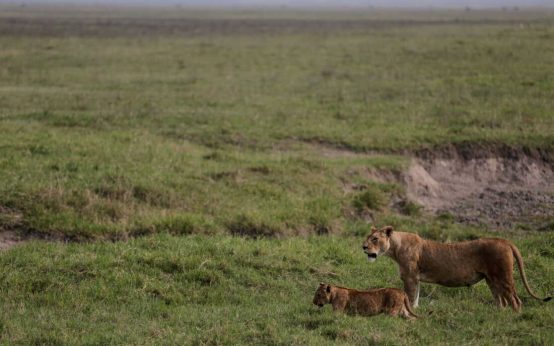 Investigation into Lion Deaths in Tanzania
 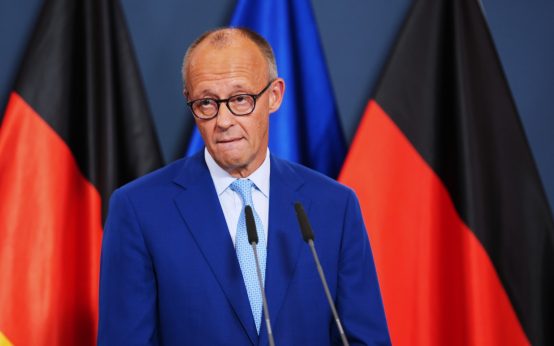 Merz Stays Resolute Amid Electoral Shifts in Germany
 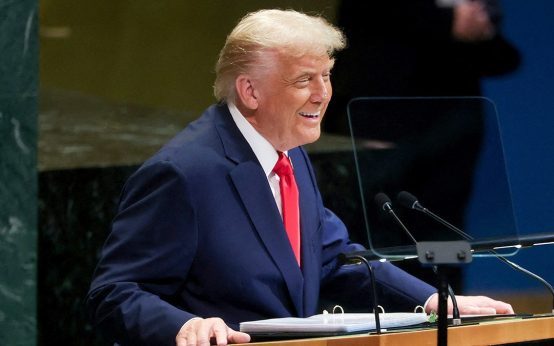 U.S.-Iran Relations and Diplomacy at Upcoming U.N. Assembly
 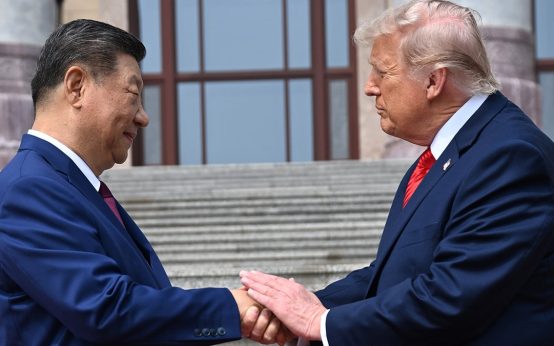 US-China Relations Under Scrutiny: Expert Warns of Escalating Tensions
 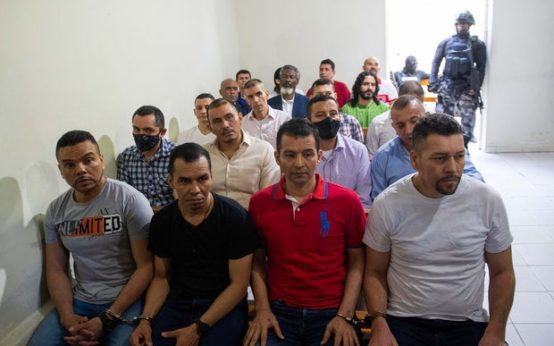 Extradition of Suspects in Haitian President’s Assassination