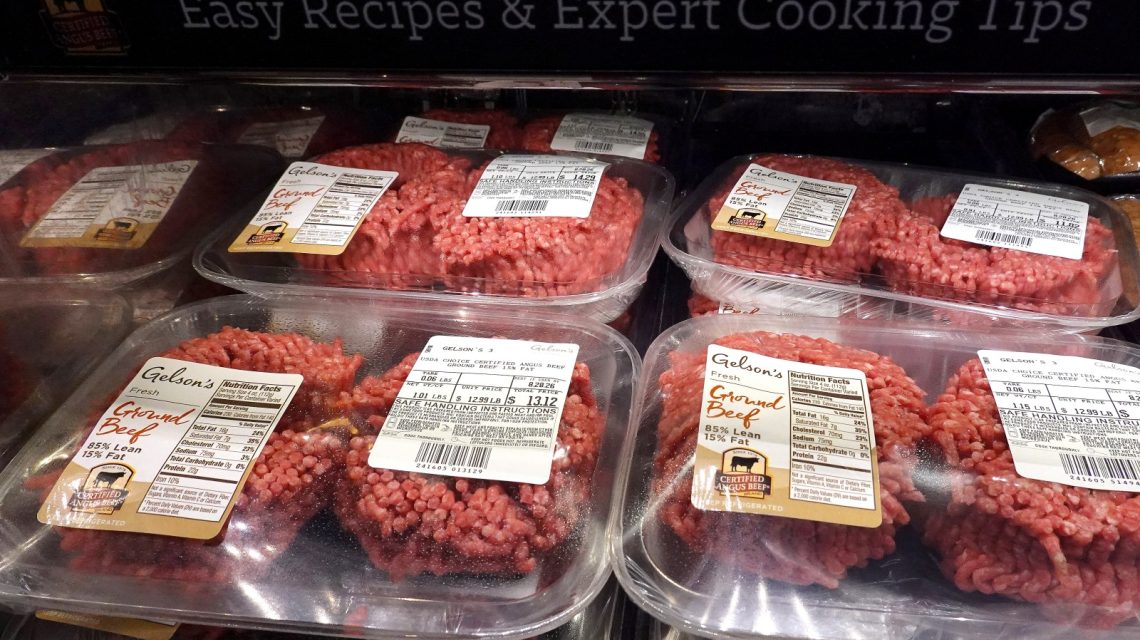
Donald Trump has expressed concern about the rising prices Americans pay for beef. His plan to allow an increase in foreign ground beef to lower these costs has been labeled a “short-term Band-Aid” by Ben Spell, the founder of Good Ranchers, a meat distribution firm in the United States. Environmental factors such as years of drought, high feed costs, and herd liquidation have significantly increased beef prices. To tackle this, the U.S. president announced an allowance of 300,000 metric tons of ground beef imports at a reduced tariff rate for 90 days. On August 21, Trump stated that this meat could be sold 25 percent below market prices as part of efforts to address cost-of-living concerns ahead of important midterm elections in November.
Spell, whose firm sources meat domestically, disagrees with the notion that more cheap foreign beef is a long-term solution. He acknowledges the immediate relief needed by American families but emphasizes the need to address the bigger underlying challenges. The White House indicated an executive order would be issued within two weeks, though specifics on the origin of the beef, sellers, and how savings would reach consumers remain unclear. The policy has encountered opposition from farm and ranch groups and GOP lawmakers, typically aligned with the president regarding agricultural issues. According to Spell, the beef pricing problem took a decade to develop, suggesting that it cannot be resolved in a mere 90 days.
“We disagree that more cheap foreign beef is the long-term solution. It’s a shot in the arm for American families, and I know people need relief, but there’s a bigger underlying problem that has to be addressed.”
Questions arise over the origin of imported beef. Spell, promoting transparency in meat sourcing, highlights the conflict between American ranchers’ efforts to rebuild herds and the challenge posed by competing with discounted foreign beef. Spell argues for labeling beef imports with their countries of origin. Since 2015, there has been no mandatory Country of Origin Labeling (COOL) law for beef and pork after the repeal of the program due to a World Trade Organization conflict with Canada and Mexico.
Trump’s plan could deprive consumers of essential information, preventing them from choosing American-produced meat over cheaper imports. Spell notes that without accountability in sourcing, transparency and quality are compromised. While the intent is to offer better grocery prices, the absence of crucial details complicates the initiative.
Record imports of fresh and frozen beef have occurred from countries like Mexico, Canada, Australia, Brazil, and Argentina. While it’s unconfirmed if these nations will supply beef under Trump’s plan, David Anderson, a professor and extension economist at Texas A&M University, suggests that Chinese tariffs may lead to Brazilian beef entering the U.S. later this year. Though imports could lower wholesale prices, Anderson warns that the direct effects on grocery store prices remain uncertain.
Senator Tim Sheehy, a Montana Republican from a top cattle-producing state, views Trump’s action as potentially challenging for American ranchers already struggling against a meatpacker monopoly. This monopoly consists of four firms responsible for about 85 percent of U.S. beef processing. Sheehy contends that the plan could further hinder ranchers’ ability to rebuild herds and reduce consumer prices.
“Increasing imports doubles down on a failed strategy that has substituted foreign beef for rebuilding domestic production.”
Rebuilding the U.S. cattle herd presents a long-term strategy. Bill Bullard, CEO of the cattle producer trade association R-Calf USA, critiques Trump’s plan as detrimental to farmers and discouraging of domestic herd expansion. Bullard states that herd expansion is a lengthy process that requires confident investment in future cattle prices.
Economic growth strategist Dan Varroney underscores the complexity of rebuilding domestic capacity amid the smallest U.S. cattle herd in nearly 75 years. This rebuilding necessitates retaining breeding animals instead of selling them, involving years of capital commitment. Varroney cautions that imported beef offered at discounts under Trump’s plan could undermine producer confidence and complicate long-term investments.
Concerns persist among American cattle producers who face drought, high input costs, and limited capital access, making quick production adjustments in response to government announcements difficult. If ongoing policy interventions deter producers from retaining breeding animals, progress toward herd expansion may stall. Spell from Good Ranchers emphasizes finding ways to encourage the next generation to raise more cattle and rebuild herds for the future.
For inquiries about this story, contact Newsweek editors Matthew Robinson and Sam Wilson.