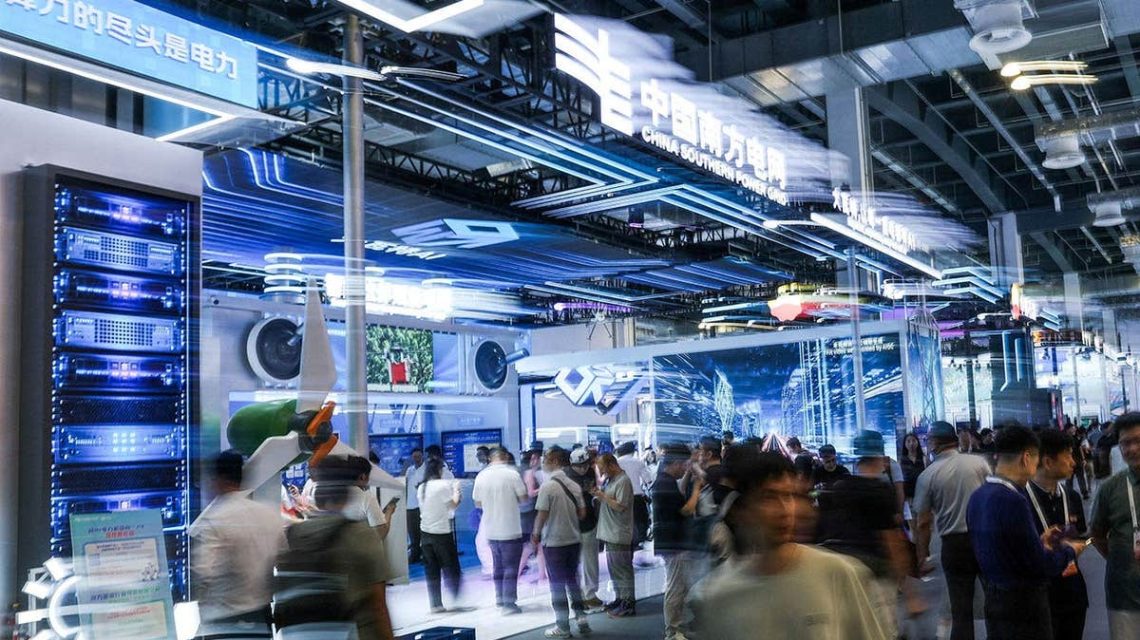
China’s Urgent Push: China is rapidly advancing its data centers and energy infrastructure to fuel artificial intelligence, sparking concerns about its ability to challenge America’s dominance in AI-related infrastructure.
Current Standing: The United States holds a significant lead in terms of data centers, according to Stanford Institute for Human-Centered Artificial Intelligence’s findings. By 2025, the U.S. had 5,427 data centers compared to China’s 449. This count does not consider variations in facility size or capacity.
We know that China is far behind, but we also know that they are moving at great speed.
China expert Gordon Chang shared with Fox News Digital. He suggested that ongoing American opposition to new data center development could hinder U.S. growth.
Warnings and Encouragement: Former President Donald Trump emphasized the threat, claiming China’s potential gain from such opposition. He urged communities to accept data centers for job creation and tax revenue benefits. Vice President JD Vance expressed concerns about losing the AI race should Democrats regain Congress, highlighting America’s need to bolster power capacity to support data centers.
Comparative Energy Production: Vance pointed out the discrepancy in energy production, noting China’s generation of power nearly triples that of the United States. He stressed the importance of easing regulatory constraints to enhance power plant construction.
China’s Diplomatic Stance: Liu Chang from the Chinese Embassy in Washington argued AI should promote cooperation and mutual benefits rather than competition.
Infrastructure Expansion: China is reorganizing its geographic computing infrastructure, directing more capacity to the west under the “East Data, West Computing” initiative. This area offers land availability and renewable energy options.
Geographic Expansion Projects: Reports indicate five of China’s eight computing hubs are in western regions. Construction efforts in areas like Inner Mongolia and Ningxia are underway, including prominent projects by Huawei Technology Co.
U.S.-China Economic and Security Review Commission Insights: Commission Vice Chairman Mike Kuiken expressed concerns over China’s strategic focus on AI as competition with other technologies grows. He elaborated on China’s swift construction capabilities, attributing it to flexible rule-making. However, limited access to advanced chips was identified as a substantial challenge for China.
American AI Metrics: Despite infrastructure concerns, the U.S. leads with 59 significant AI models in 2025 against China’s 35. U.S. private AI investment was markedly higher at $285.9 billion compared to China’s $12.4 billion.
Local Opposition Factors: Chang claimed American protests against data centers might involve external influences. Yet, Kuiken cautioned that localized factors like electricity costs and land use concerns account for genuine opposition.
Global AI Race: The competition encompasses not only AI model development but also the rapid creation of supporting infrastructure such as electricity, data centers, chips, and networks.
Reporter Background: Efrat (Effie) Lachter is an experienced Fox News Digital reporter with extensive coverage in conflict, global affairs, and human rights. Her investigative work spans multiple continents, covering critical global issues and earning recognition for excellence in reporting.
 AI and the Changing Nature of Google Searches
  Ukraine Missile and Drone Barrage Hits Russia Amidst Elections
  U.S. Strategic Goals Remain Unmet Amid Prolonged Conflict
  New Photos Reveal Damage from Iranian Strikes in the Middle East
  Assassin of Chilean Diplomat Orlando Letelier Faces Deportation 50 Years After Assassination
  Gorillaz and Macklemore Respond to Controversy Over Israel-Palestine Statements