In the almost two years since Mark Rutte began his role as NATO’s Secretary-General, much effort has been focused on keeping the United States committed to the alliance. Using diplomacy and praise, he has worked to prevent former President Donald Trump from following through on threats to leave NATO. As the week marks a crucial summit in Turkey, the objectives of the alliance continue to shift, creating ongoing challenges.
Initially, financial commitments were the main issue. Trump often criticized NATO allies for spending inadequate portions of their national budgets on defense. The previous summit addressed these concerns, with allies agreeing to match the United States in terms of GDP spending. The current challenge is transforming those funds into tangible military capabilities, especially amidst European concerns over Russia’s potential aggression.
Rutte attempted to quell lingering concerns in a recent White House meeting, presenting a chart labeled “Trump’s Trillion,” highlighting $1.2 trillion in allied spending since 2017.
However, Trump was unwavering, expressing disappointment over NATO allies’ reluctance to join the conflict with Iran, initiated by the U.S. and Israel without consultation. He stated, “I don’t need their money; I need loyalty.” He even suggested he might skip the upcoming summit if not for Turkish President Recep Tayyip Erdogan hosting it.
Rutte’s strategy involved significant flattery, notably during a well-coordinated White House presentation showcasing job creation in the U.S. and European military equipment orders worth $300 billion, all attributed to Trump. Despite these efforts, Trump’s threats to withdraw from NATO persist, undermining confidence within the alliance.
The U.S. plays a crucial role in NATO, especially as Russia poses an increased threat by testing European defenses. Recently, the Pentagon announced potential troop reductions in Europe, causing confusion and worry among NATO members.
NATO’s unity is vital, embodied in Article 5’s “all for one” principle, which was only invoked after the 9/11 attacks. The last NATO summit, held in Rutte’s hometown, The Hague, successfully secured a key defense spending commitment.
This year’s summit in Turkey, hosted by Erdogan, another key NATO member, aims to maintain U.S. involvement at the table. Yet, Trump’s demand for “loyalty” presents a difficult challenge for Rutte, as it goes beyond mere financial commitments.
Rutte’s predecessor, Jens Stoltenberg, recounted in his memoirs a similar experience during the 2018 summit, nearly derailed by Trump. He noted that if a U.S. president were to withdraw support, NATO’s security assurances would lose their significance.
 Senator Criticizes Drug Policy After Ohio Tragedy
 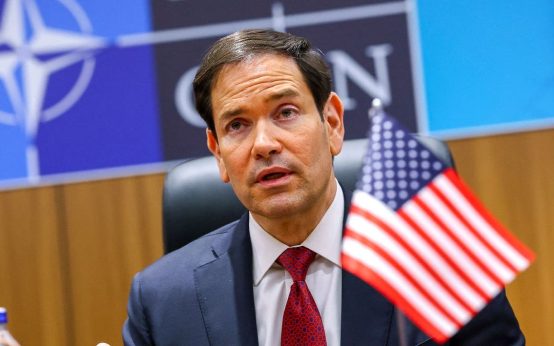 Secretary Rubio Discusses Middle East Conflict and NATO Relations
  Israeli Leader’s Upcoming U.N. Assembly Speech Marked by Controversy
  Republicans Call for Quick Resolution to Iran Conflict
  United States Secures Arctic Defense Pact
  Senator Warren Seeks to Restrict Private Equity in Restaurant Chains