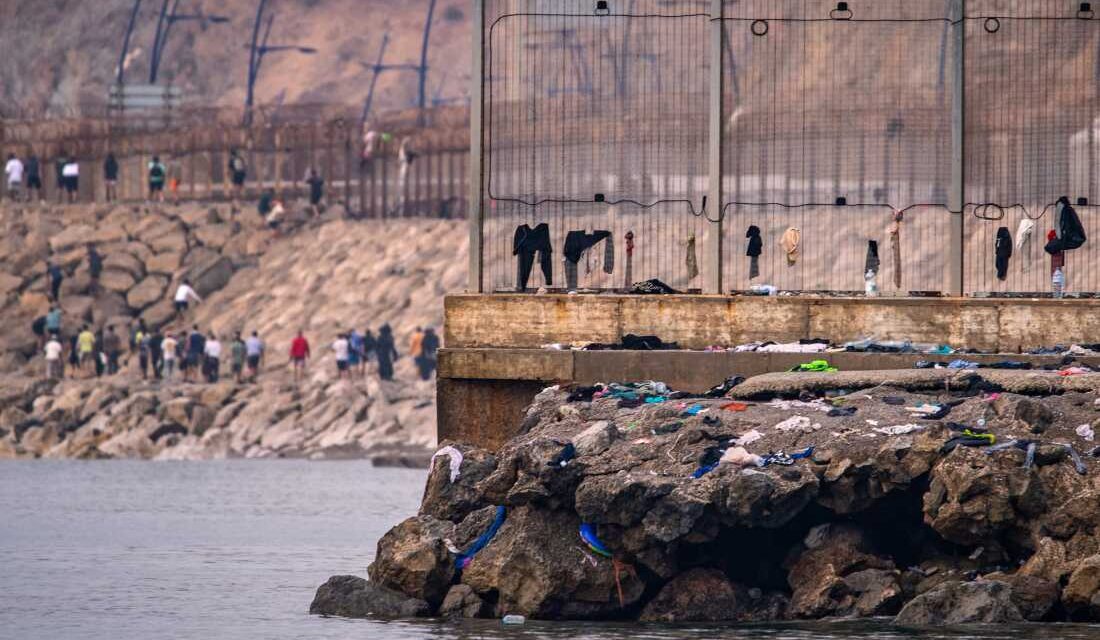
On Saturday, August 1, 2026, migrants started returning to Morocco from the Spanish enclave of Ceuta. Recent reports indicate that 67 people have died amid the Ceuta border crisis, according to the Spanish government. The fatalities include individuals who drowned and others who died in a stampede while trying to cross a breakwater barrier.
Spain announced the construction of a 500-meter-long containment barrier along the breakwater fence that extends into the sea. This decision follows the breach of Ceuta’s frontier by approximately 60,000 migrants between Thursday and Friday.
On Saturday morning, a few weary migrants who swam to Ceuta’s urban Tarajal beach were encountered by soldiers. These soldiers escorted them back across the border. Spain’s interior ministry reported that most individuals who entered the Spanish territory in North Africa have returned to Morocco.
Following several days of turmoil, Ceuta’s streets were filled with people aspiring for a better life in Spain. By Saturday, the city experienced an uneasy calm. Security remains a concern for the 84,000 residents of Ceuta.
“Life in this city has been disrupted as a result of the border incident,”
said Ceuta’s President, Juan Jesus Vivas. He emphasized the importance of completing the return process, though the city has not yet returned to normal.
Despite the ongoing situation, some migrants are determined to stay in Ceuta. Among them is Mohamed Hatri, a 23-year-old Moroccan. He expressed frustration at the situation:
“They’ve closed everything down so that we can’t buy anything to eat, to force us to return to our country. But even if they close it down, we’re determined to stay here, whether we’re hungry or not.”
 Ukraine Missile and Drone Barrage Hits Russia Amidst Elections
  U.S. Strategic Goals Remain Unmet Amid Prolonged Conflict
  New Photos Reveal Damage from Iranian Strikes in the Middle East
  Assassin of Chilean Diplomat Orlando Letelier Faces Deportation 50 Years After Assassination
  Gorillaz and Macklemore Respond to Controversy Over Israel-Palestine Statements
  Investigation into Lion Deaths in Tanzania