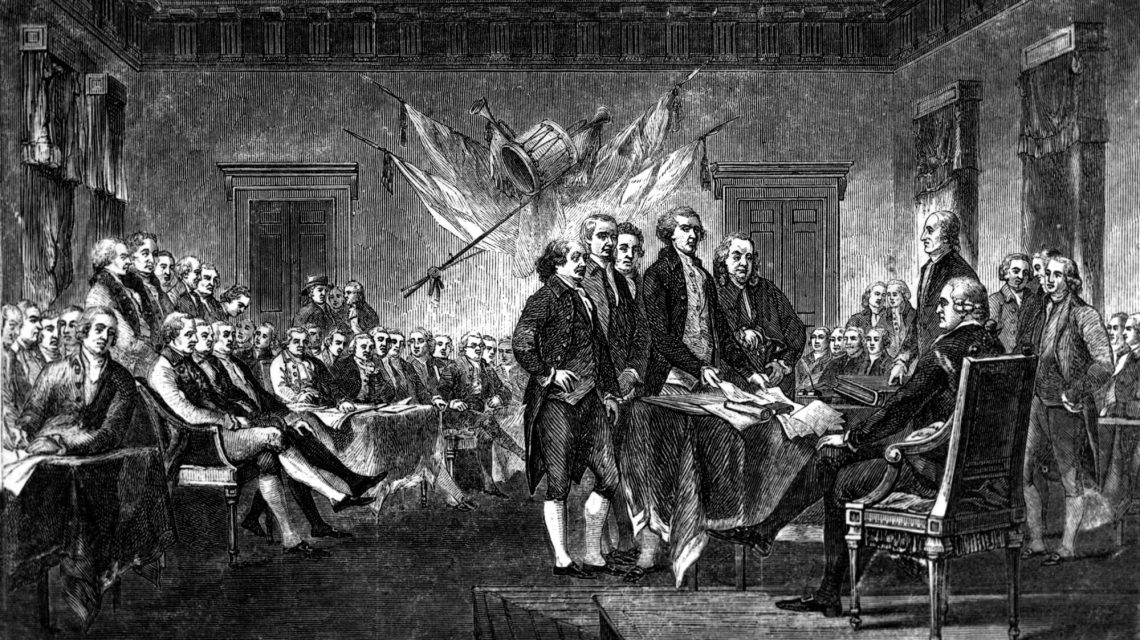
You may know 1776 for the founding of the United States, but California played a critical role in shaping the nation’s future that year. Far from the original 13 colonies, significant developments were unfolding on the West Coast.
Early Developments in Spanish California
California in 1776 was under Spanish influence, primarily marked by mission-building projects. The construction of the San Gabriel mission began, following earlier endeavors that faced challenges like flooding. On June 29 of that year, around the same time the Continental Congress reviewed Jefferson’s declaration, Spanish newcomers performed the first mass at the future Mission Dolores in San Francisco.
For the local Native Americans, including the Ohlone tribe, the arrival of missions and Spanish settlers brought hardship. Their way of life faced disruptions due to disease and territorial changes initiated by Spain’s empire-building strategies.
Mexican Influence and California’s Constitution
About 75 years after these initial developments, California adopted its first constitution, influenced by Mexican legislative traditions. Unlike the early U.S. Constitution, California’s document, adopted in 1849, included explicit bans on slavery. This was informed by Mexican values, which sought to abolish slavery due to ethical and strategic reasons.
Key areas where California’s constitution diverged from Eastern traditions involved property rights for women. While the Eastern U.S. followed English law where a wife’s identity was merged with her husband’s, Californian laws acknowledged women’s rights to own property independently, preserving aspects of Iberian tradition.
Shifts in Voting Rights
California’s constitution initially extended voting rights exclusively to white males. However, defining ‘white’ was complex due to the mixed heritage of many Californians, including Mexican and Native American ancestry. Despite the complexities, Mexican Californians were considered white for voting purposes, although debates persisted over the inclusivity of ethnic definitions.
Water Rights and Legal Practices
Water rights were another area where California’s practices differed from the East. Riparian rights, which allowed water usage based on property adjacency, evolved to incorporate appropriative rights, allowing for diversion efforts like the ones seen during the Gold Rush. These practices stem from earlier pueblo days and remain contentious, often leading to legal disputes.
Impact of California’s Constitution
Though the state constitution has undergone significant changes, its progressive aspects have significantly influenced national laws. Elements like bilingual official proceedings were removed, but foundational aspects including bans on slavery and gender rights became part of the wider U.S. legal framework.
The far-reaching impacts of California’s early legal and constitutional developments offer a deeper understanding of America’s growth beyond the original 13 colonies. The state’s pioneering approaches on several fronts continue to shape legal and cultural national norms.
 American Public Opinion on Press Freedom
  St. Laurence High School’s Transformative Journey
  Significant Events in Chicago History on September 21
  Presley Gerber Passes Away at 27 in Rehab Facility
  Shooting of DoorDash Delivery Driver by ICE Agent Raises Questions
  Growing Concerns Over Food Safety and National Security