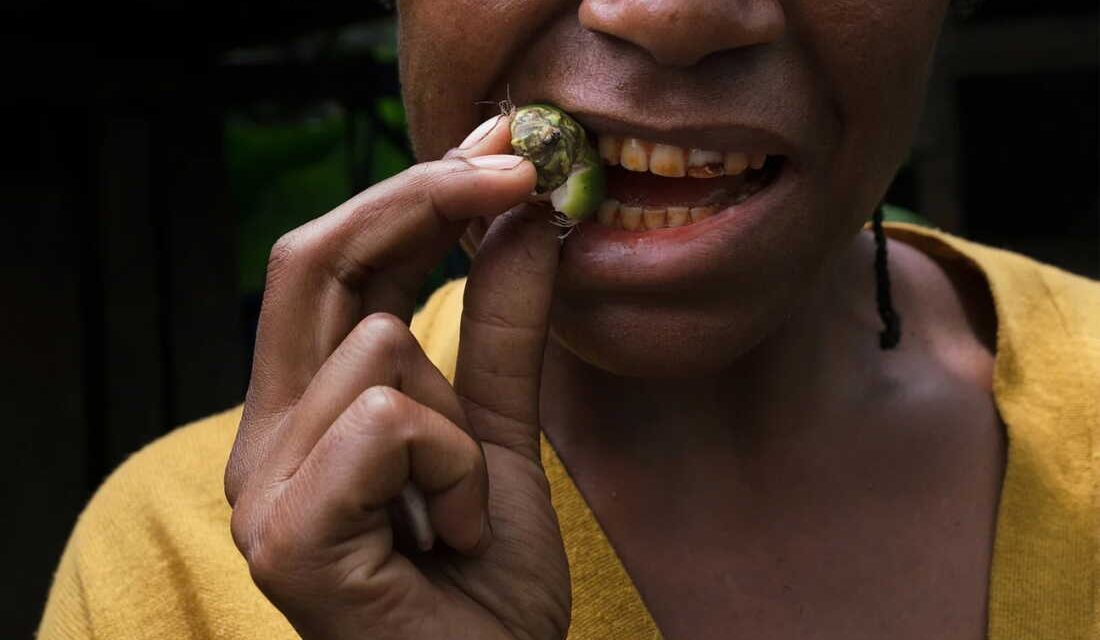
Betel nuts, the brownish-green seeds of certain palm trees, are chewed by around 600 million people today. Users claim benefits like relief from indigestion and fresh breath, but the medical community warns of risks such as damage to teeth and increased risk of heart disease and oral cancer. Despite the risks, many in Asia and the Pacific remain addicted, making betel nuts the fourth most commonly used mind-affecting substance after tobacco, alcohol, and caffeine.
A new study in Science Advances suggests the practice of betel nut chewing is ancient. By examining ancient teeth, researchers found evidence of early betel nut usage by hunter-gatherers who likely sought its painkilling effects. Adam Brumm, an archaeology professor at Griffith University, suggests the practice began with sucking on the nuts, akin to gobstoppers.
Outside researchers, while intrigued, find the evidence compelling but not definitive. José Capriles from Penn State University notes the long history of drug use among humans, indicating it is part of human nature to experiment with substances.
Investigating Ancient Betel Nut Usage
The discovery involved analysis of teeth remains from Sulawesi, Indonesia, dating back 25,000 years. These remains featured mysterious grooves. Tested teeth displayed deep wear exposing the pulp cavity, implying decades of repeated wear. Comparison to tobacco pipe usage from the colonial period led researchers to speculate a similar habit might be responsible for the grooves.
Evidence Supporting Betel Nut Use
Today, betel nuts are frequently chewed with chemicals for stimulant effects, but ancient teeth wear patterns suggested sucking on hard, round objects. Researchers, including Brumm and neuropharmacologist Roger Papke, tested whether sucking betel nuts could have had drug-like effects. They found that artificial saliva extracted arecoline, an active chemical in betel nuts, indicating a physiological reaction altering brain function.
Tests on ancient dental tissues detected traces of arecoline, concluding that betel nuts are the only known natural source of it. Brumm, replicating ancient practices, experienced the numbing effects of betel juice, suggesting a pain-relieving motivation for ancient users.
Cultural Implications and Ongoing Research
Outside researchers acknowledge the study as compelling, with Peter Ungar from the University of Arkansas emphasizing chemical evidence as significant. However, Capriles highlights the rarity of preserving ancient remains in tropical climates.
Agustín Fuentes from Princeton advises caution against assuming contemporary health perspectives reflect ancient cultures. The dental wear might also reflect social and cultural factors. People today indulge in habits harmful to dental health for non-utility reasons, suggesting ancient motivations could similarly be diverse.
Brumm recognizes the study’s limitations, noting the unknowns typical in archaeology despite their considered hypotheses.
 Personal Journey in Understanding Neurodegenerative Diseases
  Great Lakes Face Beach Hazards Due to Dangerous Currents
  OpenAI’s Complex Solution to Navier-Stokes Equations Stirs Debate
  Reassessing the Central Role of Rome in the Roman Empire’s Road Network
  Fire Amoeba Discovery Challenges Limits of Complex Organisms
  Impact of Sleep Types on Disease Risk